About this artwork
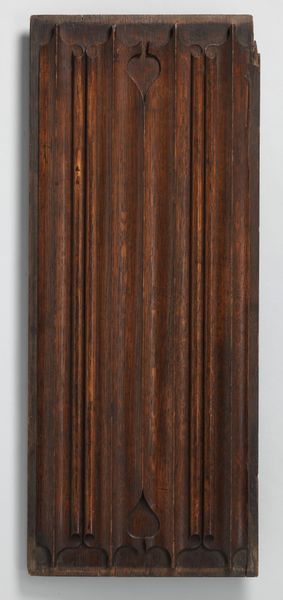
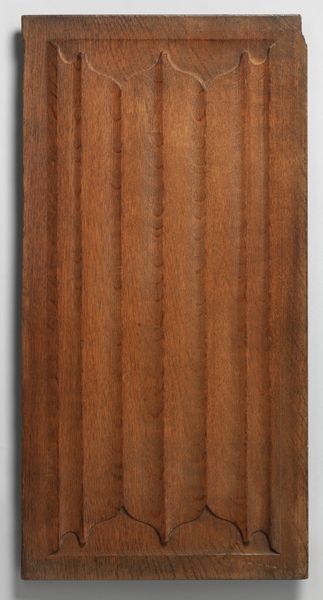
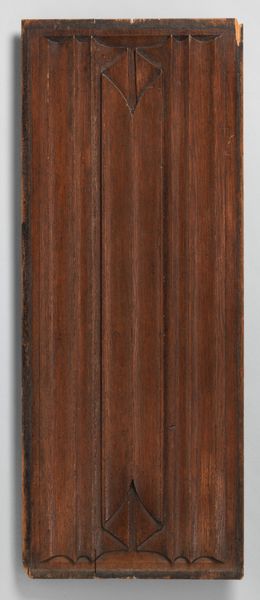
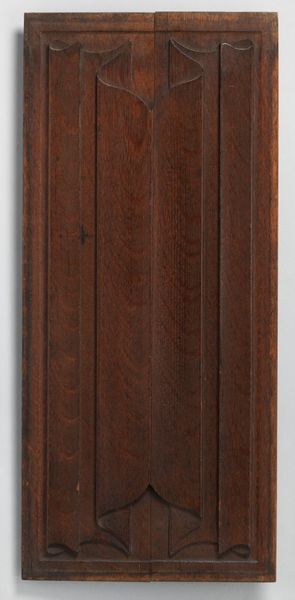
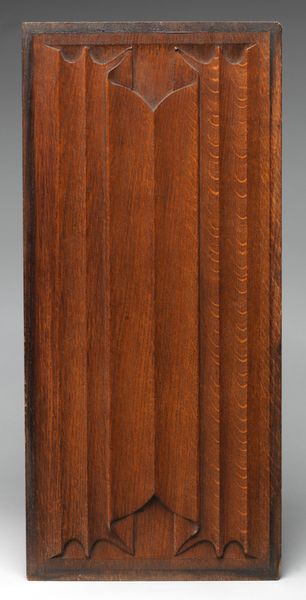
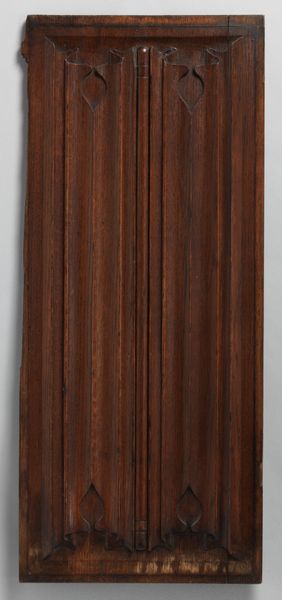
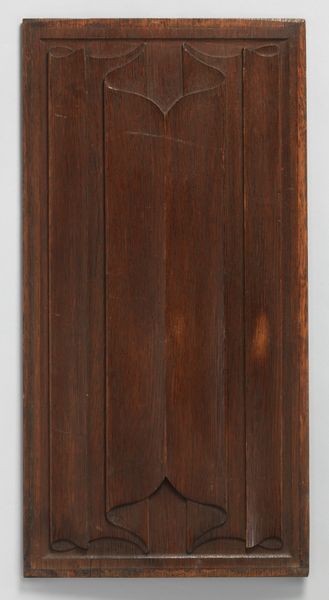
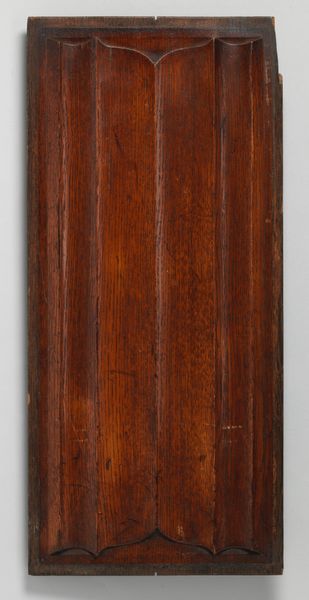
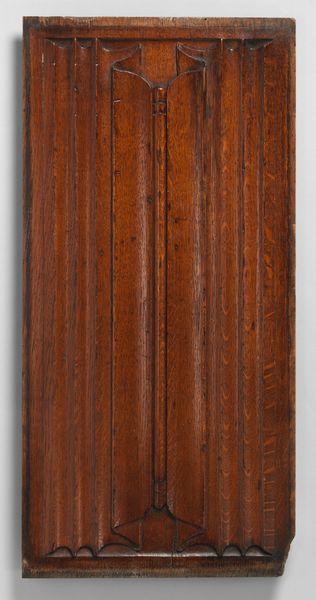
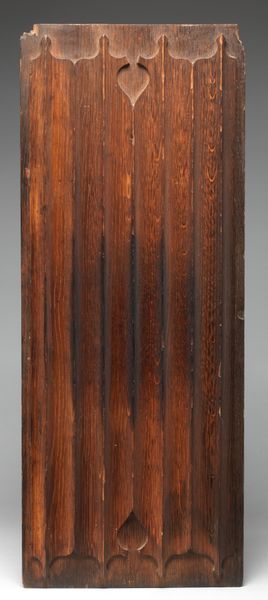
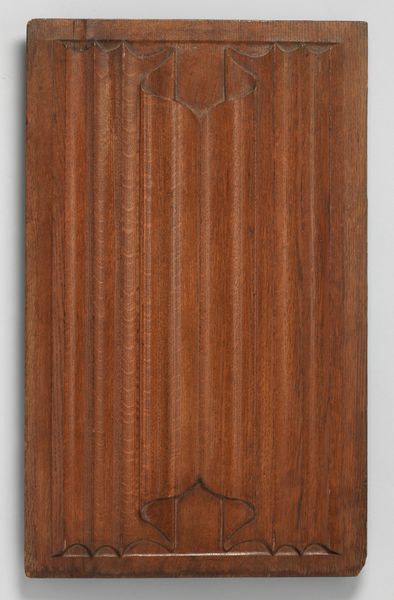
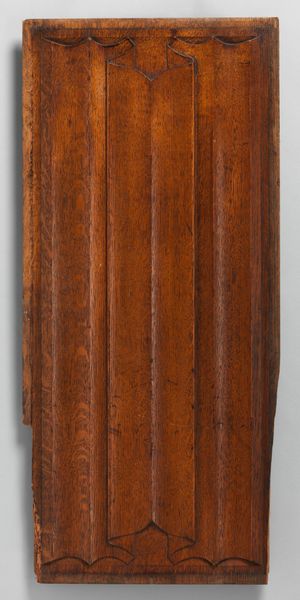
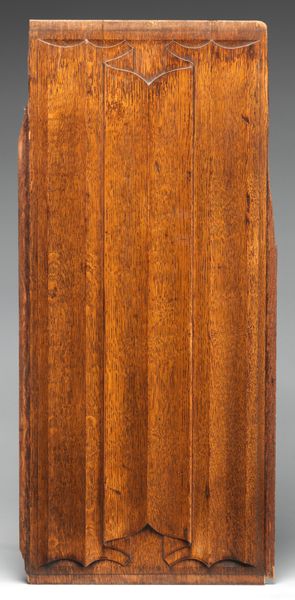
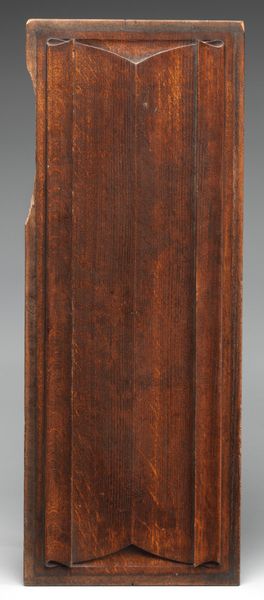
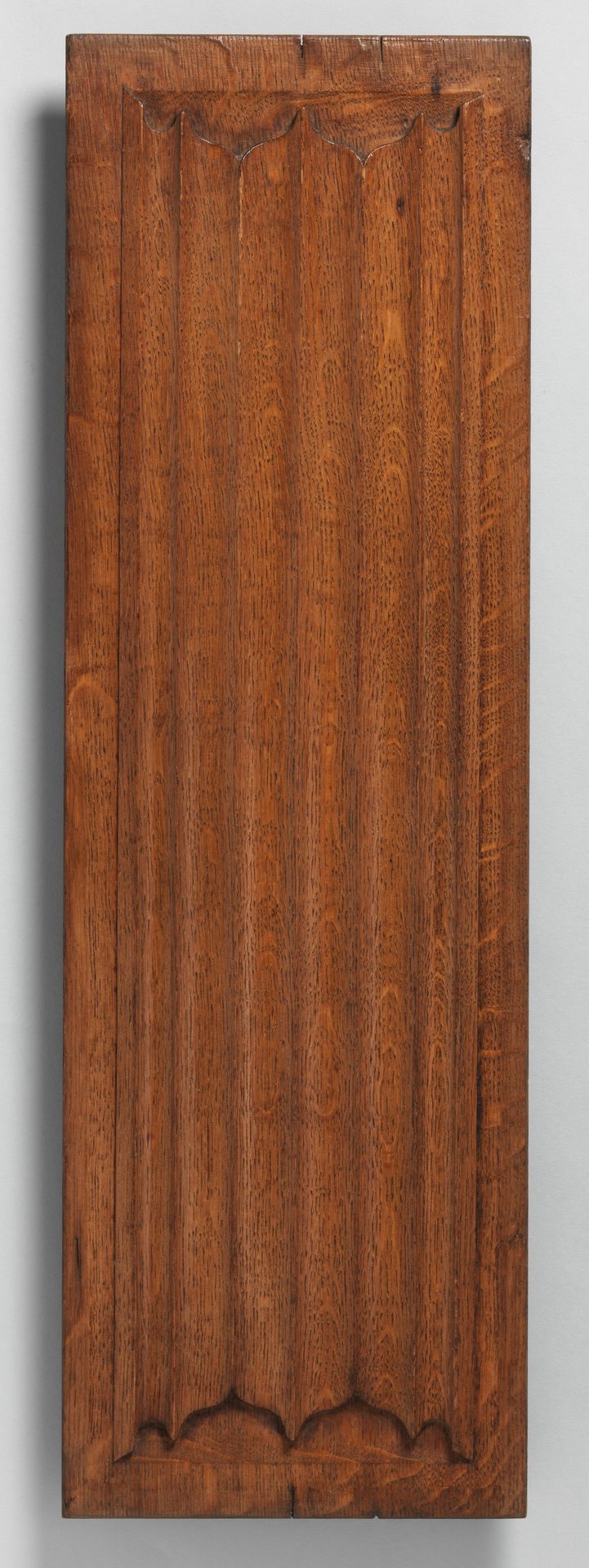
This is a panel from the Palace of Westminster, created by Augustus Welby Northmore Pugin. The panel's structure is immediately striking: vertical fluting dominates the composition, creating a rhythmic play of light and shadow. The wooden material, with its warm tones and visible grain, adds a tactile quality, inviting a sense of connection to the craftsmanship. Pugin, deeply immersed in the Gothic Revival, sought to restore what he believed were the moral and structural values of medieval art. The verticality of the fluting and the pointed arches subtly embedded within the design are key elements that evoke the Gothic style. These forms, beyond their aesthetic appeal, served as cultural signs, linking the Palace of Westminster to a perceived golden age of architectural and societal integrity. The panel, in its design, challenges the industrial age's emphasis on mass production by celebrating handcrafted details and historical forms. In its totality, the panel serves as a powerful statement on tradition, craftsmanship, and the symbolic potential of architectural elements. It invites us to consider how historical forms can be reinterpreted to convey cultural and philosophical values.
Panel from the Palace of Westminster
1842 - 1852

Augustus Welby Northmore Pugin
1812 - 1852
The Metropolitan Museum of Art
Metropolitan Museum of Art, New York, NYArtwork details
- Dimensions
- Overall (confirmed): 24 15/16 × 7 13/16 × 1/2 in. (63.3 × 19.8 × 1.3 cm)
- Location
- Metropolitan Museum of Art, New York, NY
- Copyright
- Public Domain
Comments
Share your thoughts
About this artwork
This is a panel from the Palace of Westminster, created by Augustus Welby Northmore Pugin. The panel's structure is immediately striking: vertical fluting dominates the composition, creating a rhythmic play of light and shadow. The wooden material, with its warm tones and visible grain, adds a tactile quality, inviting a sense of connection to the craftsmanship. Pugin, deeply immersed in the Gothic Revival, sought to restore what he believed were the moral and structural values of medieval art. The verticality of the fluting and the pointed arches subtly embedded within the design are key elements that evoke the Gothic style. These forms, beyond their aesthetic appeal, served as cultural signs, linking the Palace of Westminster to a perceived golden age of architectural and societal integrity. The panel, in its design, challenges the industrial age's emphasis on mass production by celebrating handcrafted details and historical forms. In its totality, the panel serves as a powerful statement on tradition, craftsmanship, and the symbolic potential of architectural elements. It invites us to consider how historical forms can be reinterpreted to convey cultural and philosophical values.
Comments
Share your thoughts