About this artwork
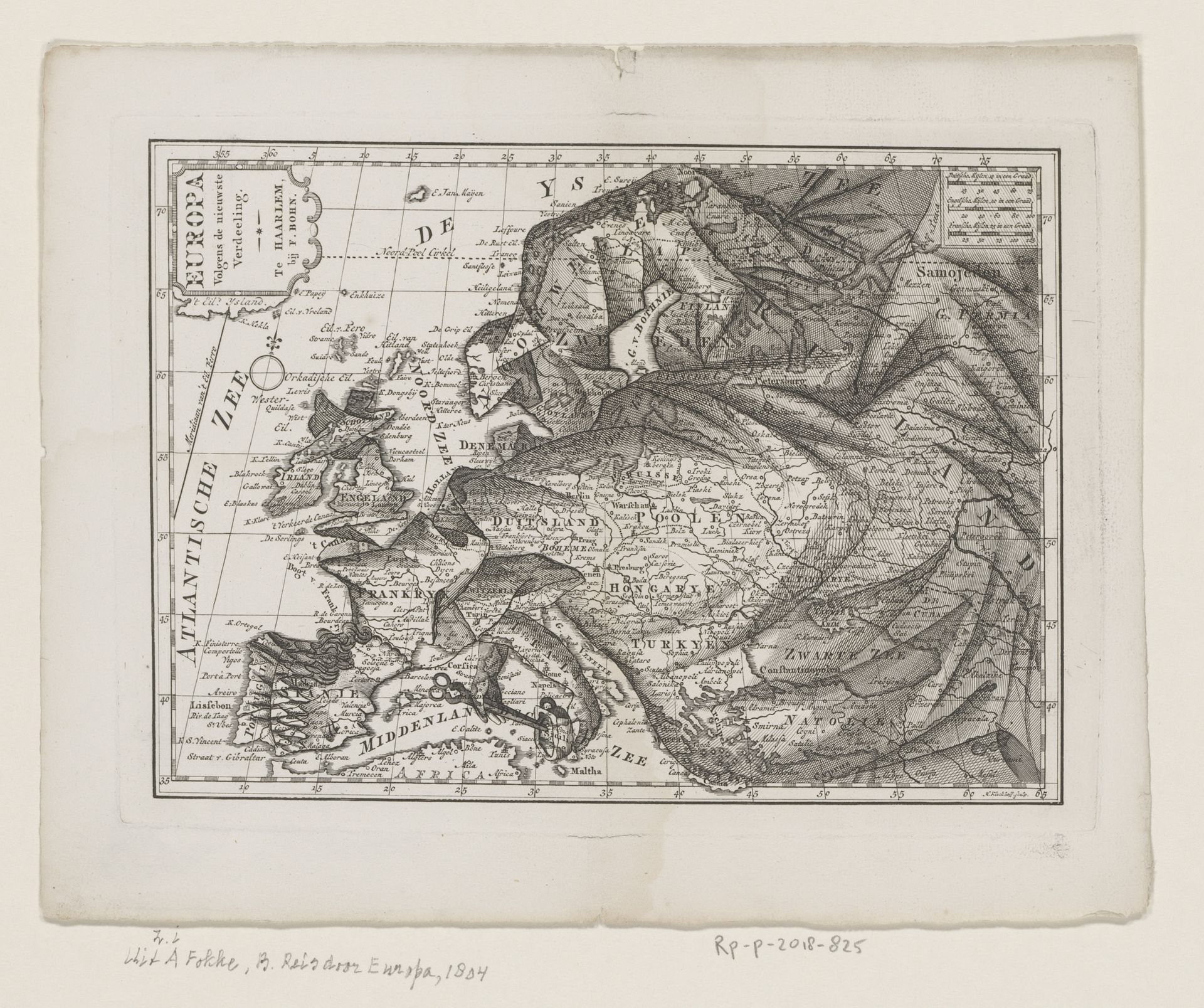
Hendrik Kloekhoff’s “Map of Europe, as a Queen,” presents a striking visual experience through its intricate composition and delicate lines. The map, rendered in monochrome, transforms the continent into a regal figure draped in elaborate garments. The use of hatching and cross-hatching defines the contours of the land and the folds of the queen’s attire, creating a rich texture. This formal approach can be understood through the lens of structuralism, where the map functions as a sign, its meaning derived from the relationship between its parts. The queen, a symbol of power and authority, is superimposed onto the geographical layout, suggesting a complex interplay between political power and cartographic representation. The choice of monochrome further emphasizes the structural elements, highlighting the contrast between light and shadow. This stark contrast adds depth and volume to the figure, making her presence all the more commanding. Consider how this formal quality functions not just aesthetically but also as part of a larger cultural and philosophical discourse, where the map becomes a site of ongoing interpretation and re-interpretation.

Artwork details
- Medium
- drawing, print, paper, engraving
- Dimensions
- height 253 mm, width 183 mm
- Copyright
- Rijks Museum: Open Domain
Tags
Comments
Share your thoughts
About this artwork
Hendrik Kloekhoff’s “Map of Europe, as a Queen,” presents a striking visual experience through its intricate composition and delicate lines. The map, rendered in monochrome, transforms the continent into a regal figure draped in elaborate garments. The use of hatching and cross-hatching defines the contours of the land and the folds of the queen’s attire, creating a rich texture. This formal approach can be understood through the lens of structuralism, where the map functions as a sign, its meaning derived from the relationship between its parts. The queen, a symbol of power and authority, is superimposed onto the geographical layout, suggesting a complex interplay between political power and cartographic representation. The choice of monochrome further emphasizes the structural elements, highlighting the contrast between light and shadow. This stark contrast adds depth and volume to the figure, making her presence all the more commanding. Consider how this formal quality functions not just aesthetically but also as part of a larger cultural and philosophical discourse, where the map becomes a site of ongoing interpretation and re-interpretation.
Comments
Share your thoughts