About this artwork
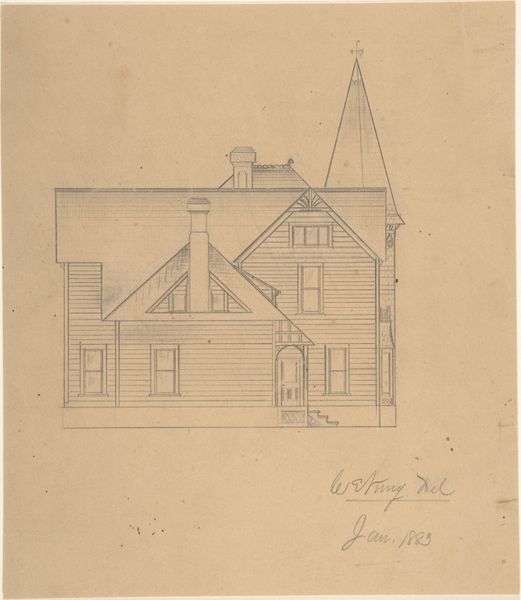
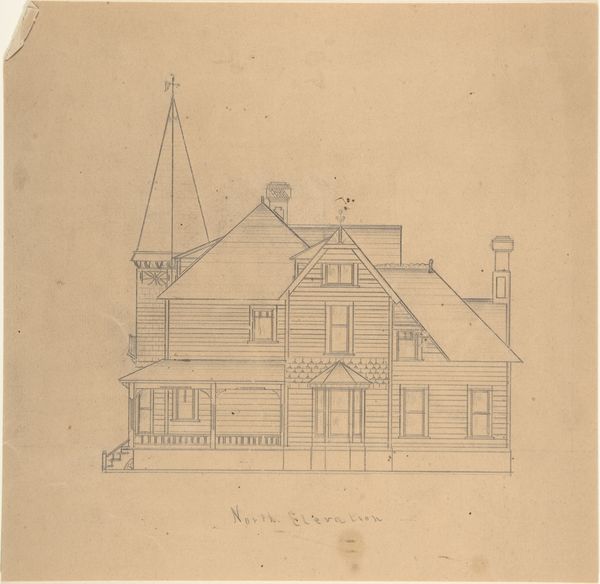
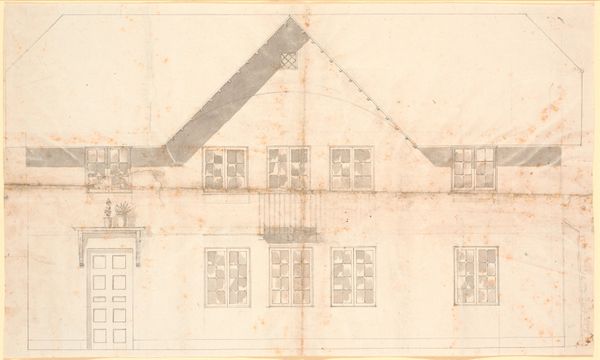
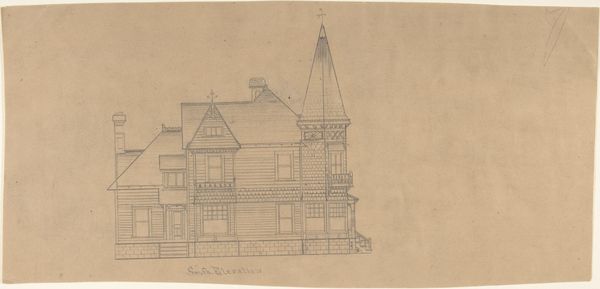
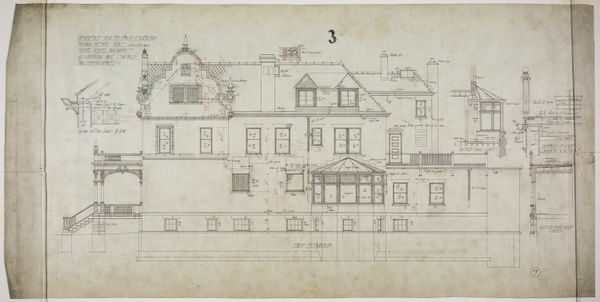
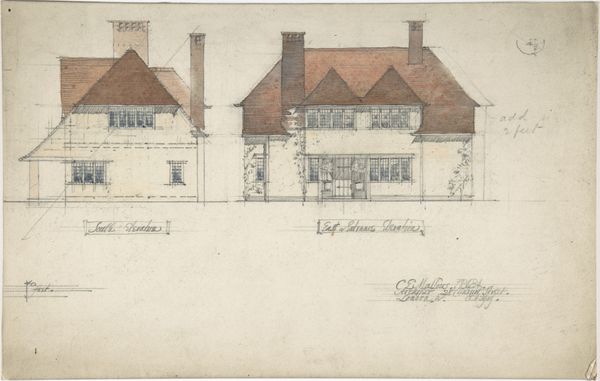
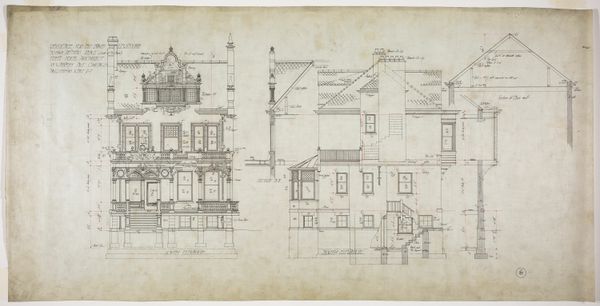
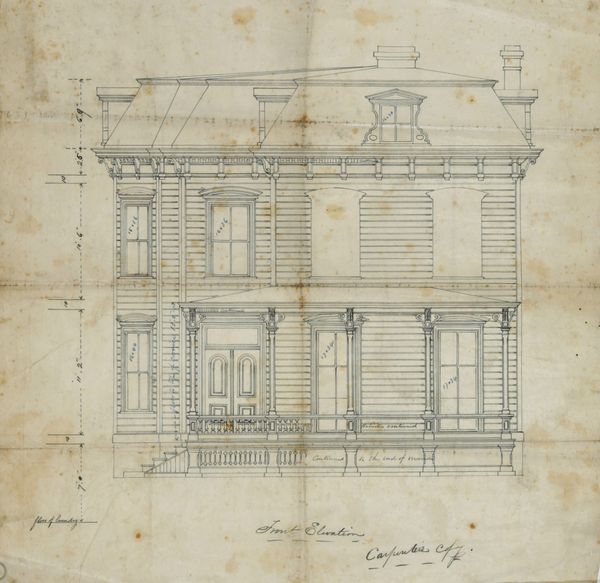
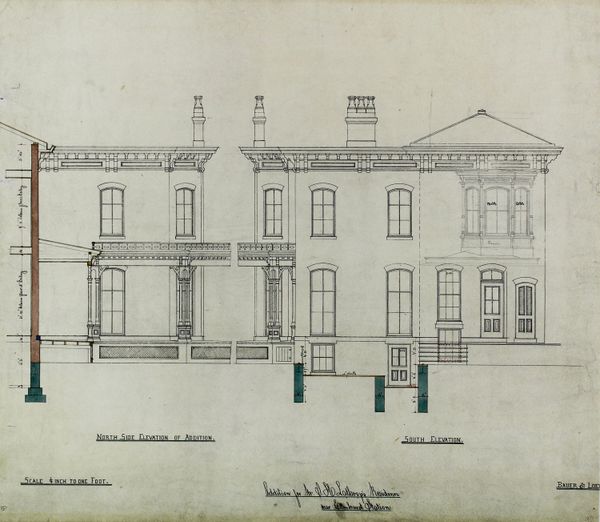
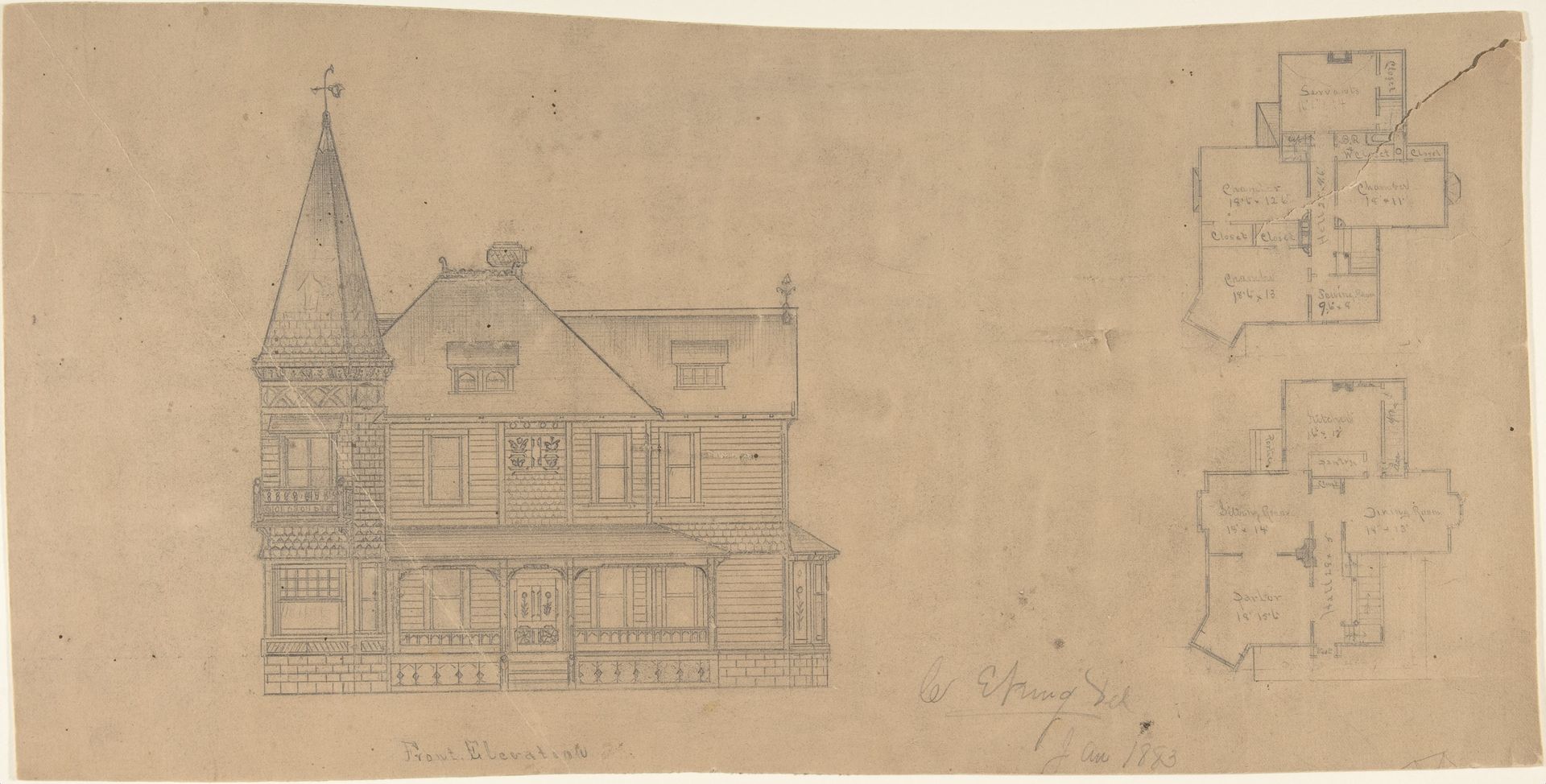
W. Strong’s “Design for a House, Front Elevation and Plans” is a 19th-century architectural drawing offering a glimpse into the aspirations and social values of the time. This design reflects the burgeoning middle class's desire for homes that symbolized upward mobility and refined taste. The detailed plans suggest a society that valued privacy, comfort, and the separation of domestic functions. But who was this house for? What did it mean to own property? These are questions that underscore issues of race, gender, and class. The house, likely intended for a white family, sits in stark contrast to the living conditions of marginalized communities, for whom home ownership was often an impossible dream. Think about the labor required to build such a house, likely performed by underpaid or enslaved workers, their contributions rendered invisible in the final design. This drawing serves as a reminder of the intertwined histories of privilege and oppression that shaped the American landscape.
Design for a House, Front Elevation and Plans
1878 - 1888


Artwork details
- Medium
- drawing, print, pencil, architecture
- Location
- Metropolitan Museum of Art, New York, NY
- Copyright
- Public Domain
Tags
Comments
Share your thoughts
About this artwork
W. Strong’s “Design for a House, Front Elevation and Plans” is a 19th-century architectural drawing offering a glimpse into the aspirations and social values of the time. This design reflects the burgeoning middle class's desire for homes that symbolized upward mobility and refined taste. The detailed plans suggest a society that valued privacy, comfort, and the separation of domestic functions. But who was this house for? What did it mean to own property? These are questions that underscore issues of race, gender, and class. The house, likely intended for a white family, sits in stark contrast to the living conditions of marginalized communities, for whom home ownership was often an impossible dream. Think about the labor required to build such a house, likely performed by underpaid or enslaved workers, their contributions rendered invisible in the final design. This drawing serves as a reminder of the intertwined histories of privilege and oppression that shaped the American landscape.
Comments
Share your thoughts