About this artwork
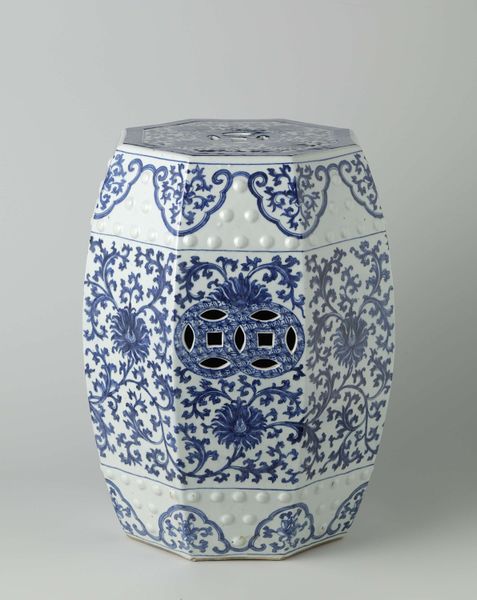
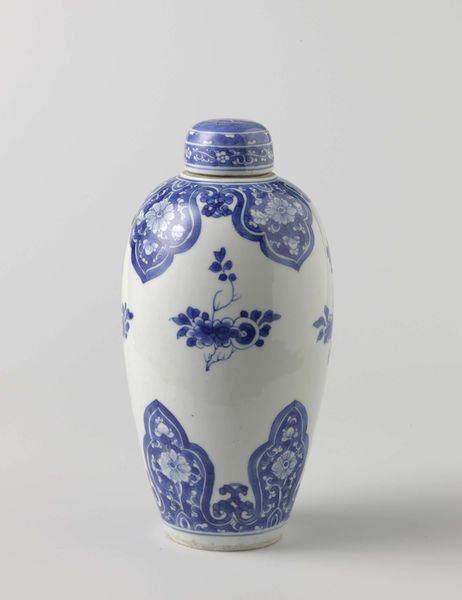
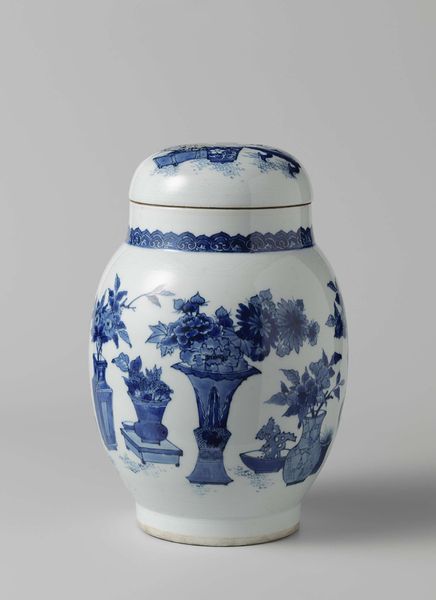
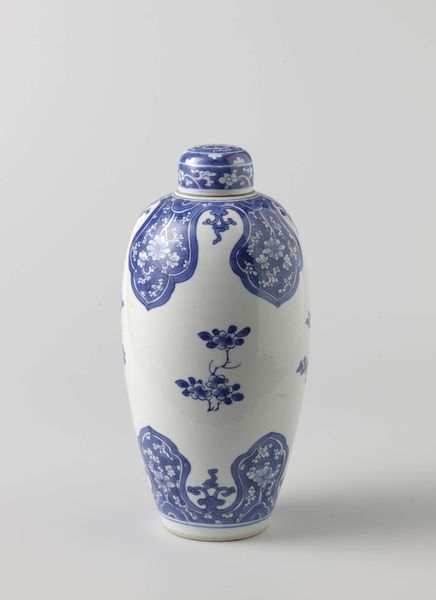
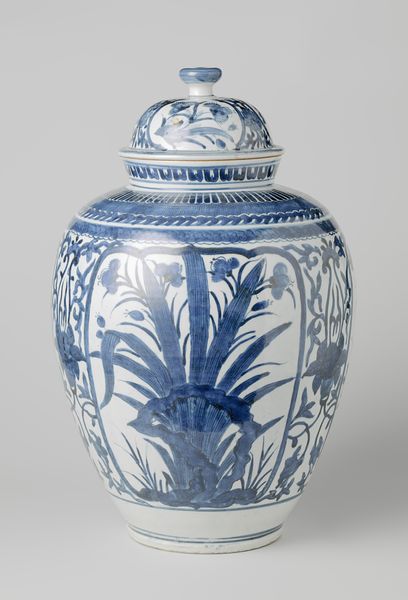
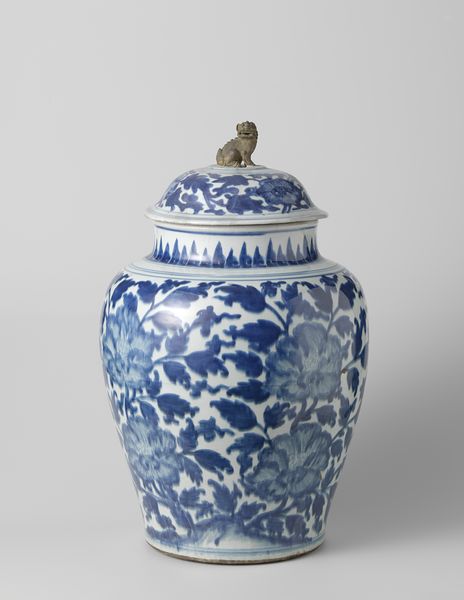
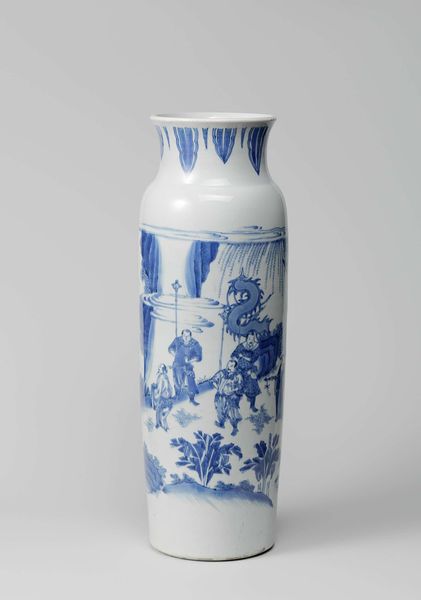
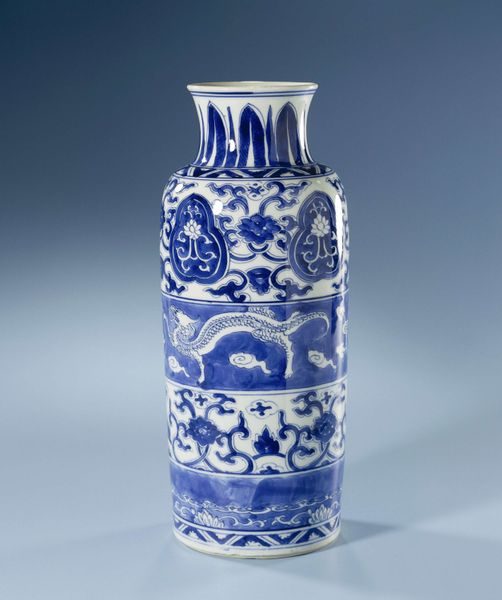
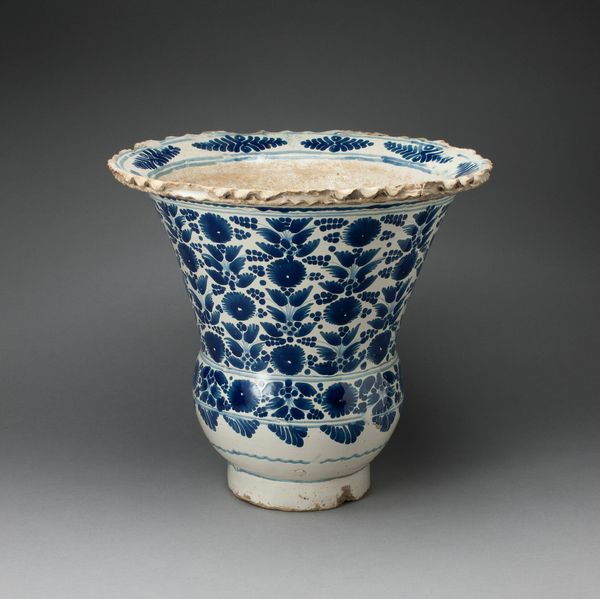
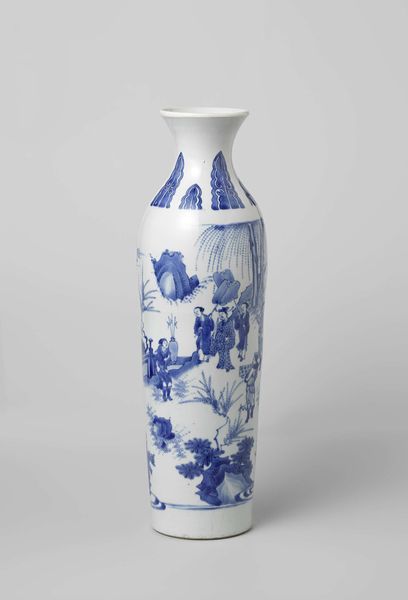
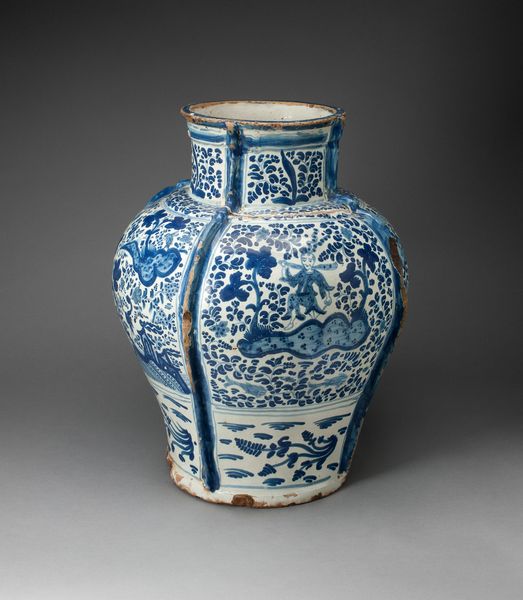
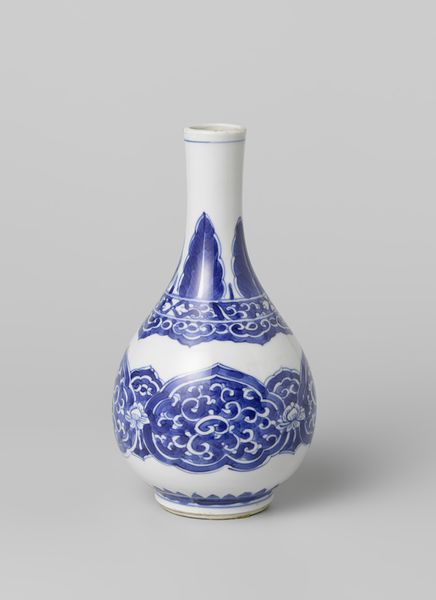
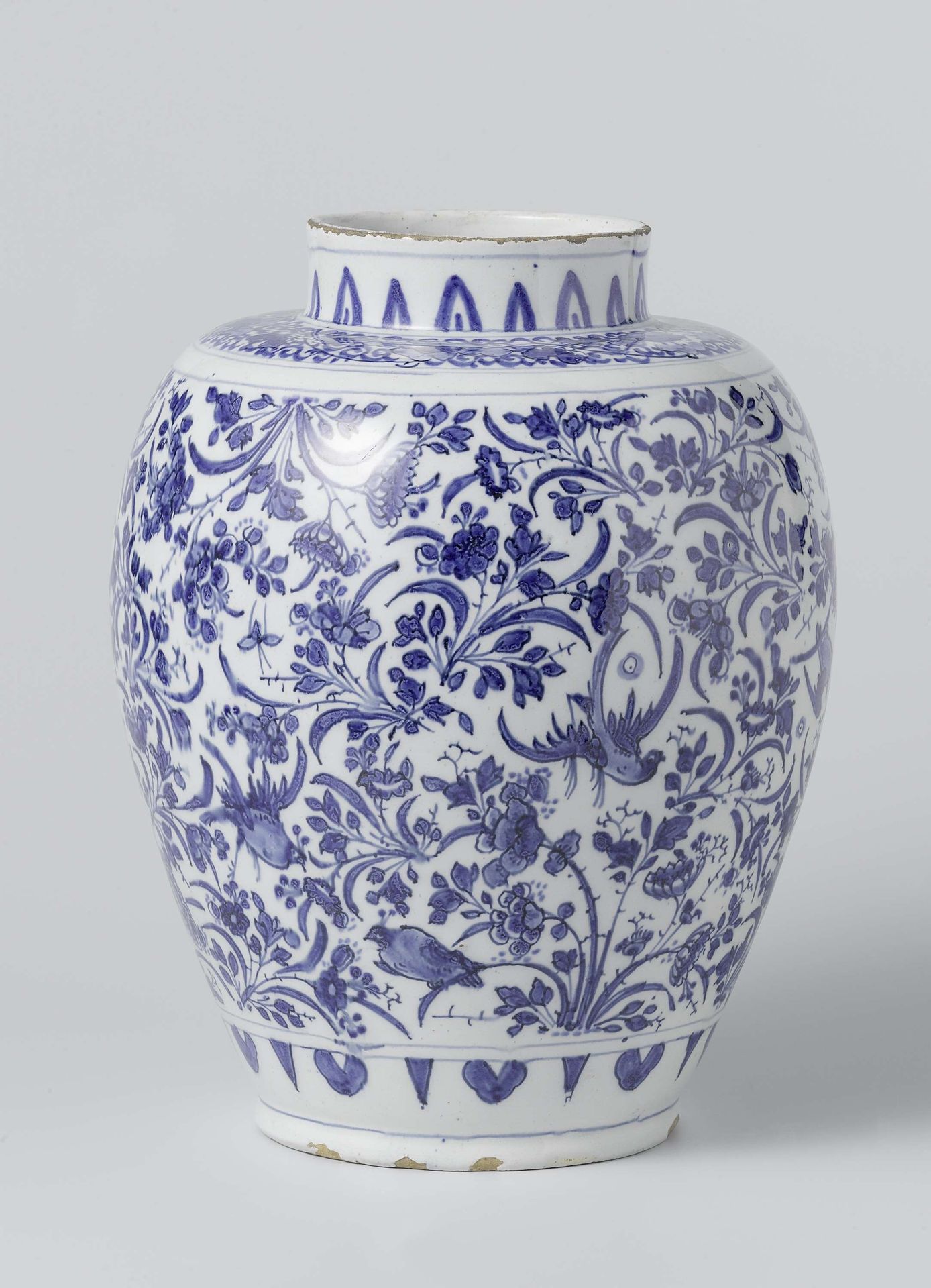
This ceramic pot was created by De Drie Posteleyne Astonne. The form is immediately striking: a rounded body that swells confidently, contrasted by a narrow neck. The pot is enveloped in a vibrant cobalt blue pattern of flora and fauna against a white ground. The design is dense, a tapestry of stylized flowers, leaves and birds that interact across the surface. Note the repetition and variation in the arrangement; each element echoes another, creating a cohesive visual rhythm. The linear quality of the painted details, combined with the overall symmetry, suggests an underlying structure guiding the composition. The pot’s design does not merely replicate nature; instead, it reimagines it through a cultural lens, reflecting a complex interplay between observation, convention, and artistic interpretation. The absence of a lid destabilizes the pot’s completeness. It prompts a re-evaluation of the vessel's function, moving beyond utility towards a more symbolic or decorative role. This tension between form and function underscores the object’s status as a carrier of meaning, inviting us to consider the cultural values and artistic traditions that have shaped its creation and reception.

Artwork details
- Medium
- ceramic
- Dimensions
- height 22 cm, diameter 17 cm
- Copyright
- Rijks Museum: Open Domain
Tags
ceramic
ceramic
islamic-art
decorative-art
Comments
No comments
About this artwork
This ceramic pot was created by De Drie Posteleyne Astonne. The form is immediately striking: a rounded body that swells confidently, contrasted by a narrow neck. The pot is enveloped in a vibrant cobalt blue pattern of flora and fauna against a white ground. The design is dense, a tapestry of stylized flowers, leaves and birds that interact across the surface. Note the repetition and variation in the arrangement; each element echoes another, creating a cohesive visual rhythm. The linear quality of the painted details, combined with the overall symmetry, suggests an underlying structure guiding the composition. The pot’s design does not merely replicate nature; instead, it reimagines it through a cultural lens, reflecting a complex interplay between observation, convention, and artistic interpretation. The absence of a lid destabilizes the pot’s completeness. It prompts a re-evaluation of the vessel's function, moving beyond utility towards a more symbolic or decorative role. This tension between form and function underscores the object’s status as a carrier of meaning, inviting us to consider the cultural values and artistic traditions that have shaped its creation and reception.
Comments
No comments