About this artwork
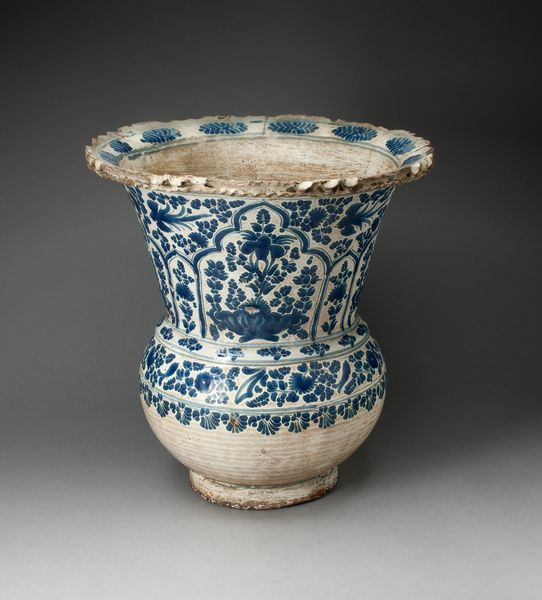
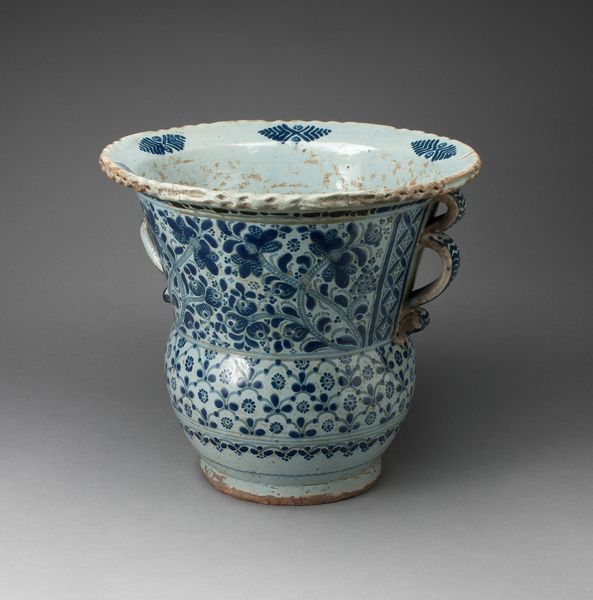
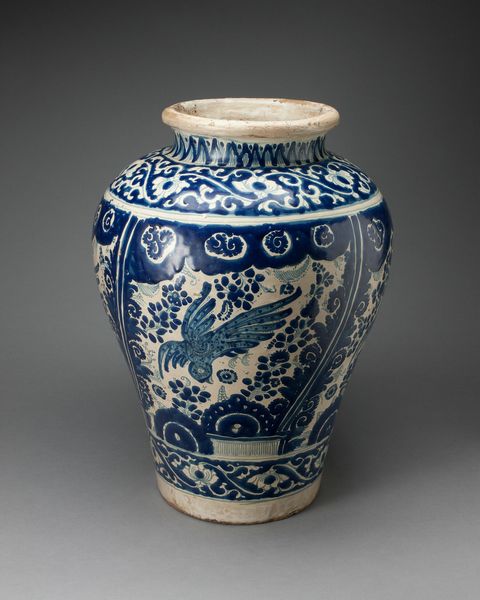
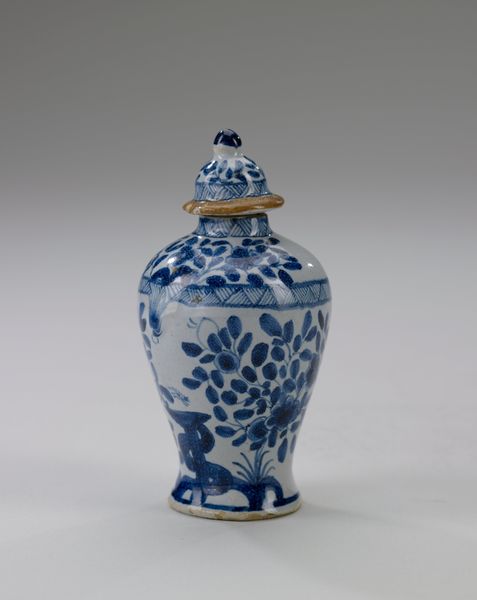
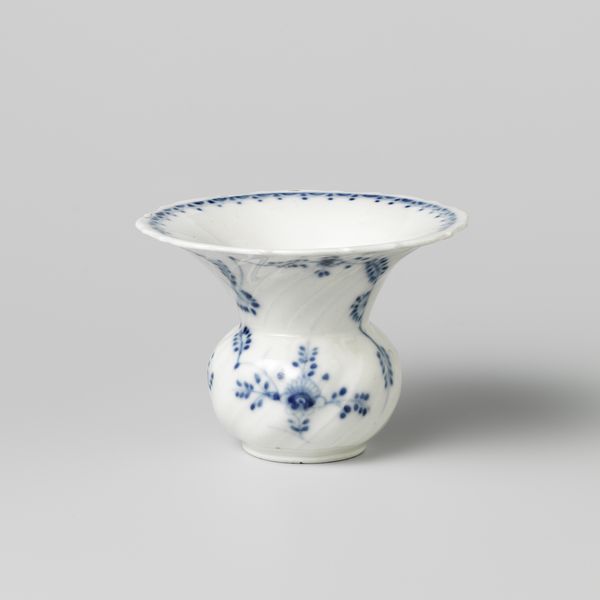
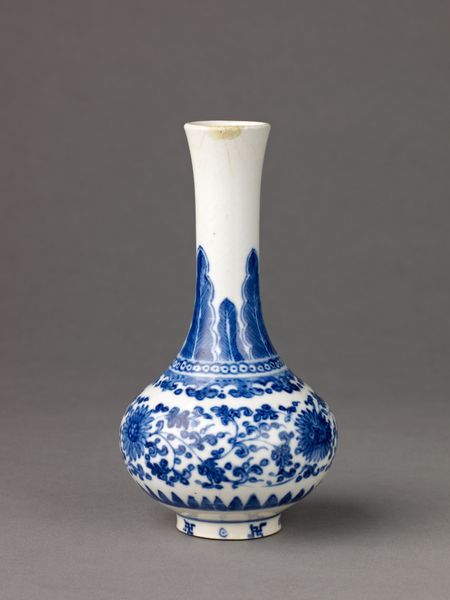
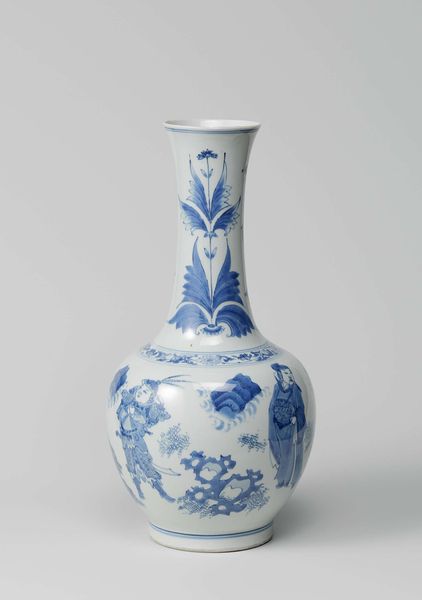
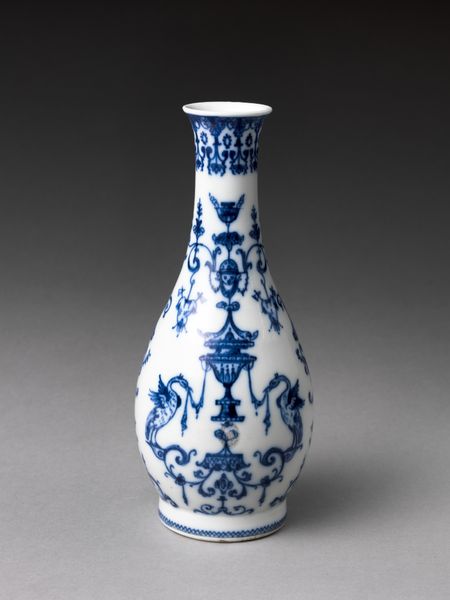
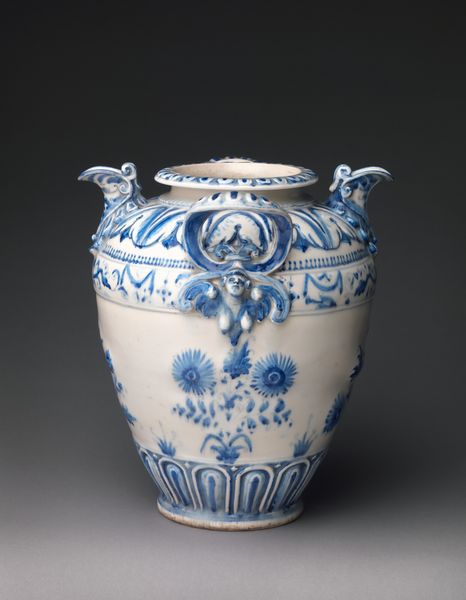
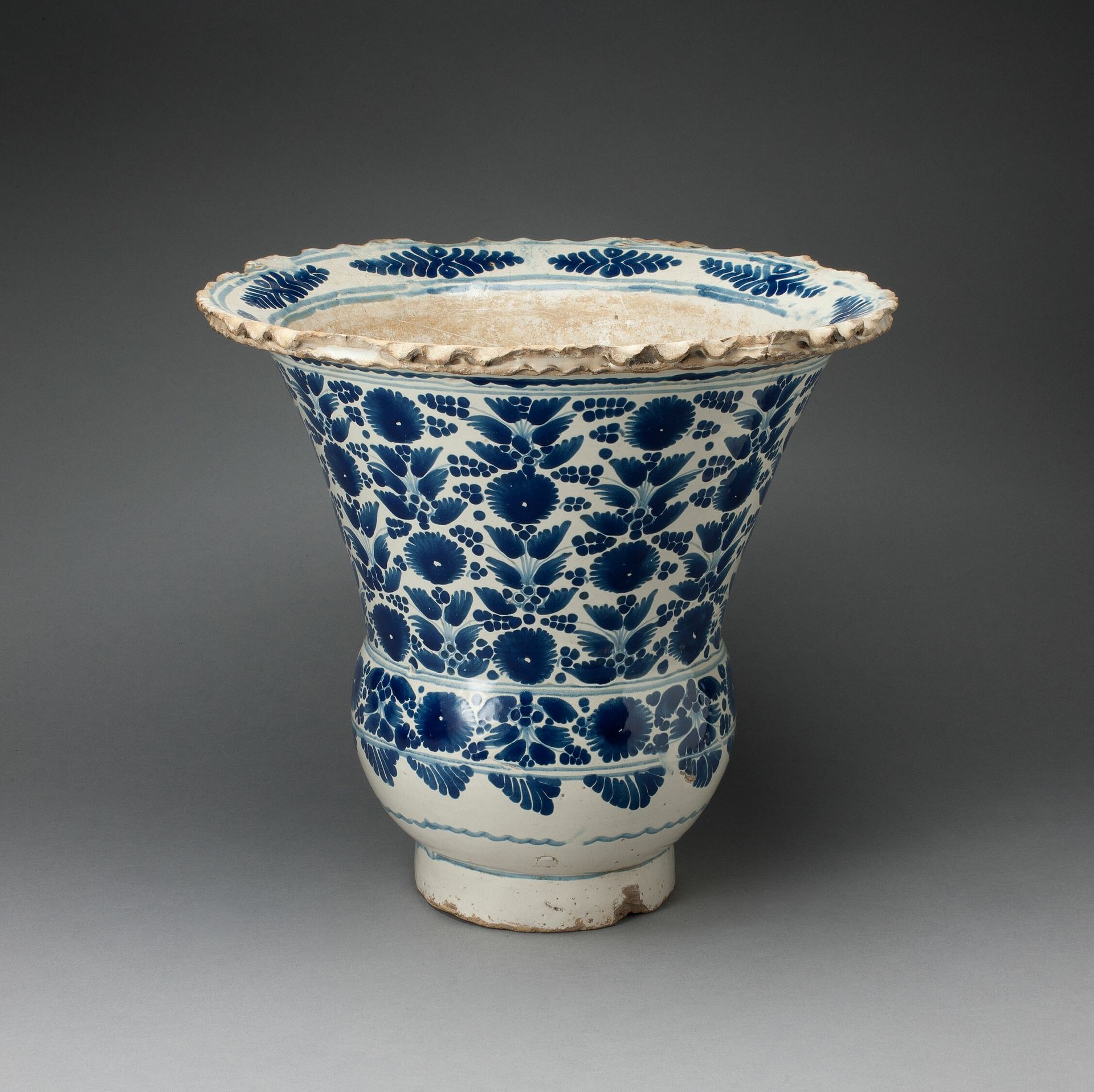
This is a Talavera Poblana urn, whose date is unknown, made with earthenware and glaze. The urn strikes us with its bold contrast: the white background against the blue floral patterns. The shapes of the flowers and leaves are densely packed, creating a rhythm that guides the eye upwards from the base to the undulating rim. The artist uses repetition and symmetry, yet the floral motifs retain a sense of organic spontaneity. The cobalt blue decorations are not merely superficial adornments; they penetrate the surface, engaging with the very essence of the ceramic form. This interplay between surface and depth can be seen as a semiotic system, where the blue patterns act as signs, referencing nature while simultaneously asserting their presence as abstract designs. It engages with historical and philosophical concerns about the relationship between art and nature, representation and abstraction. Notice the materiality of the glaze itself. This emphasis on the material qualities invites us to contemplate the ways in which art can challenge our perceptions of the world.
Urn 1675 - 1700


Artwork details
- Medium
- ceramic, earthenware
- Dimensions
- H. 35 cm (13 3/4 in.)
- Location
- The Art Institute of Chicago
- Copyright
- Public Domain
Tags
ceramic
vessel
earthenware
latin-american
ceramic
islamic-art
decorative-art
Comments
No comments
About this artwork
This is a Talavera Poblana urn, whose date is unknown, made with earthenware and glaze. The urn strikes us with its bold contrast: the white background against the blue floral patterns. The shapes of the flowers and leaves are densely packed, creating a rhythm that guides the eye upwards from the base to the undulating rim. The artist uses repetition and symmetry, yet the floral motifs retain a sense of organic spontaneity. The cobalt blue decorations are not merely superficial adornments; they penetrate the surface, engaging with the very essence of the ceramic form. This interplay between surface and depth can be seen as a semiotic system, where the blue patterns act as signs, referencing nature while simultaneously asserting their presence as abstract designs. It engages with historical and philosophical concerns about the relationship between art and nature, representation and abstraction. Notice the materiality of the glaze itself. This emphasis on the material qualities invites us to contemplate the ways in which art can challenge our perceptions of the world.
Comments
No comments