About this artwork
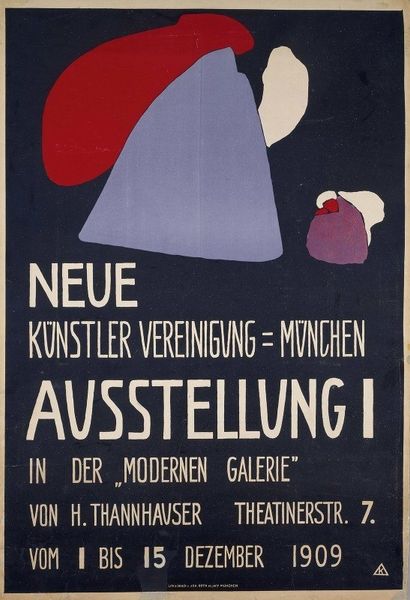
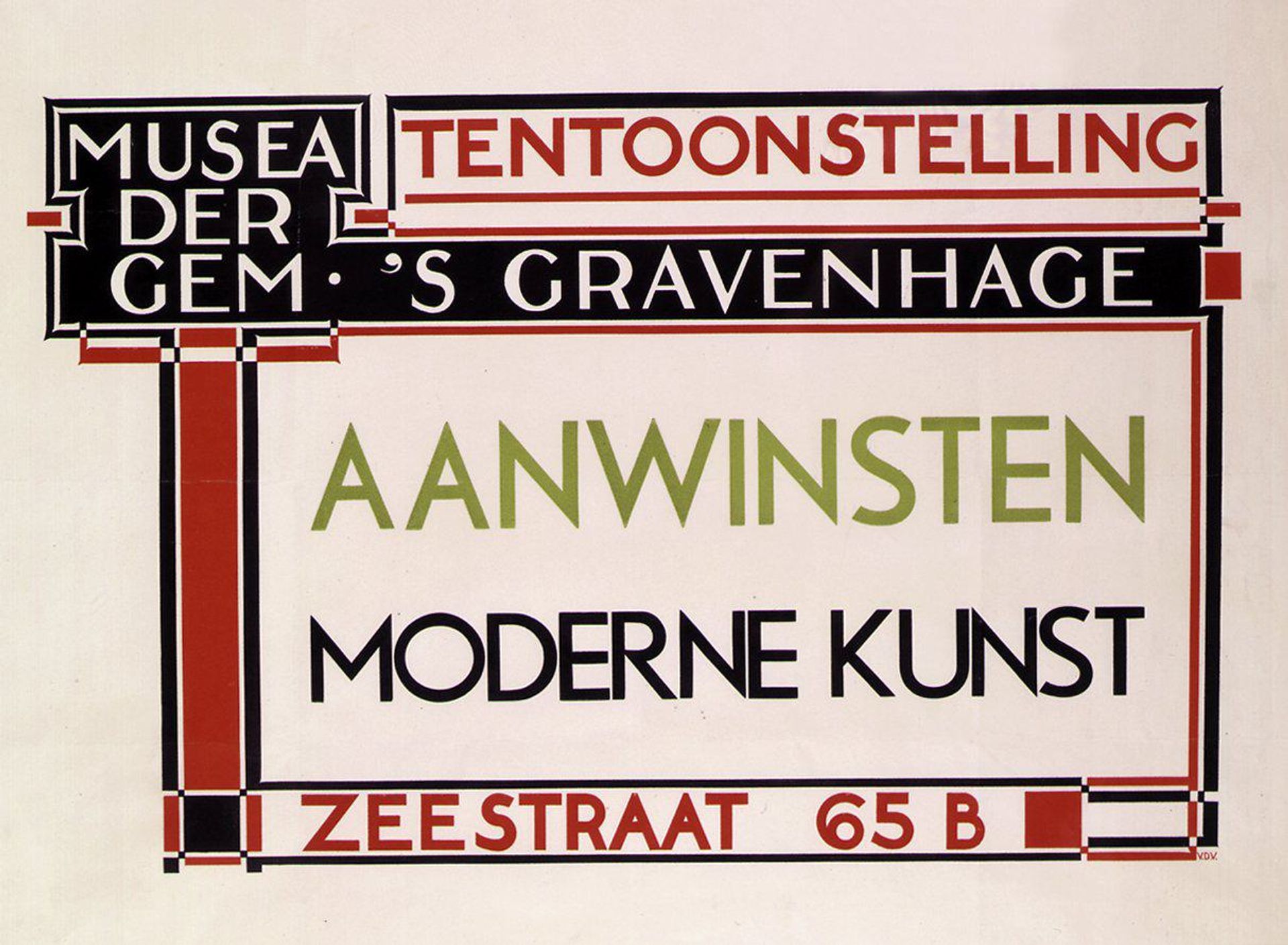
This exhibition poster, advertising “Modern Art” at the Hague, is anonymously made and employs a combination of ink and paper to create an image that is both informative and visually striking. The flat colors and sharp lines suggest a printing process, perhaps lithography or screen printing. The design relies on the interplay of bold geometric shapes and carefully chosen typography. The weight and texture of the paper itself contribute to the overall effect, lending a tactile quality to the image. Consider how the design reflects the visual language of early 20th-century modernism. The simplified forms and emphasis on functionality align with the era's broader interest in industrial production and mass communication. It's an example of how art intersects with commerce and the promotion of cultural events. Ultimately, the poster invites us to consider the relationship between materials, methods, and meaning in the creation of visual culture. It challenges us to think about how design objects can be both functional and aesthetically compelling.
Moderne Kunst
1925


Artwork details
- Medium
- print, typography, poster
- Dimensions
- 19 x 25 in. (48.3 x 63.5 cm)
- Location
- Minneapolis Institute of Art
- Copyright
- Public Domain
Tags
art-deco
typography
typography
poster
Comments
Be the first to share your thoughts about this work.
About this artwork
This exhibition poster, advertising “Modern Art” at the Hague, is anonymously made and employs a combination of ink and paper to create an image that is both informative and visually striking. The flat colors and sharp lines suggest a printing process, perhaps lithography or screen printing. The design relies on the interplay of bold geometric shapes and carefully chosen typography. The weight and texture of the paper itself contribute to the overall effect, lending a tactile quality to the image. Consider how the design reflects the visual language of early 20th-century modernism. The simplified forms and emphasis on functionality align with the era's broader interest in industrial production and mass communication. It's an example of how art intersects with commerce and the promotion of cultural events. Ultimately, the poster invites us to consider the relationship between materials, methods, and meaning in the creation of visual culture. It challenges us to think about how design objects can be both functional and aesthetically compelling.
Comments
Be the first to share your thoughts about this work.