About this artwork
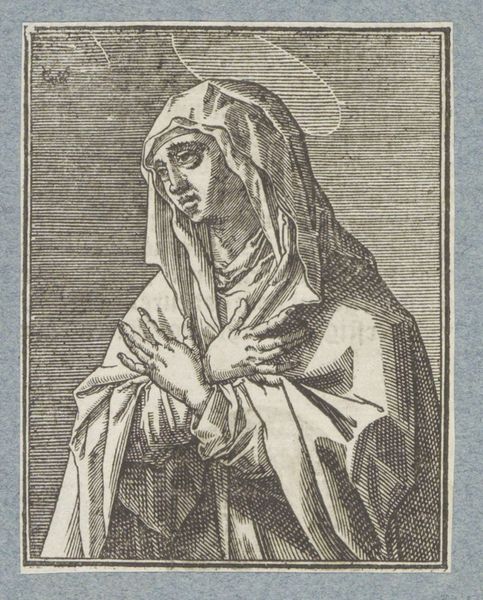
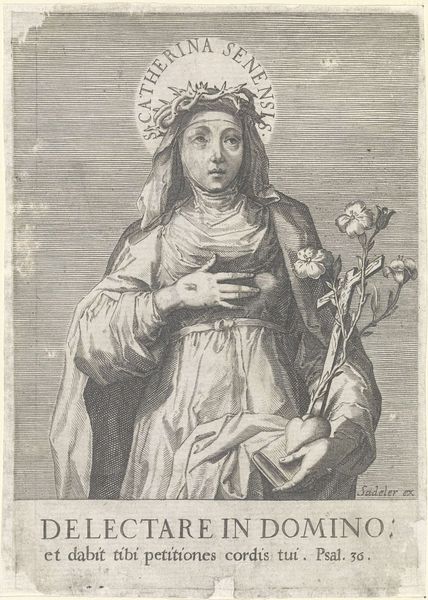
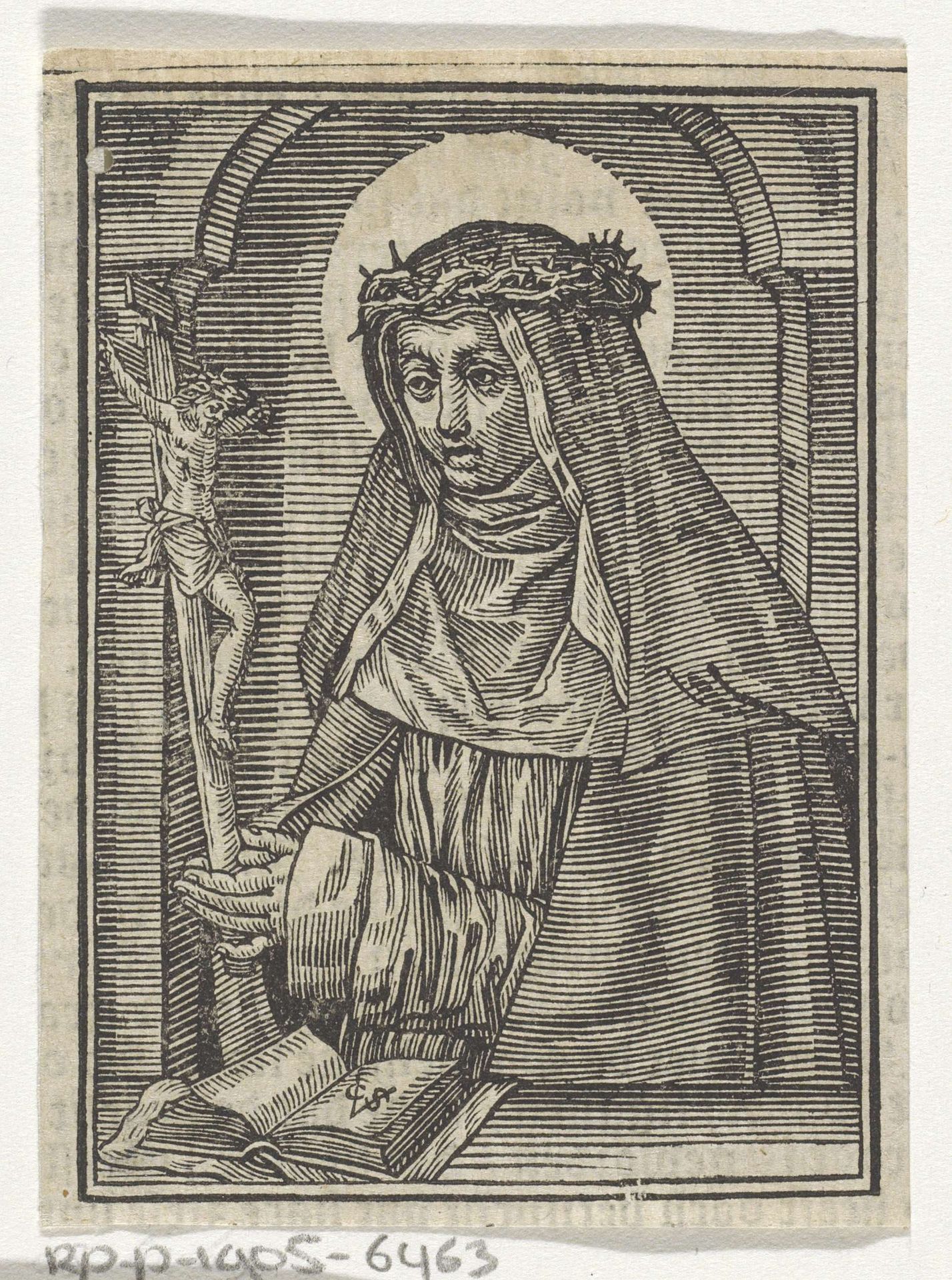
Editor: We're looking at "Heilige met een doornenkroon, een crucifix en een boek," from 1648, by Christoffel van Sichem II. It's an engraving, so black lines on white. The figure has a sort of solemn, resigned feeling. What do you see in this piece? Curator: I see the weight of the era’s socio-political constraints, particularly on women. This engraving presents a figure laden with symbols of piety and suffering. Consider the thorned crown, the crucifix – these are direct references to Christ's Passion, right? How do you interpret that within the context of the Baroque era? Editor: I guess it represents her faith? I'm just not sure how it all connects. Curator: Precisely. And think about what was considered woman's role at the time: piety, obedience, and suffering. This woman’s acceptance of her "cross," so to speak, reflects societal expectations. What's more, look at the book – is it a symbol of knowledge, or is it limited to religious text, further confining her world? The open book invites closer looking, it almost offers freedom of the press for the repressed, yet simultaneously reminds her, her identity, and indeed all women's, remains inextricably chained. Editor: That's a powerful interpretation. It reframes the image for me. It feels a lot more challenging now. Curator: It is meant to. Early modern printmakers played a crucial role in codifying and reproducing acceptable paradigms, and also resisting this cultural reduction, one of piety, religious conviction and a life confined within the walls, both of the family home, and metaphorically. Editor: This really shifts my understanding of the artwork. I went in with assumptions about simple religious iconography and didn’t really consider the broader power dynamics at play. Curator: Exactly. And that's the essence of looking at art through an intersectional lens: questioning assumptions and digging deeper into the context and narrative beyond the surface. This lens demands we interrogate everything we think we already know. Editor: Thank you. That context is super helpful to understand it from a gender studies perspective.
Heilige met een doornenkroon, een crucifix en een boek
1648

Christoffel van (II) Sichem
1581 - 1658Location
RijksmuseumArtwork details
- Medium
- print, engraving
- Dimensions
- height 82 mm, width 61 mm
- Location
- Rijksmuseum
- Copyright
- Rijks Museum: Open Domain
Tags
Comments
Share your thoughts
About this artwork
Editor: We're looking at "Heilige met een doornenkroon, een crucifix en een boek," from 1648, by Christoffel van Sichem II. It's an engraving, so black lines on white. The figure has a sort of solemn, resigned feeling. What do you see in this piece? Curator: I see the weight of the era’s socio-political constraints, particularly on women. This engraving presents a figure laden with symbols of piety and suffering. Consider the thorned crown, the crucifix – these are direct references to Christ's Passion, right? How do you interpret that within the context of the Baroque era? Editor: I guess it represents her faith? I'm just not sure how it all connects. Curator: Precisely. And think about what was considered woman's role at the time: piety, obedience, and suffering. This woman’s acceptance of her "cross," so to speak, reflects societal expectations. What's more, look at the book – is it a symbol of knowledge, or is it limited to religious text, further confining her world? The open book invites closer looking, it almost offers freedom of the press for the repressed, yet simultaneously reminds her, her identity, and indeed all women's, remains inextricably chained. Editor: That's a powerful interpretation. It reframes the image for me. It feels a lot more challenging now. Curator: It is meant to. Early modern printmakers played a crucial role in codifying and reproducing acceptable paradigms, and also resisting this cultural reduction, one of piety, religious conviction and a life confined within the walls, both of the family home, and metaphorically. Editor: This really shifts my understanding of the artwork. I went in with assumptions about simple religious iconography and didn’t really consider the broader power dynamics at play. Curator: Exactly. And that's the essence of looking at art through an intersectional lens: questioning assumptions and digging deeper into the context and narrative beyond the surface. This lens demands we interrogate everything we think we already know. Editor: Thank you. That context is super helpful to understand it from a gender studies perspective.
Comments
Share your thoughts