About this artwork
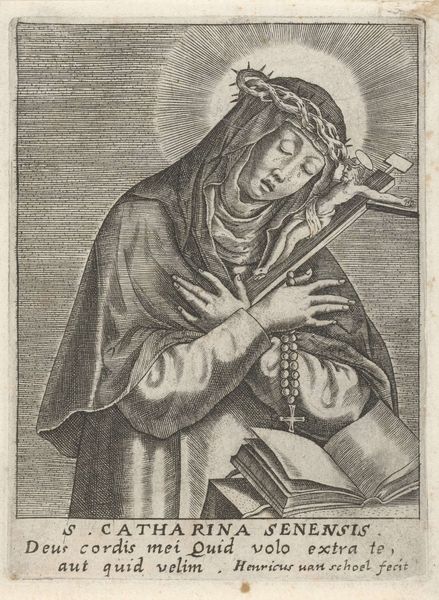
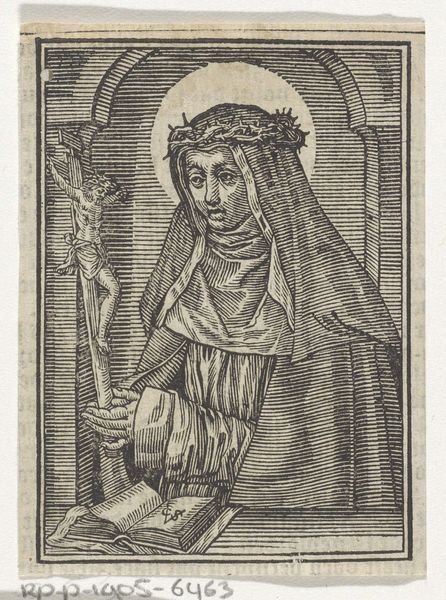
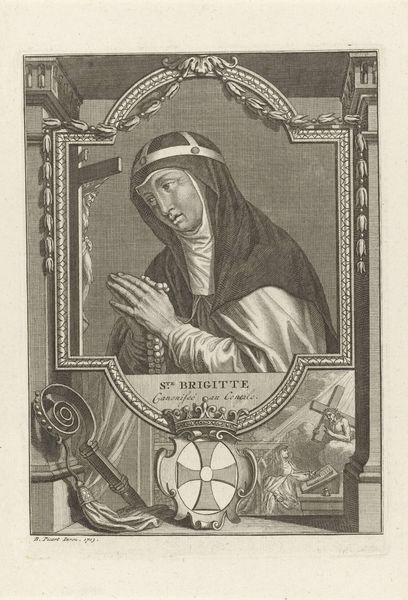
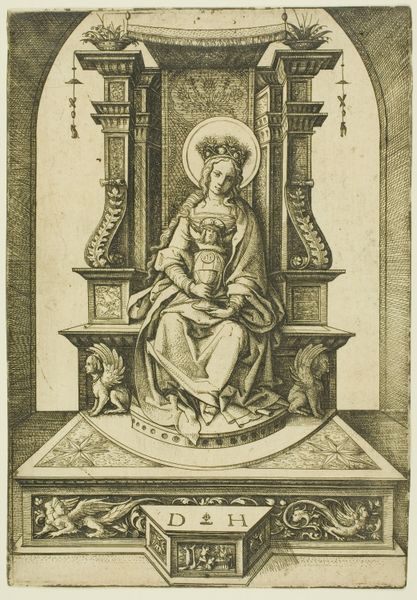
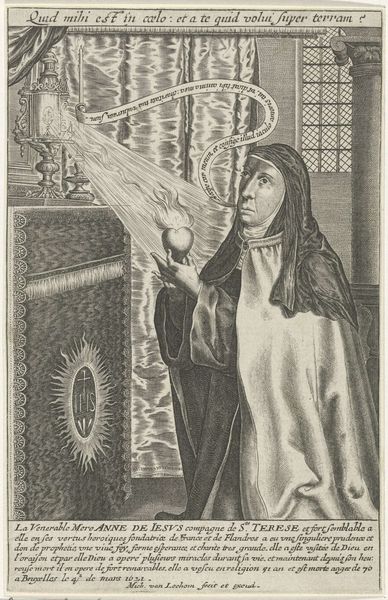
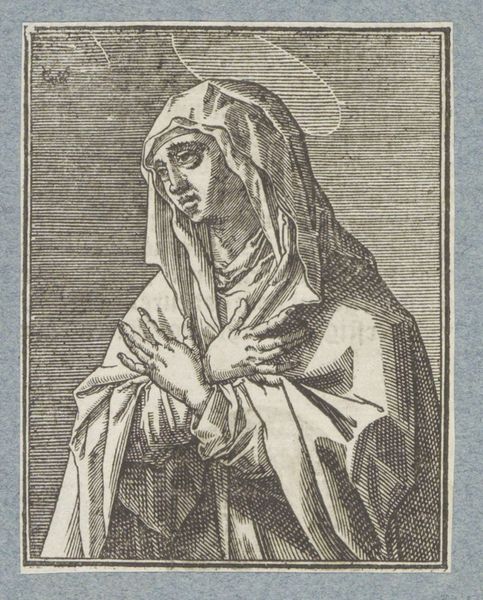
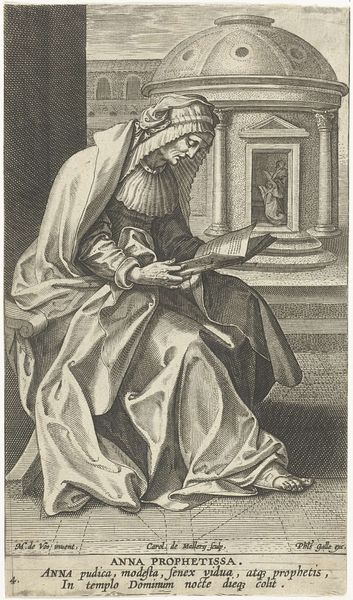
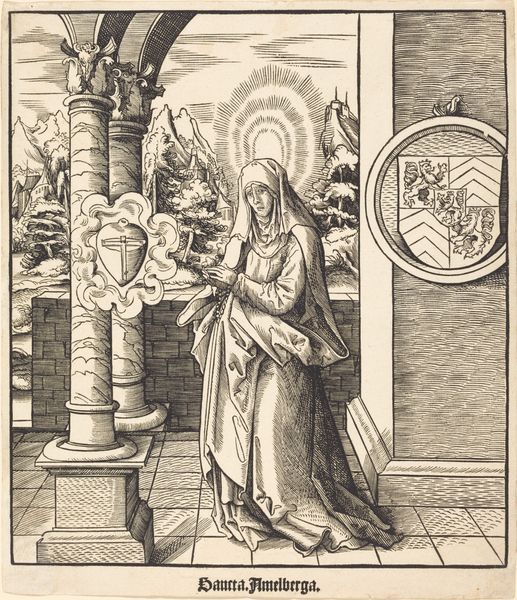
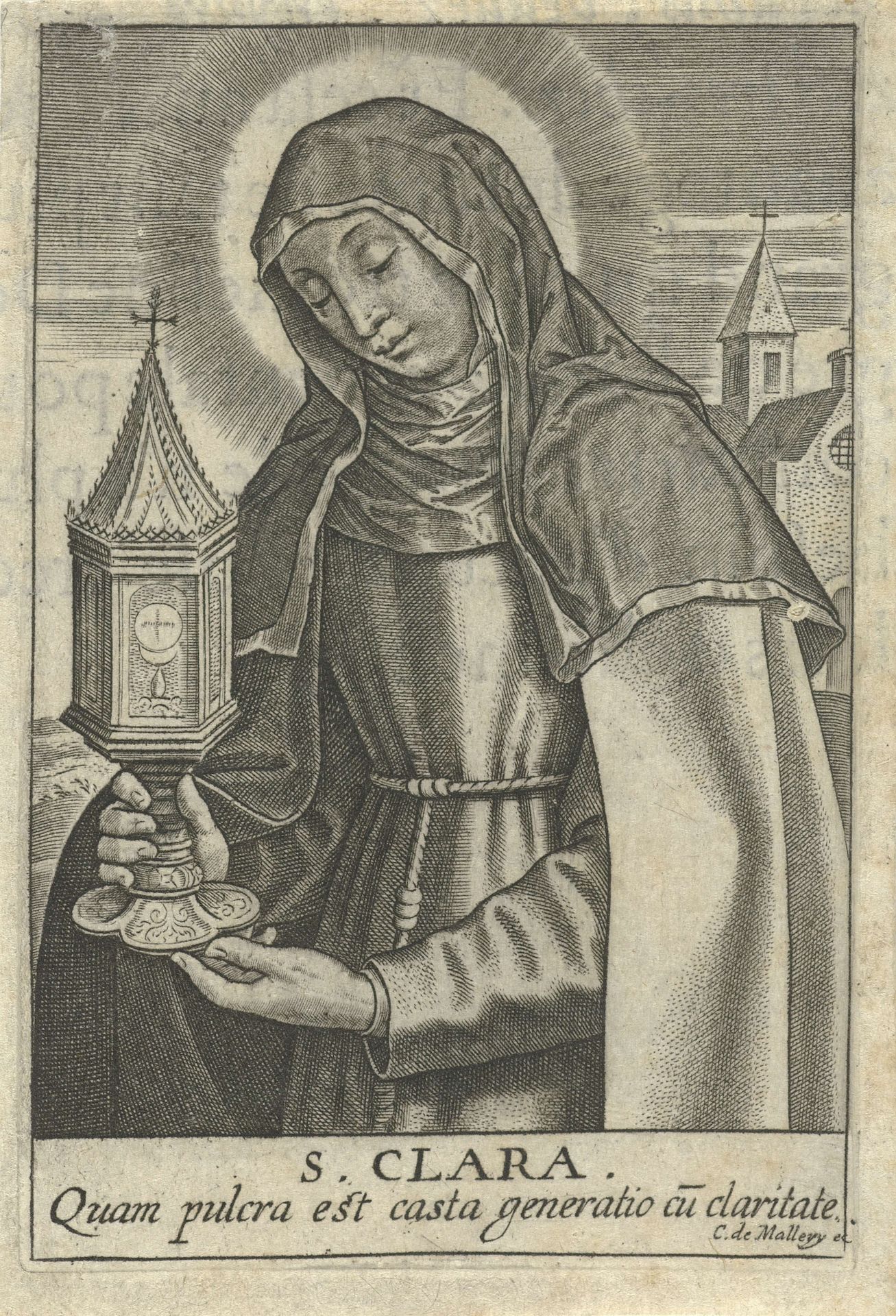
"H. Clara" is an engraving made by Karel van Mallery sometime between the late 16th and mid-17th century. Van Mallery, living in the Southern Netherlands during the Counter-Reformation, was part of a society grappling with religious identity and the role of the church. The print depicts Saint Clara of Assisi, who abandoned a life of nobility to found the Order of Poor Ladies, known today as the Poor Clares. Here, she is shown holding a monstrance. It refers to a story where she warded off an attack on her convent by holding up the Blessed Sacrament. The engraving is interesting in its emotional resonance. Clara’s downcast eyes are rendered with exquisite detail which invites introspection and empathy. Van Mallery frames Clara as an active agent, a woman who used her faith to protect herself and her sisters. The inscription beneath the image, "Quam pulcra est casta generatio cu claritate," celebrates chastity and spiritual clarity. It asks us to consider the power of female piety during a time of great religious and political upheaval.

Artwork details
- Medium
- print, engraving
- Dimensions
- height 80 mm, width 53 mm
- Location
- Rijksmuseum
- Copyright
- Rijks Museum: Open Domain
Tags
portrait
baroque
old engraving style
engraving
Comments
No comments
About this artwork
"H. Clara" is an engraving made by Karel van Mallery sometime between the late 16th and mid-17th century. Van Mallery, living in the Southern Netherlands during the Counter-Reformation, was part of a society grappling with religious identity and the role of the church. The print depicts Saint Clara of Assisi, who abandoned a life of nobility to found the Order of Poor Ladies, known today as the Poor Clares. Here, she is shown holding a monstrance. It refers to a story where she warded off an attack on her convent by holding up the Blessed Sacrament. The engraving is interesting in its emotional resonance. Clara’s downcast eyes are rendered with exquisite detail which invites introspection and empathy. Van Mallery frames Clara as an active agent, a woman who used her faith to protect herself and her sisters. The inscription beneath the image, "Quam pulcra est casta generatio cu claritate," celebrates chastity and spiritual clarity. It asks us to consider the power of female piety during a time of great religious and political upheaval.
Comments
No comments