About this artwork
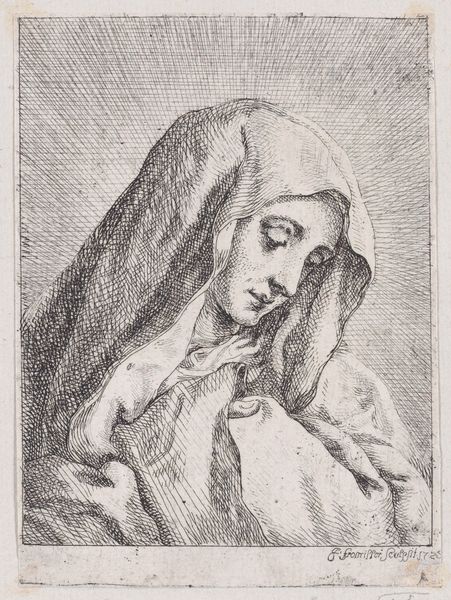
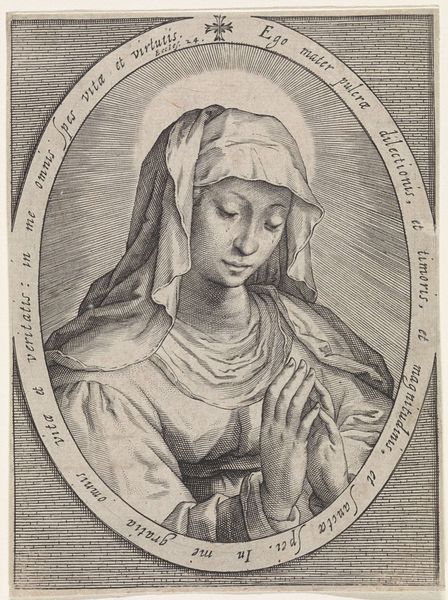
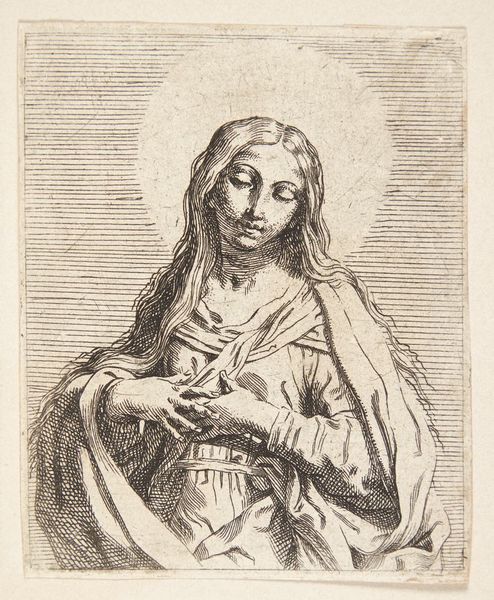
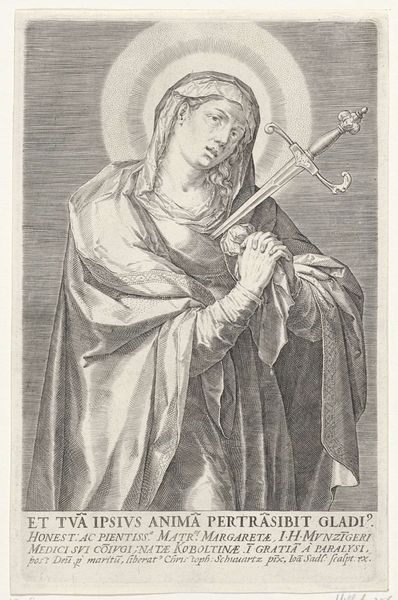
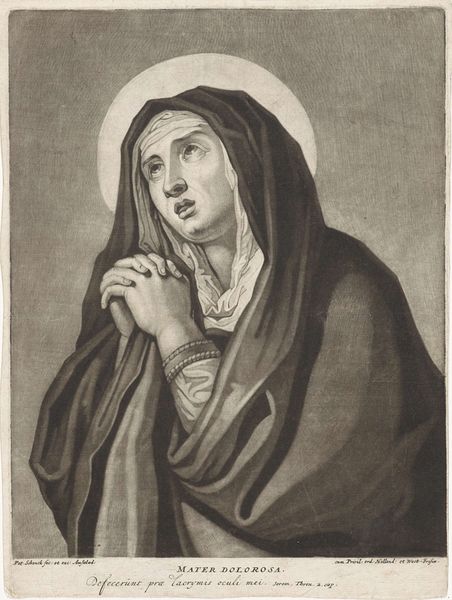
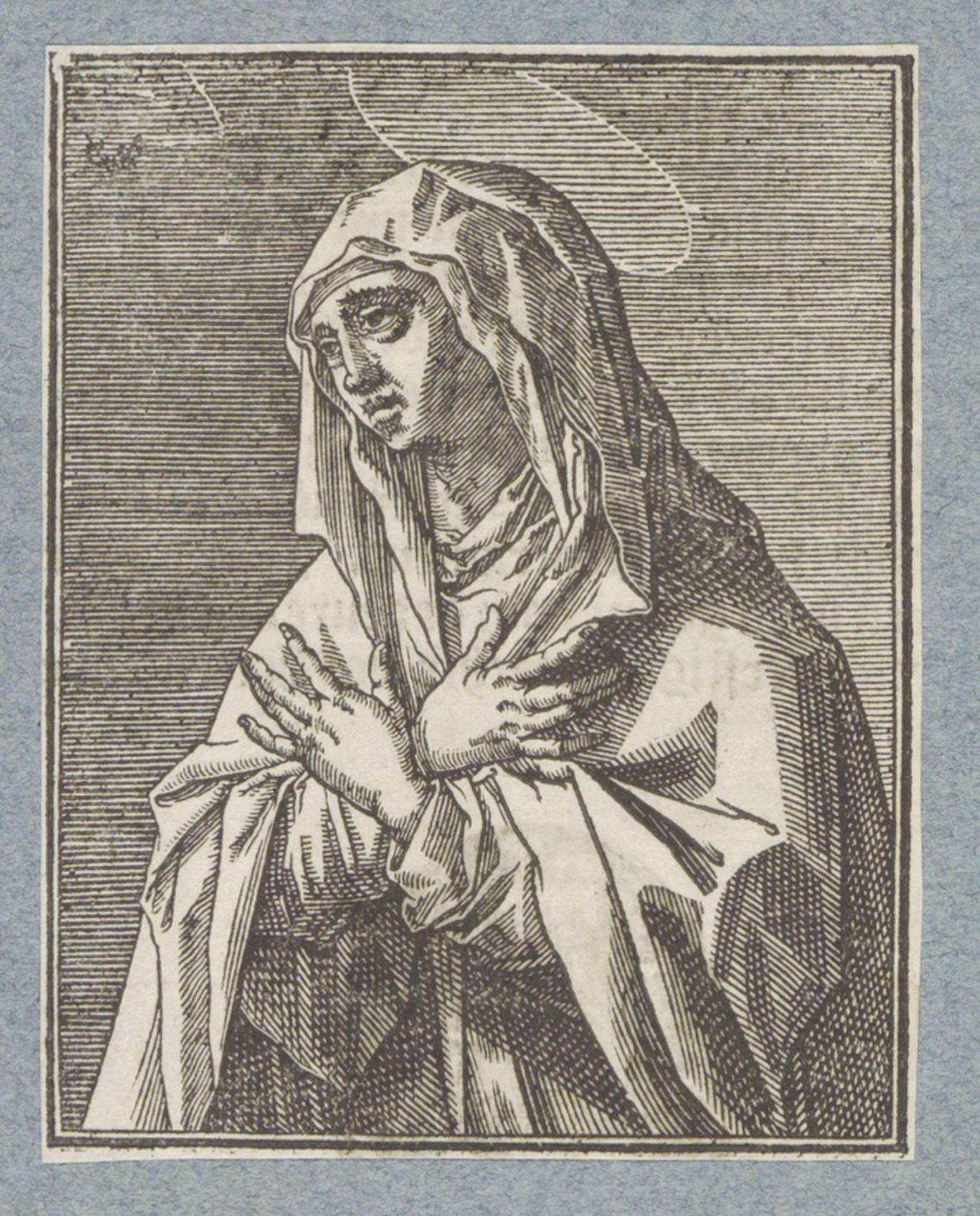
This is Rouwende Maria, or Mourning Mary, an engraving made by Christoffel van Sichem the Younger. Sichem was a second-generation printmaker; engraving was a family business. It involved painstaking labor to incise an image into a metal plate, which was then inked and used to make multiple impressions. The marks are the message here. Look closely at the fine parallel lines that define the form, a sort of scrim that captures light and shadow. The image’s meaning is inseparable from this matrix of tiny cuts, each one demanding focused effort. It is a kind of devotional act, mirroring Mary’s own grief. The print medium also allowed for the wide dissemination of this image, making it accessible to a broad audience. So while this may appear to be a straightforward religious image, it is also deeply embedded in the history of craft, labor, and the rise of print culture. A potent reminder that art is always connected to wider social and economic forces.

Artwork details
- Medium
- print, engraving
- Dimensions
- height 81 mm, width 63 mm
- Location
- Rijksmuseum
- Copyright
- Rijks Museum: Open Domain
Tags
Comments
Share your thoughts
About this artwork
This is Rouwende Maria, or Mourning Mary, an engraving made by Christoffel van Sichem the Younger. Sichem was a second-generation printmaker; engraving was a family business. It involved painstaking labor to incise an image into a metal plate, which was then inked and used to make multiple impressions. The marks are the message here. Look closely at the fine parallel lines that define the form, a sort of scrim that captures light and shadow. The image’s meaning is inseparable from this matrix of tiny cuts, each one demanding focused effort. It is a kind of devotional act, mirroring Mary’s own grief. The print medium also allowed for the wide dissemination of this image, making it accessible to a broad audience. So while this may appear to be a straightforward religious image, it is also deeply embedded in the history of craft, labor, and the rise of print culture. A potent reminder that art is always connected to wider social and economic forces.
Comments
Share your thoughts