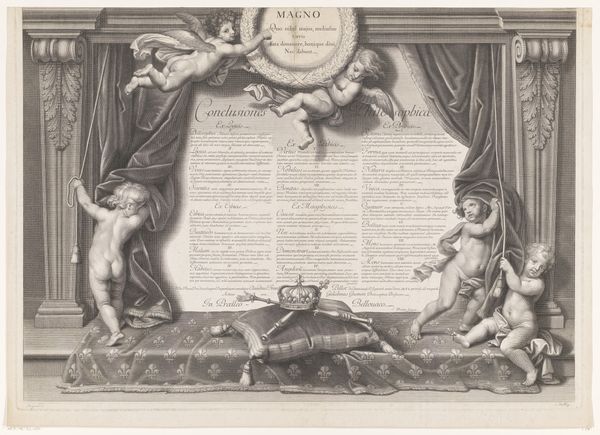
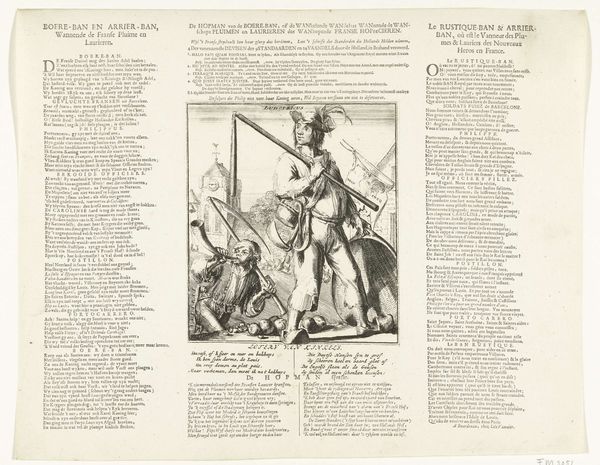
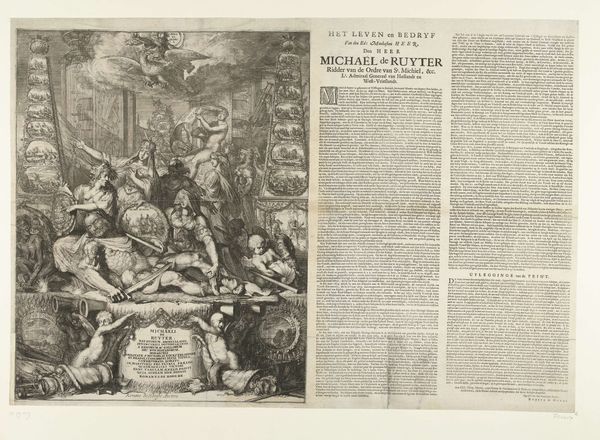
Allegorisch ruiterportret van Lodewijk XIV, koning van Frankrijk 1677
0:00
0:00

gerardedelinck
Rijksmuseum
engraving
#
allegory
#
baroque
#
history-painting
#
engraving
Dimensions: height 580 mm, width 764 mm
Copyright: Rijks Museum: Open Domain
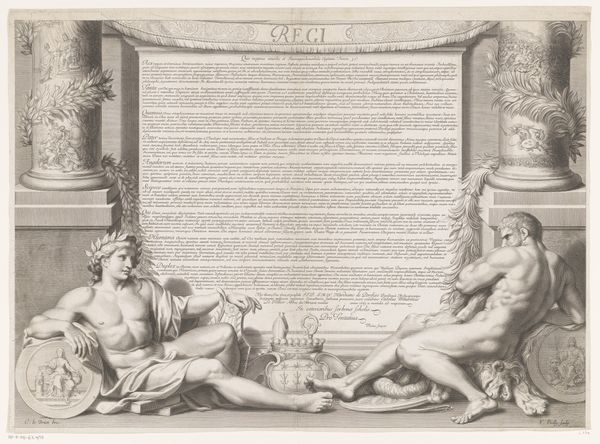
Curator: This impressive engraving is entitled “Allegorical Equestrian Portrait of Louis XIV, King of France," crafted in 1677 by Gérard Edelinck. It’s currently housed here at the Rijksmuseum. What are your first thoughts? Editor: It strikes me as a forceful expression of power and dominion. The use of monochrome emphasizes a monumental quality, further enhanced by the dramatic, almost theatrical framing devices that surround the central text. Curator: Absolutely. The text is central to the image, positioned within this incredible framework full of symbolism. The overall image is clearly meant to assert Louis XIV’s authority and paint him in an ideal, even mythic, light. The history painting elements solidify his place within a grand narrative of power. Editor: The allegorical elements here speak volumes about the process of crafting these images and circulating the ideas through printmaking. This isn't just about glorifying the king. How much labour and resources are needed to generate this political message? Look at the border where male figures labor intensely. Curator: And indeed, their bodies seem to strain under the weight, contrasting the idealized portrait with the human cost of maintaining power. Even more interesting is the positioning of what seems like a enslaved leopard beneath, which underscores narratives of colonization during that era. These details demand we engage with the broader social and historical context surrounding Louis XIV's reign. Editor: The engraving medium itself is quite compelling when considering its proliferation during this time. Edelinck’s use of this medium demonstrates how power used existing and innovative modes of production and reproduction in service to its narrative, disseminating ideals about monarchy through printed imagery. Curator: A key consideration. We see how these kinds of images, particularly engravings like this one, can serve as valuable tools for exploring themes of identity, race, and power during the Baroque period. How can we, today, understand such intricate systems that produce these kinds of works and their circulation? Editor: By tracing back the materials and labor it took to disseminate an idea of authority and power. The paper, the ink, and the labor of the artist speak volumes when thinking about material reality. Curator: A perfect ending note, reflecting on how both narrative and method shape our comprehension. Editor: A material analysis coupled with a historicized view provides richer grounds for thought.
Comments
No comments
Be the first to comment and join the conversation on the ultimate creative platform.
 Collect
 React
React Comment
More like this