engraving
#
portrait
#
allegory
#
baroque
#
classical-realism
#
figuration
#
line
#
history-painting
#
academic-art
#
engraving
Dimensions: height 459 mm, width 630 mm
Copyright: Rijks Museum: Open Domain
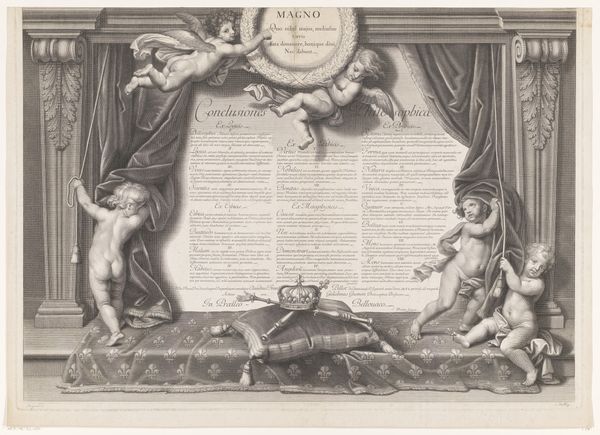
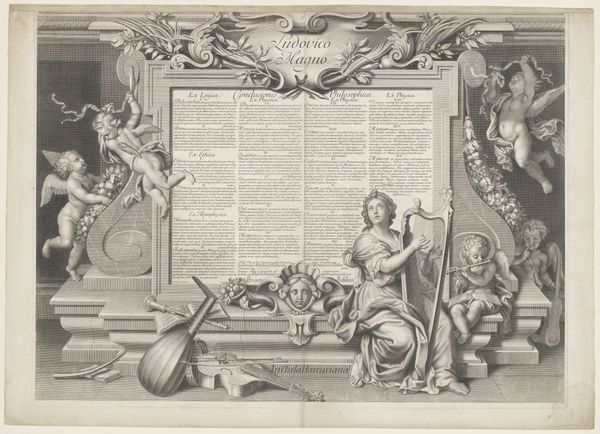
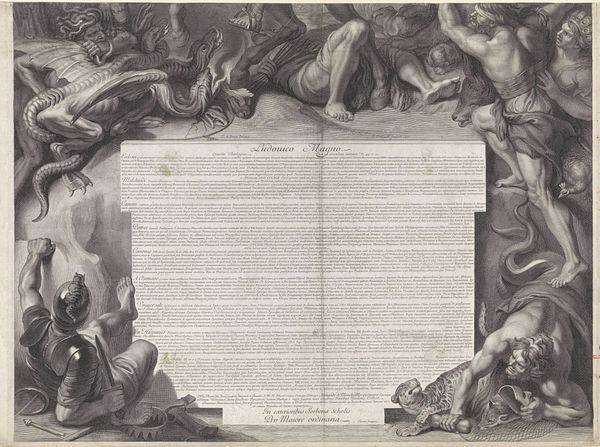
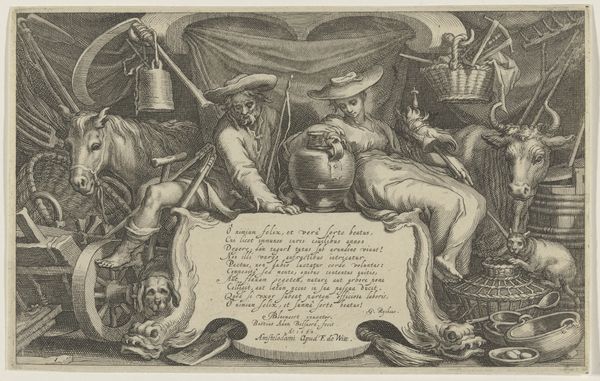
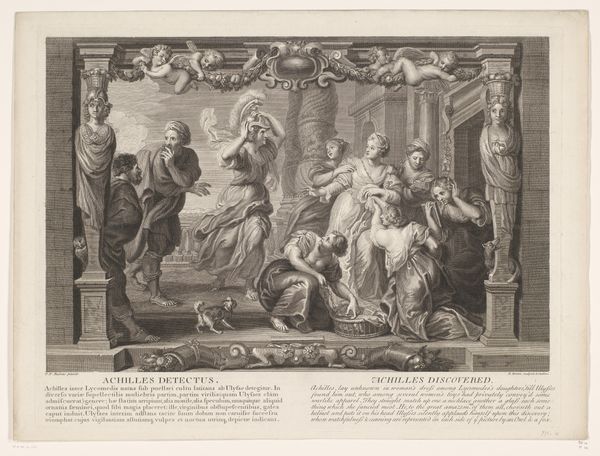
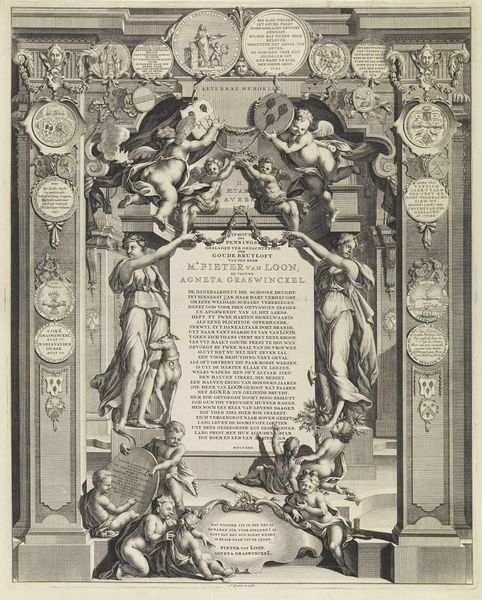
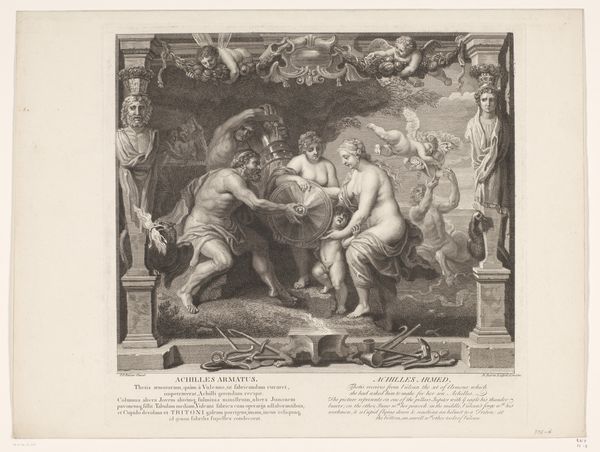
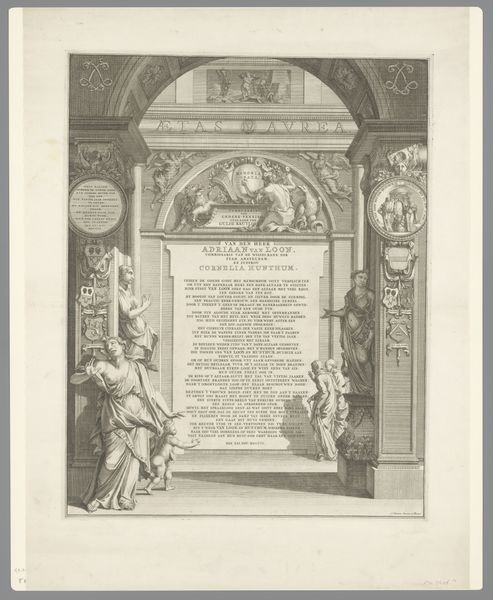
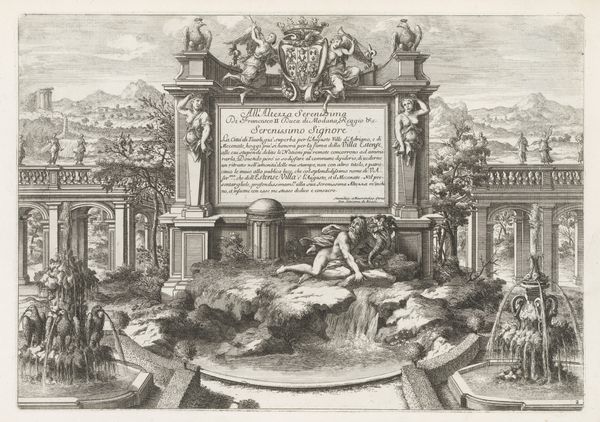
This allegorical portrait of Louis XIV was made by Francois de Poilly, likely in the latter half of the 17th century. It's an engraving, meaning the image was incised into a metal plate, which was then inked and printed onto paper. Think about the labor involved in such a process: the meticulous cutting of lines, the skilled application of ink, and the operation of the printing press itself. This wasn't just about making an image; it was about mass production, creating multiples for distribution. The linear character of engraving lends itself well to the depiction of texture and detail. You can see it in the folds of the drapery, the musculature of the figures, and the intricate lettering. The choice of engraving speaks to the social context as well. It was a way to disseminate images of power, to project an aura of authority and permanence. Yet, it also democratized representation, making it accessible to a wider audience. This print reminds us that even seemingly straightforward images are imbued with the labor, skill, and social forces that brought them into being.
Comments
No comments
Be the first to comment and join the conversation on the ultimate creative platform.
 Collect
 React
React Comment
More like this