1693 - 1695
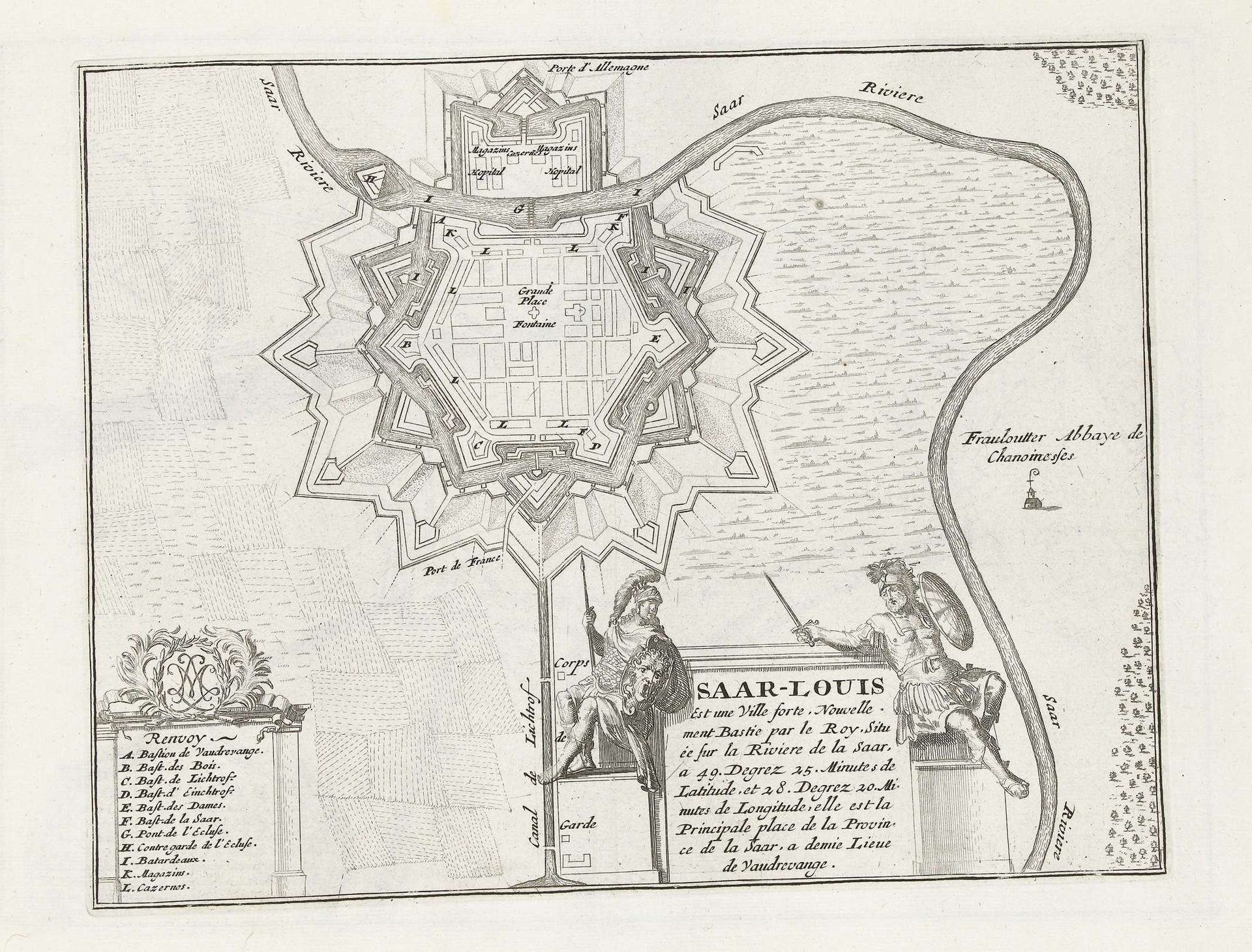
Plattegrond van Saarlouis, ca. 1693-1695

Anonymous
@anonymousLocation
RijksmuseumListen to curator's interpretation
Curatorial notes
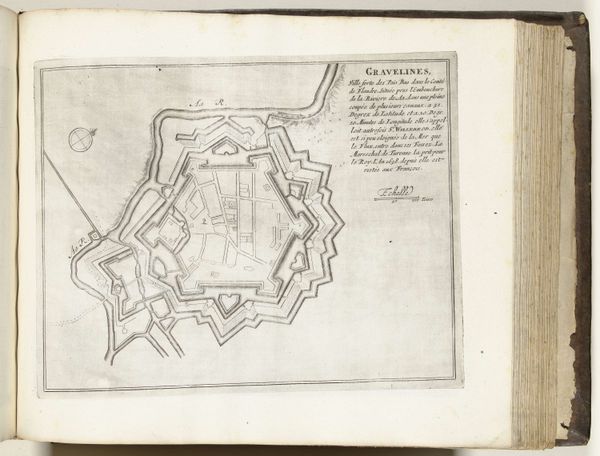
Curator: This intriguing print is entitled "Plattegrond van Saarlouis," dating to about 1693-1695. The identity of the artist is unknown, but it’s held in the collection of the Rijksmuseum. Editor: It's captivating. The sharp lines of the fortification create such a dramatic geometric pattern— almost a kind of visual fortress. There's a cold, austere quality that immediately strikes me. Curator: Indeed. The Baroque period, to which this print belongs, favored a grand, almost theatrical aesthetic. This piece uses that drama, but to project power through architectural precision, suggesting the imposition of control and order. Editor: It’s like a carefully orchestrated visual declaration. The rivers, rendered so precisely, create visual flow around the structure; its star shape pushing out with near threatening angles. There is definitely a statement being made about centrality and inescapable authority here. Curator: Absolutely. The city plan as image, also performs a role as a political declaration, an attempt to create the impression of an impenetrable urban structure. Those sharp angles act almost like sun rays from the center point: domination. Editor: The allegorical figures flanking the "SAAR-LOUIS" inscription solidify this theme, lending a near militaristic feel. They act as symbols of strength. This map projects not just a place but a constructed identity; a fortress made not of just walls, but also meaning. It speaks volumes about the era's power structures. Curator: Agreed, the cultural weight here is impressive. This engraving, far beyond just cartography, conveys the ambition and cultural landscape of its time. A statement through strategic deployment of form and imagery. Editor: It's amazing how a seemingly simple plan can radiate such intense ideas about control and dominion, just through composition and deliberate lines. The visual encoding is impressive!