About this artwork
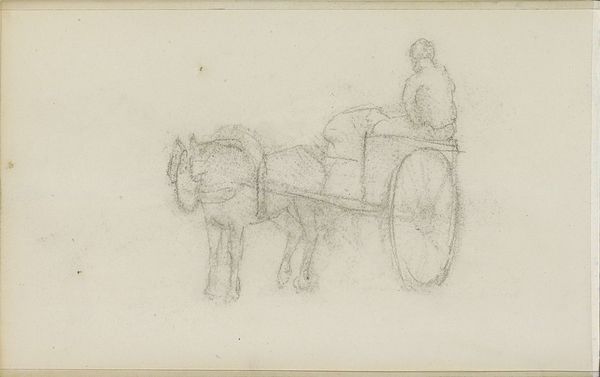
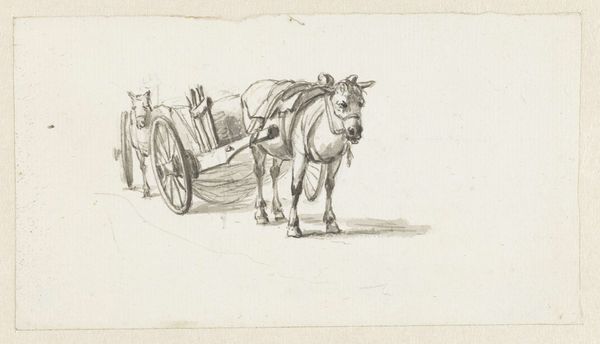
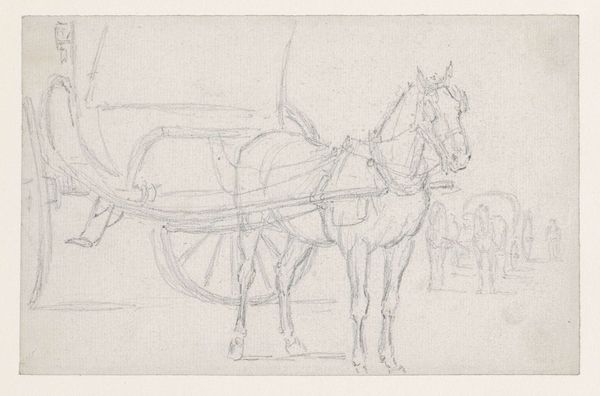
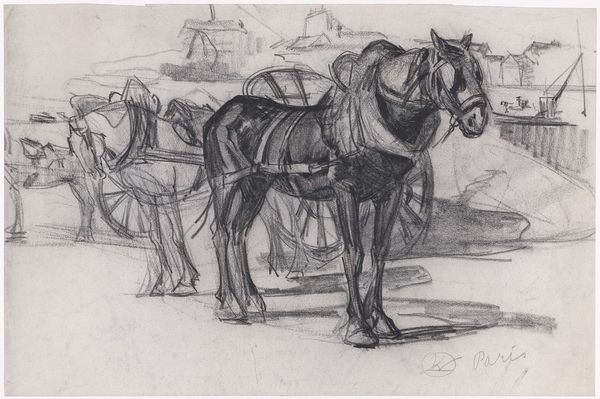
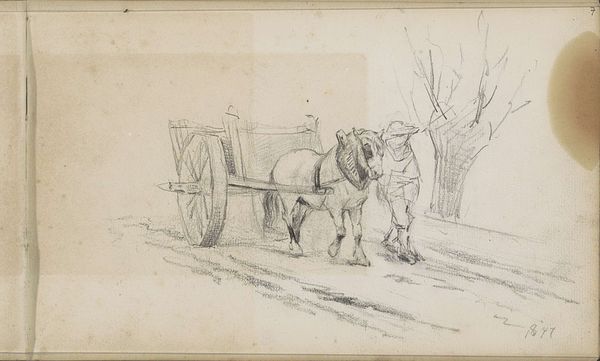
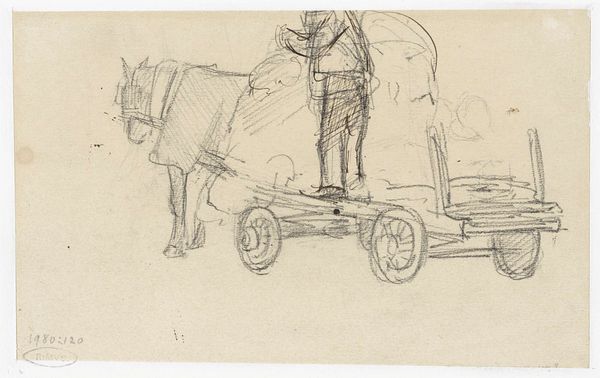
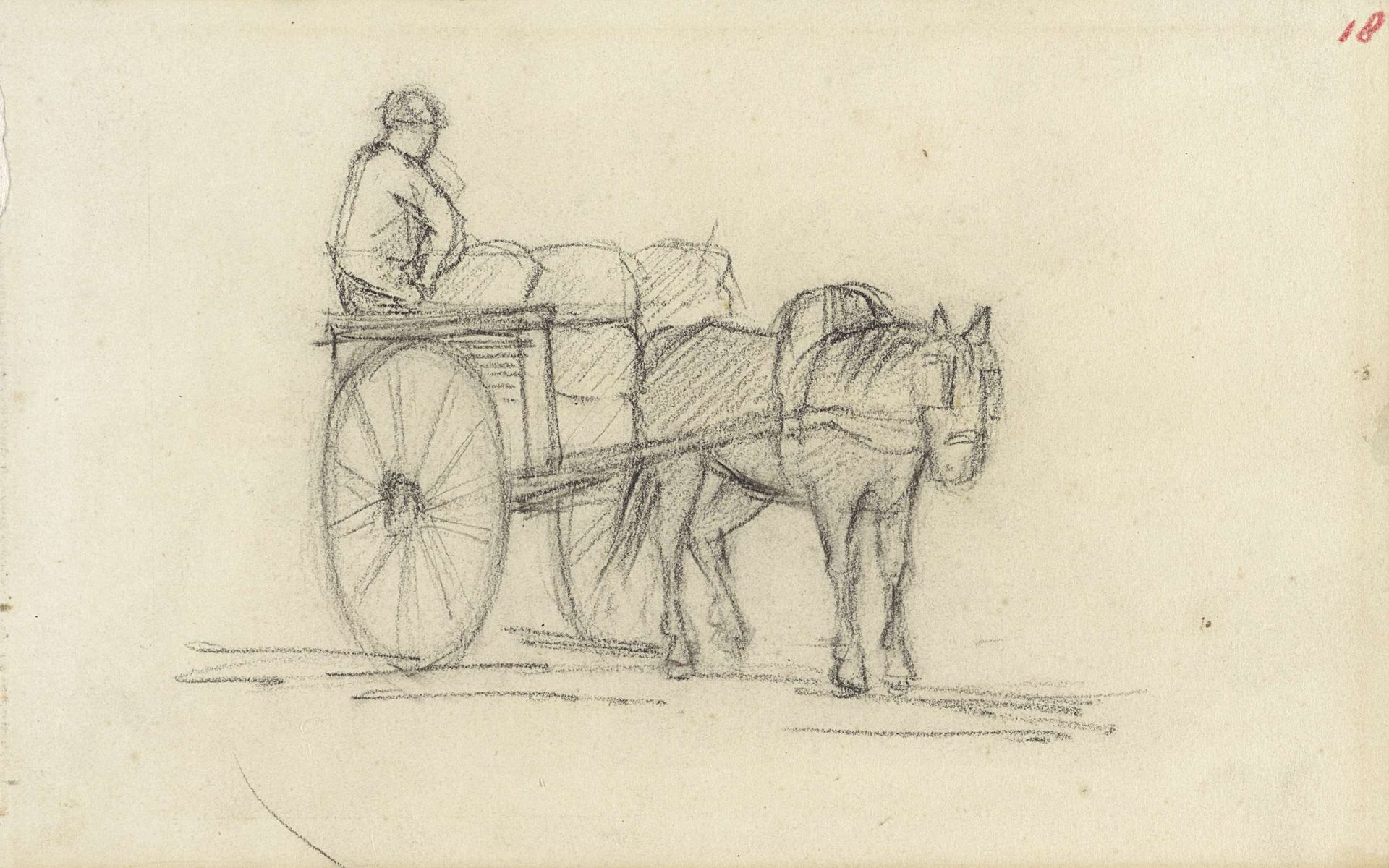
Jozef Israëls made this drawing, "Horse and cart with a man on it," with graphite on paper. Graphite is an interesting material. We find it in pencils today, but in the nineteenth century, it was also used in industrial processes, as a lubricant. Here, Israëls uses it to quickly capture a scene of everyday labor. Note how the marks vary in pressure, some dark and certain, others light and searching. The sketch shows the amount of work involved in moving goods before mechanization fully took hold. The weight of the graphite lines seems to mirror the burden on the horse. The artist’s hand is evident, the image rapidly captured, as if the artist was in a hurry to record the scene. The immediacy of the medium allows for a direct connection to the subject. It reminds us that even a simple sketch carries layers of meaning, all connected to the materials, the making, and the context of its creation.

Artwork details
- Medium
- drawing, pencil
- Dimensions
- height 131 mm, width 210 mm
- Location
- Rijksmuseum
- Copyright
- Rijks Museum: Open Domain
Tags
drawing
pencil sketch
landscape
pencil
realism
Comments
No comments
About this artwork
Jozef Israëls made this drawing, "Horse and cart with a man on it," with graphite on paper. Graphite is an interesting material. We find it in pencils today, but in the nineteenth century, it was also used in industrial processes, as a lubricant. Here, Israëls uses it to quickly capture a scene of everyday labor. Note how the marks vary in pressure, some dark and certain, others light and searching. The sketch shows the amount of work involved in moving goods before mechanization fully took hold. The weight of the graphite lines seems to mirror the burden on the horse. The artist’s hand is evident, the image rapidly captured, as if the artist was in a hurry to record the scene. The immediacy of the medium allows for a direct connection to the subject. It reminds us that even a simple sketch carries layers of meaning, all connected to the materials, the making, and the context of its creation.
Comments
No comments