About this artwork
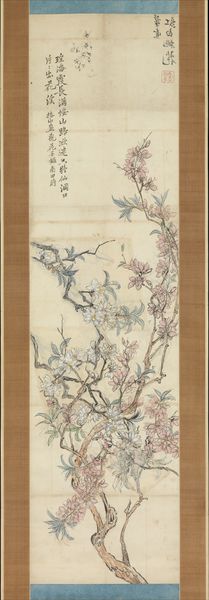
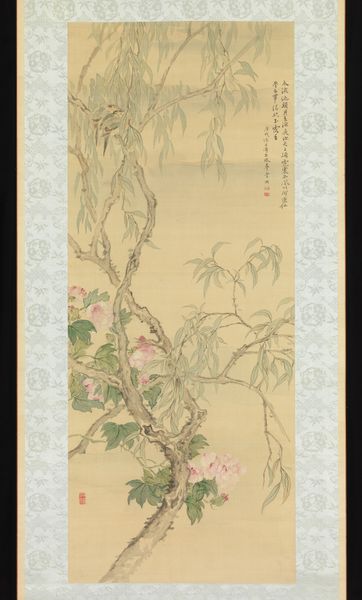
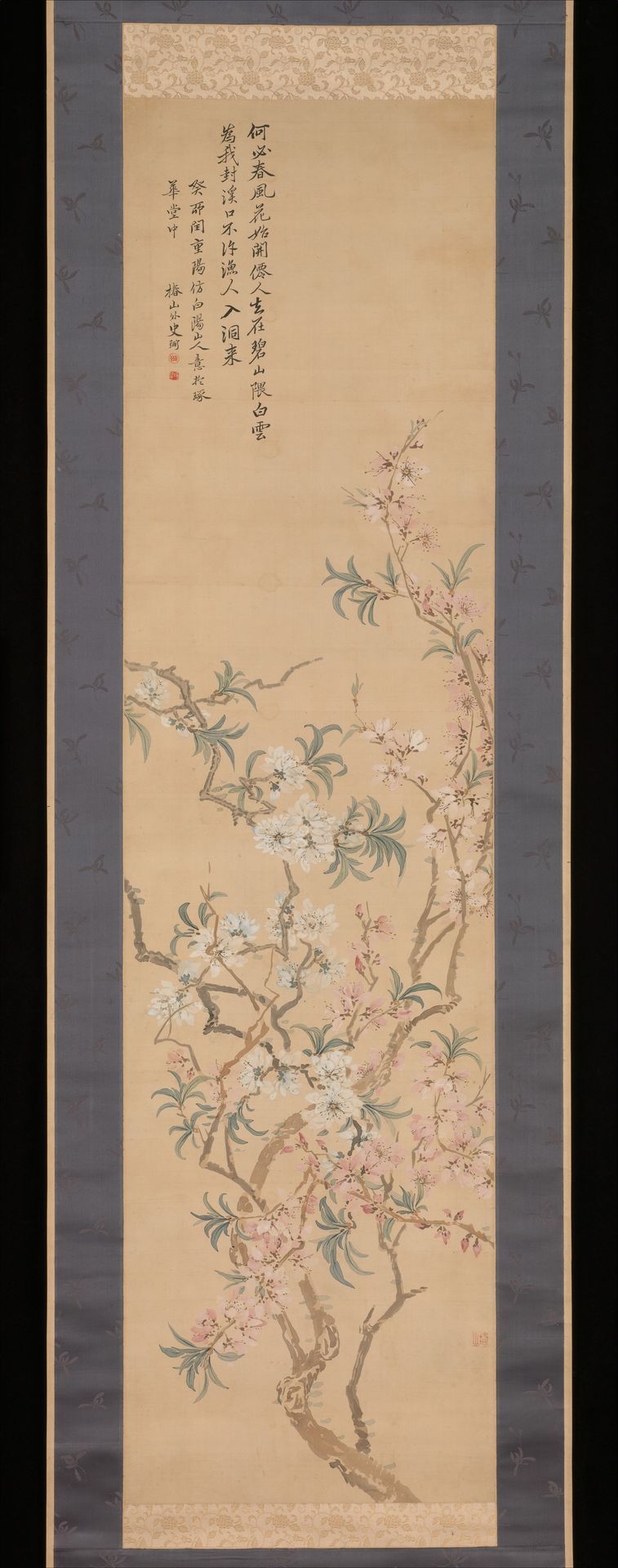
Tsubaki Chinzan painted "Red and White Peach Blossoms" on silk in 19th-century Japan, a delicate dance of color and form, imbued with symbolic weight. Here, the peach blossom, a potent symbol of spring and renewal, bursts forth. Look closely, and you'll see that in Chinese and Japanese traditions, the peach is not merely a flower, but a powerful emblem of longevity and immortality. It appears in countless tales and images, often linked to the divine. This motif is not unique. Recall the Hellenistic era with images of floral offerings to the gods, or Renaissance paintings with fruit as symbols of plenty. Over time, the peach has evolved, shifting from a sacred fruit to a symbol of feminine allure. The collective subconscious resonates with such symbols, transcending time and place. We see it re-emerging in this artwork. The painting reminds us that symbols are never static, but fluid, cyclical, and ever-evolving.
Red and White Peach Blossoms
1843

Tsubaki Chinzan 椿椿山
1801 - 1854
The Metropolitan Museum of Art
Metropolitan Museum of Art, New York, NYArtwork details
- Medium
- painting, watercolor
- Dimensions
- Image: 55 1/2 x 14 5/8 in. (141 x 37.1 cm) Overall with mounting: 85 3/4 x 24 1/4 in. (217.8 x 61.6 cm)
- Location
- Metropolitan Museum of Art, New York, NY
- Copyright
- Public Domain
Tags
Comments
Share your thoughts
About this artwork
Tsubaki Chinzan painted "Red and White Peach Blossoms" on silk in 19th-century Japan, a delicate dance of color and form, imbued with symbolic weight. Here, the peach blossom, a potent symbol of spring and renewal, bursts forth. Look closely, and you'll see that in Chinese and Japanese traditions, the peach is not merely a flower, but a powerful emblem of longevity and immortality. It appears in countless tales and images, often linked to the divine. This motif is not unique. Recall the Hellenistic era with images of floral offerings to the gods, or Renaissance paintings with fruit as symbols of plenty. Over time, the peach has evolved, shifting from a sacred fruit to a symbol of feminine allure. The collective subconscious resonates with such symbols, transcending time and place. We see it re-emerging in this artwork. The painting reminds us that symbols are never static, but fluid, cyclical, and ever-evolving.
Comments
Share your thoughts