About this artwork
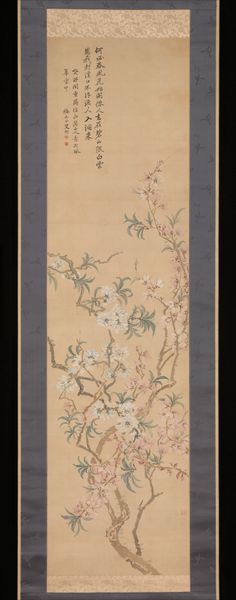
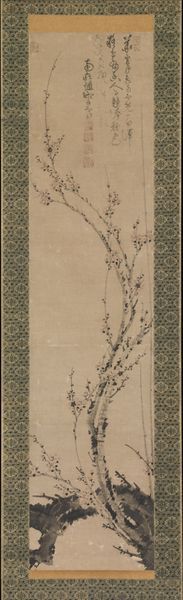
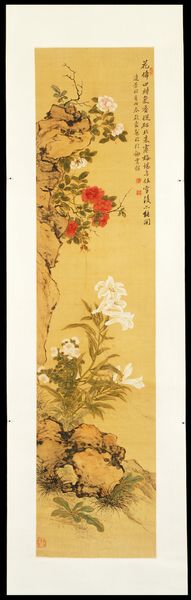
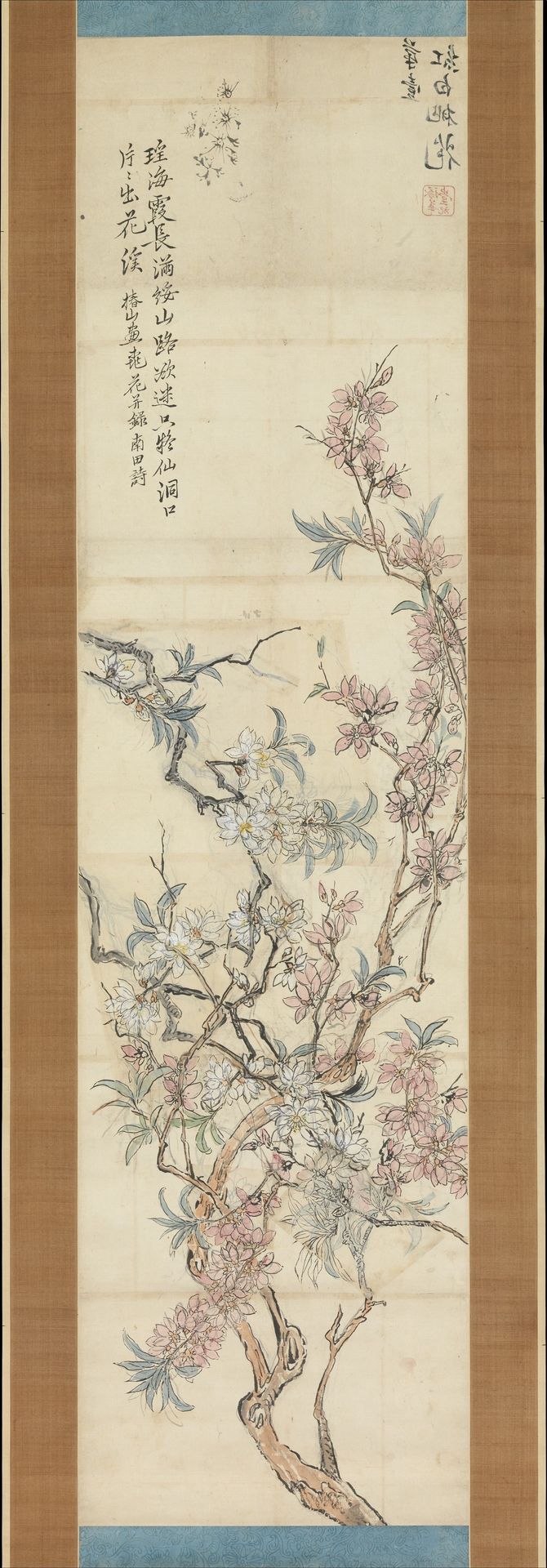
This scroll, a preparatory sketch of red and white peach blossoms, was painted by Tsubaki Chinzan in 19th-century Japan. It exemplifies the kind of art encouraged by the Tokugawa shogunate: scholarly, naturalistic, and allusive to Chinese culture. Look closely and you'll see just how deeply informed this deceptively simple sketch really is. The choice of subject matter is telling. Peach blossoms were a popular motif in Chinese art, often symbolizing longevity and feminine beauty. And yet, by depicting them in a preparatory sketch, Chinzan offers us a glimpse into the artistic process itself. Consider the role of the artist in Edo-period Japan: a figure often patronized by the ruling elite, whose work served to reinforce social hierarchies. This makes us wonder, was Chinzan challenging or reinforcing those hierarchies? To answer this, we might look to his biography, to collections of letters, or to the writings of his contemporaries. These sources help us to interpret the meaning of art as something contingent on its social and institutional context.
Red and White Peach Blossoms, Preparatory Sketch
1843

Tsubaki Chinzan 椿椿山
1801 - 1854
The Metropolitan Museum of Art
Metropolitan Museum of Art, New York, NYArtwork details
- Dimensions
- Image: 56 7/8 x 14 13/16 in. (144.5 x 37.6 cm) Overall with mounting: 85 1/4 x 24 3/16 in. (216.5 x 61.4 cm)
- Location
- Metropolitan Museum of Art, New York, NY
- Copyright
- Public Domain
Comments
Be the first to share your thoughts about this work.
About this artwork
This scroll, a preparatory sketch of red and white peach blossoms, was painted by Tsubaki Chinzan in 19th-century Japan. It exemplifies the kind of art encouraged by the Tokugawa shogunate: scholarly, naturalistic, and allusive to Chinese culture. Look closely and you'll see just how deeply informed this deceptively simple sketch really is. The choice of subject matter is telling. Peach blossoms were a popular motif in Chinese art, often symbolizing longevity and feminine beauty. And yet, by depicting them in a preparatory sketch, Chinzan offers us a glimpse into the artistic process itself. Consider the role of the artist in Edo-period Japan: a figure often patronized by the ruling elite, whose work served to reinforce social hierarchies. This makes us wonder, was Chinzan challenging or reinforcing those hierarchies? To answer this, we might look to his biography, to collections of letters, or to the writings of his contemporaries. These sources help us to interpret the meaning of art as something contingent on its social and institutional context.
Comments
Be the first to share your thoughts about this work.