About this artwork
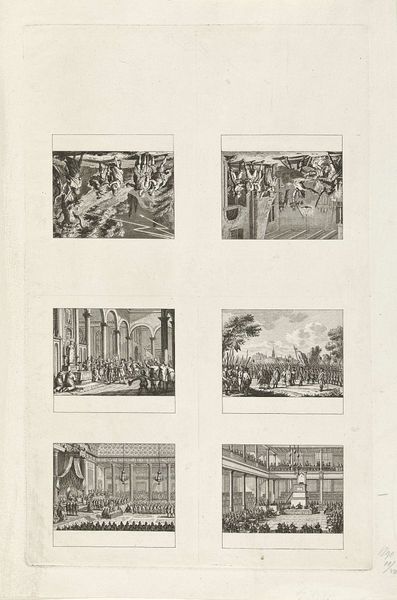
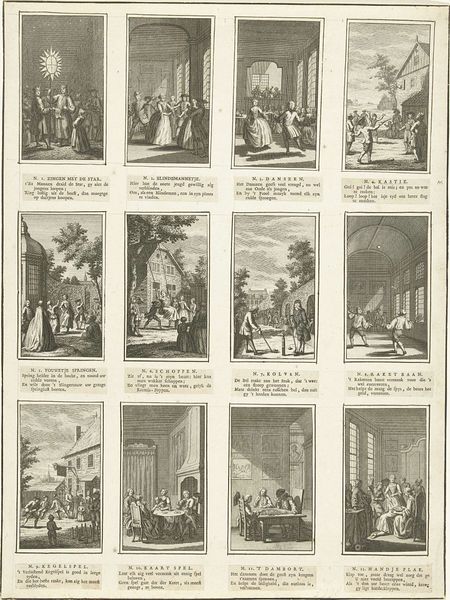
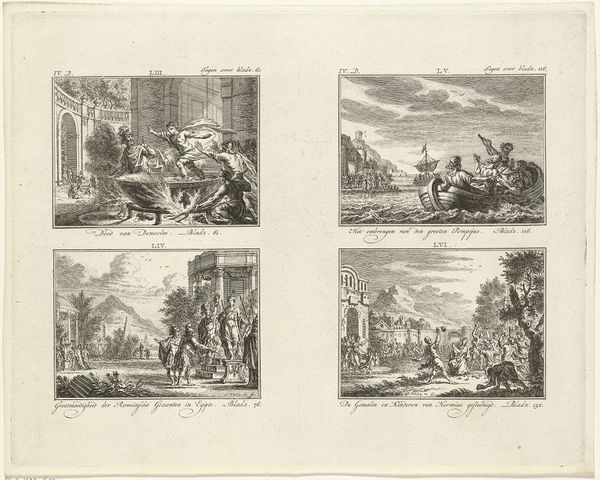
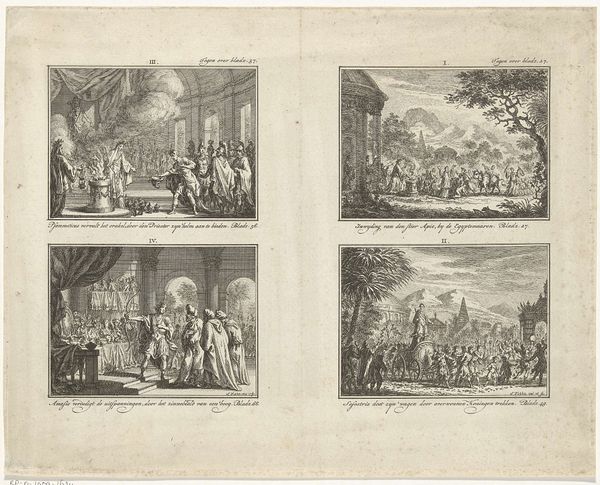
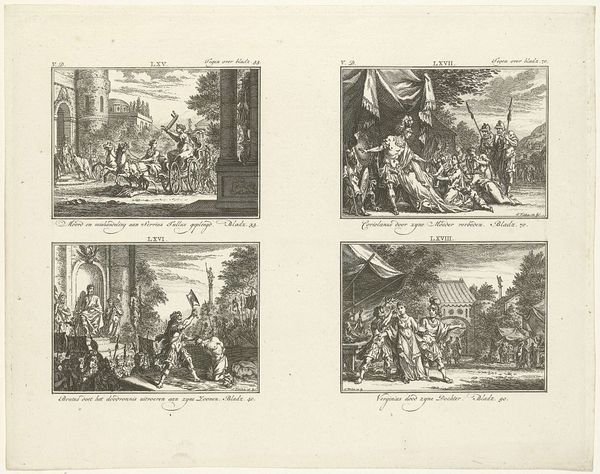
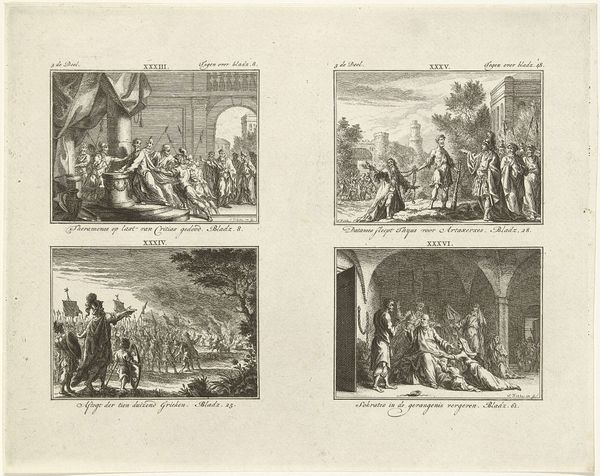
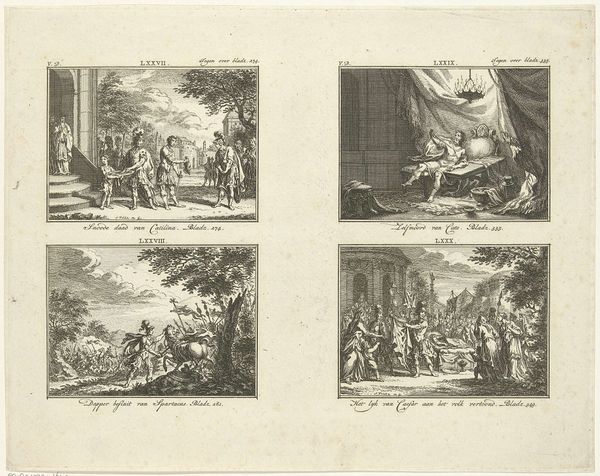
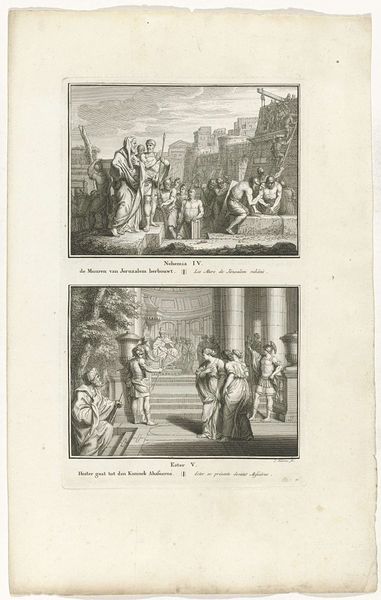
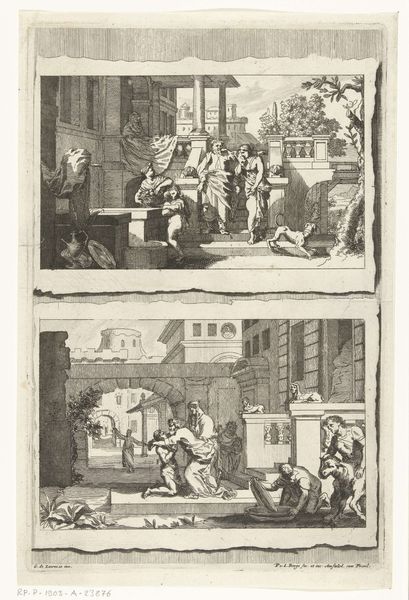
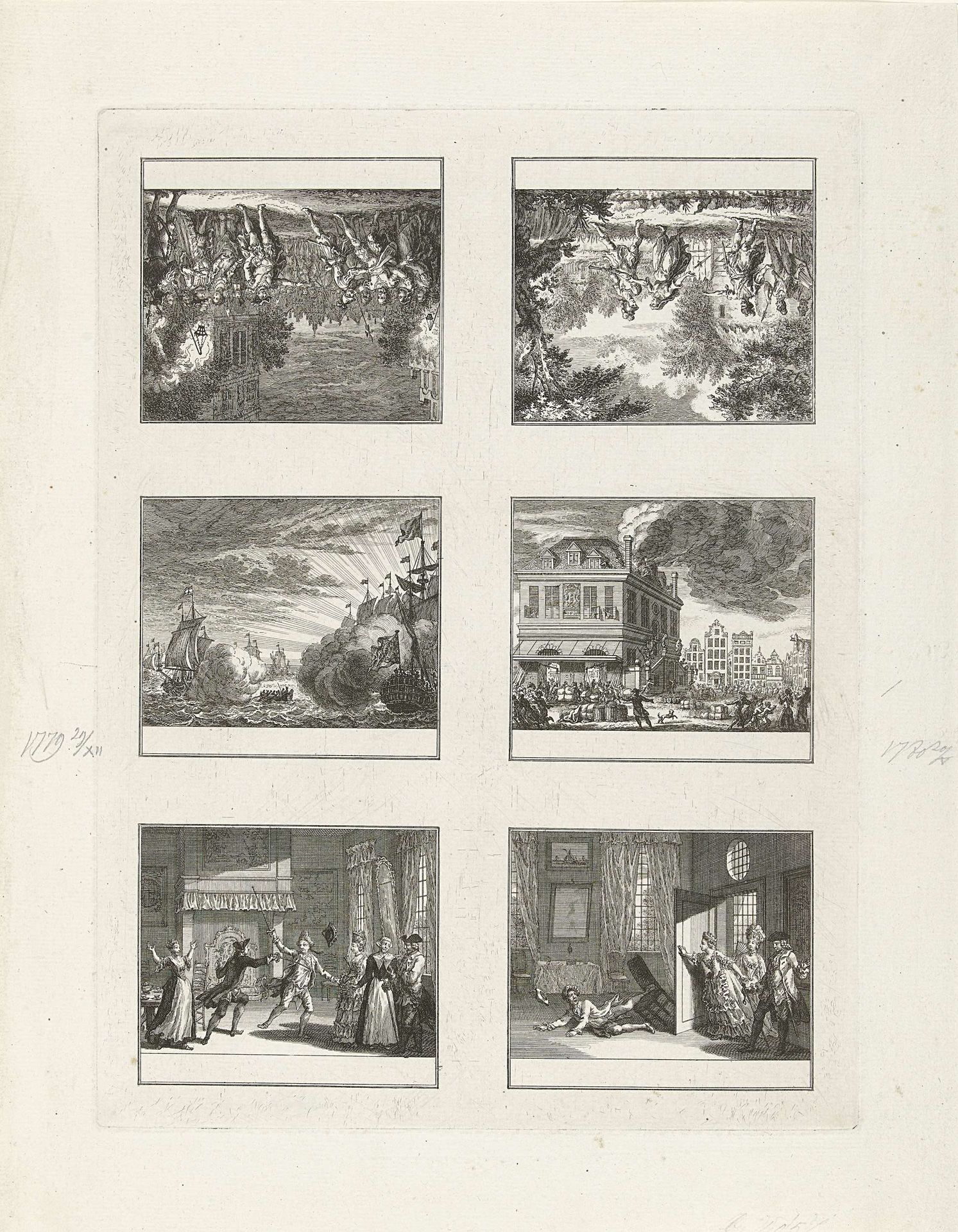
This uncut sheet of six prints was made by Cornelis Brouwer around 1779-1780, using the technique of etching. Consider the process. The artist would have coated a metal plate with a waxy ground, then drawn through it with a needle to expose the metal. Immersed in acid, the exposed lines would be eaten away, creating grooves. Ink is then forced into these lines, the surface wiped clean, and the image transferred to paper under great pressure, resulting in the fine lines and detailed scenes we see here. The material qualities of the print – its crispness and precision – arise directly from this method. Look closely and you'll see a record of labor, not just in the artist's design, but also in the skilled application of the etching process. The depicted scenes are historical events from 1779-1780, suggesting the prints may have been intended as records of current affairs, reproduced and distributed widely. By understanding the materials and techniques involved, we appreciate not only the artist's skill, but also the print's role as a means of communication and documentation in a specific time.
Onversneden vel met zes voorstellingen waarvan twee van historische gebeurtenissen uit 1779-1780
1790 - 1796

Cornelis Brouwer
1735 - 1803Location
RijksmuseumArtwork details
- Dimensions
- height 330 mm, width 247 mm
- Location
- Rijksmuseum
- Copyright
- Rijks Museum: Open Domain
Comments
Be the first to share your thoughts about this work.
About this artwork
This uncut sheet of six prints was made by Cornelis Brouwer around 1779-1780, using the technique of etching. Consider the process. The artist would have coated a metal plate with a waxy ground, then drawn through it with a needle to expose the metal. Immersed in acid, the exposed lines would be eaten away, creating grooves. Ink is then forced into these lines, the surface wiped clean, and the image transferred to paper under great pressure, resulting in the fine lines and detailed scenes we see here. The material qualities of the print – its crispness and precision – arise directly from this method. Look closely and you'll see a record of labor, not just in the artist's design, but also in the skilled application of the etching process. The depicted scenes are historical events from 1779-1780, suggesting the prints may have been intended as records of current affairs, reproduced and distributed widely. By understanding the materials and techniques involved, we appreciate not only the artist's skill, but also the print's role as a means of communication and documentation in a specific time.
Comments
Be the first to share your thoughts about this work.