About this artwork
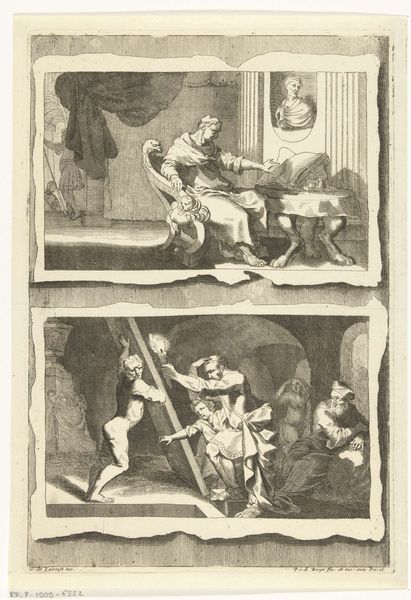
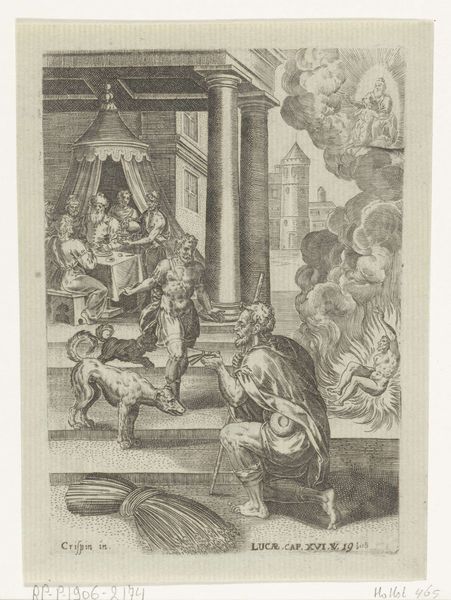
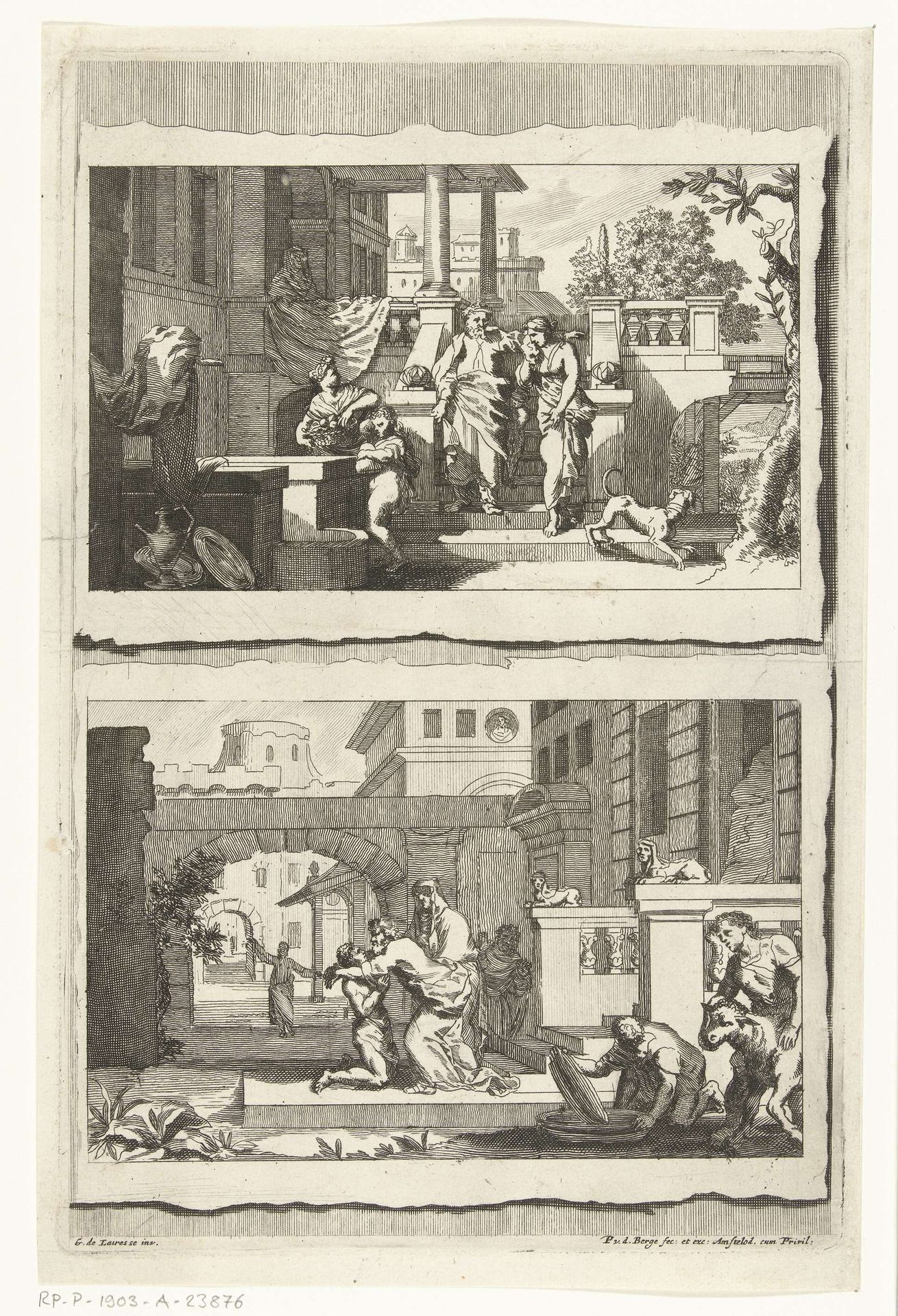
Pieter van den Berge’s undated etching juxtaposes two biblical narratives, the expulsion of Hagar and Ishmael with the return of the prodigal son. Note the profound emotion conveyed through posture: Hagar’s despair mirrors the son’s repentance. Consider the prevalence of the 'suppliant' pose across cultures. This gesture transcends time, recurring in ancient Greek tragedies and Renaissance paintings alike. We see it even today in modern political cartoons. The return to a kneeling position represents both a personal acknowledgment of guilt and an appeal for grace. Such deeply ingrained motifs tap into the collective unconscious, evoking empathy and prompting introspection. This symbolic language speaks to the timeless human experience, echoing through history and resonating within our souls.
Verdrijving van Hagar en Ismaël en de terugkeer van de verloren zoon
1694 - 1737

Pieter van den Berge
1659 - 1737Location
RijksmuseumArtwork details
- Medium
- print, engraving
- Dimensions
- height 258 mm, width 170 mm
- Location
- Rijksmuseum
- Copyright
- Rijks Museum: Open Domain
Tags
Comments
Share your thoughts
About this artwork
Pieter van den Berge’s undated etching juxtaposes two biblical narratives, the expulsion of Hagar and Ishmael with the return of the prodigal son. Note the profound emotion conveyed through posture: Hagar’s despair mirrors the son’s repentance. Consider the prevalence of the 'suppliant' pose across cultures. This gesture transcends time, recurring in ancient Greek tragedies and Renaissance paintings alike. We see it even today in modern political cartoons. The return to a kneeling position represents both a personal acknowledgment of guilt and an appeal for grace. Such deeply ingrained motifs tap into the collective unconscious, evoking empathy and prompting introspection. This symbolic language speaks to the timeless human experience, echoing through history and resonating within our souls.
Comments
Share your thoughts