About this artwork
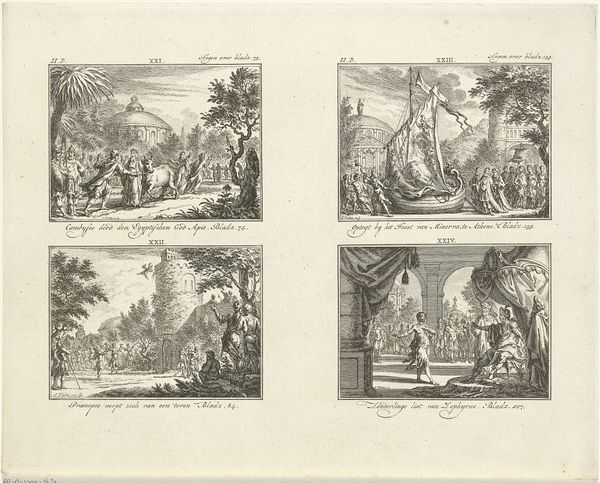
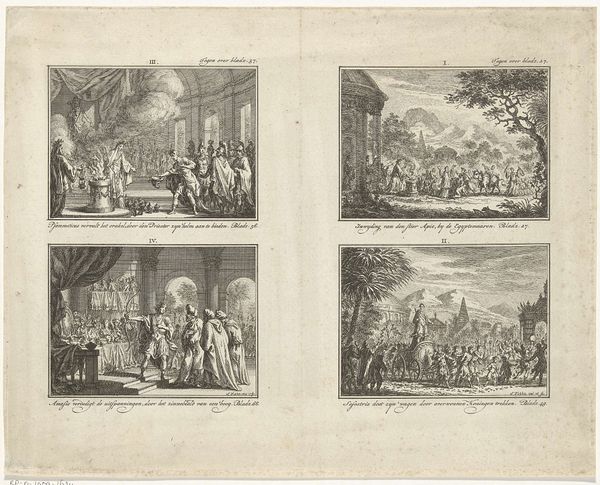
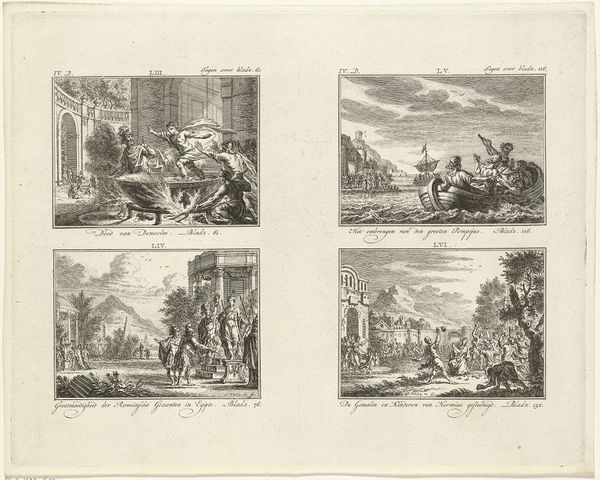
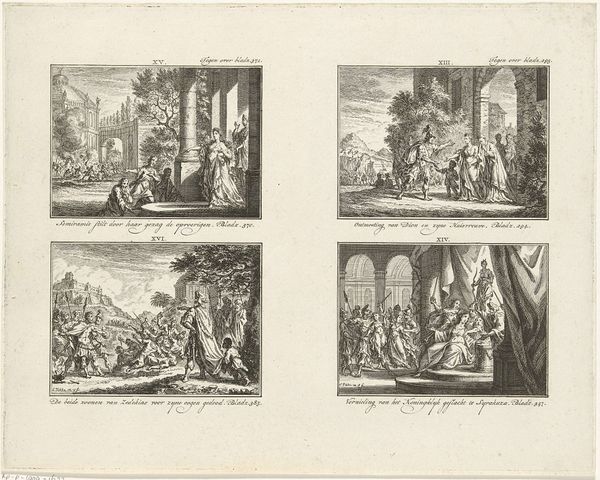
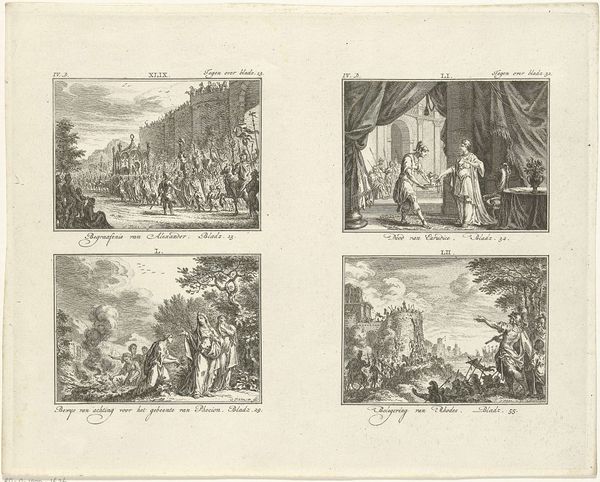
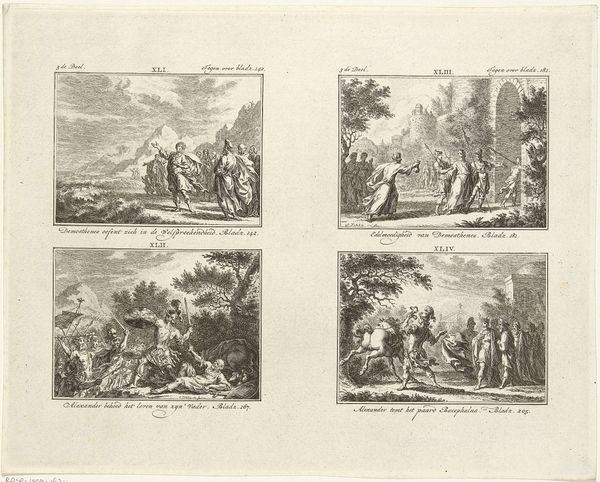
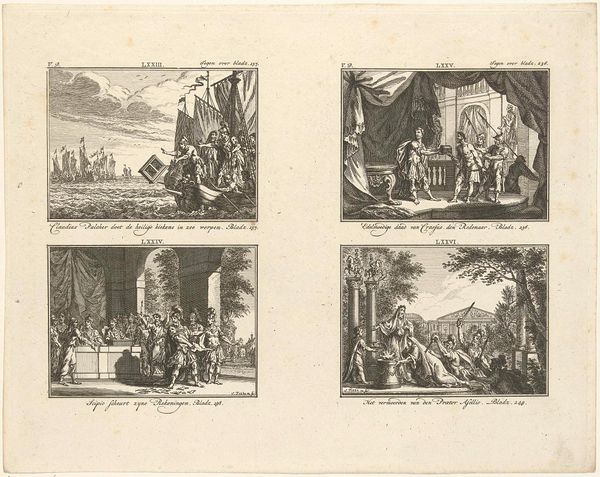
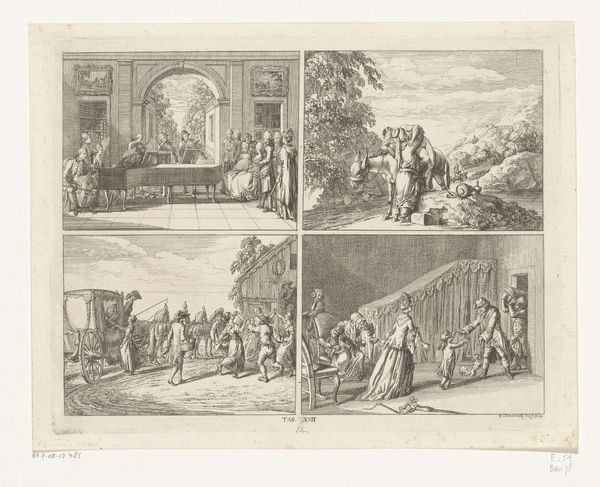
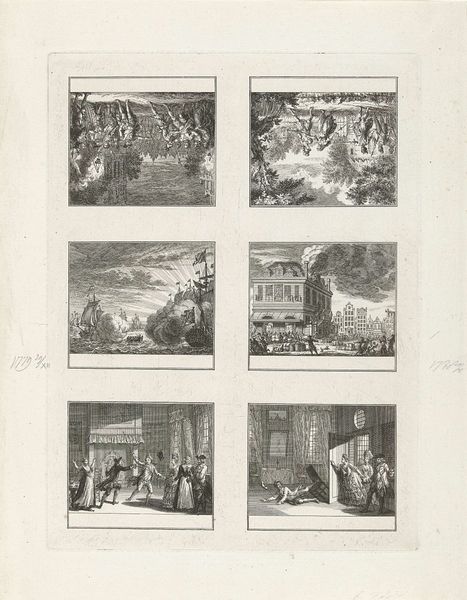
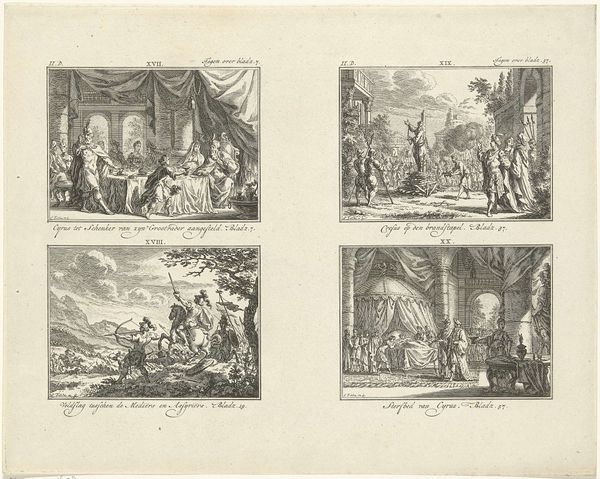
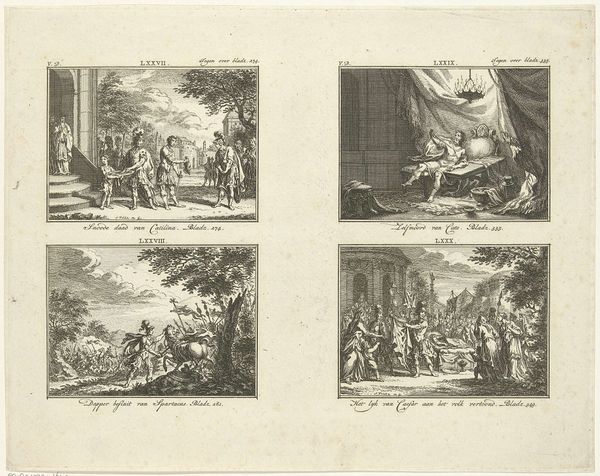
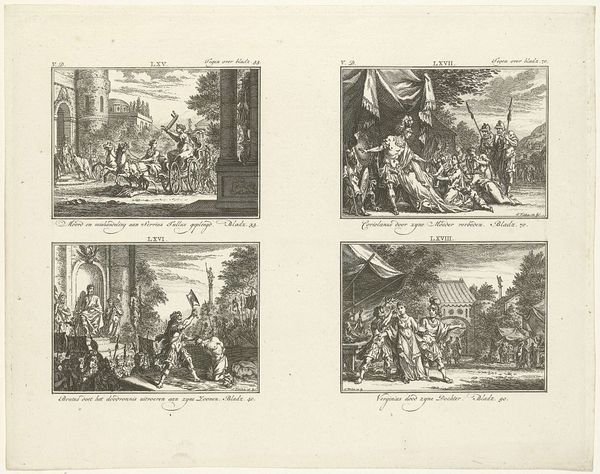
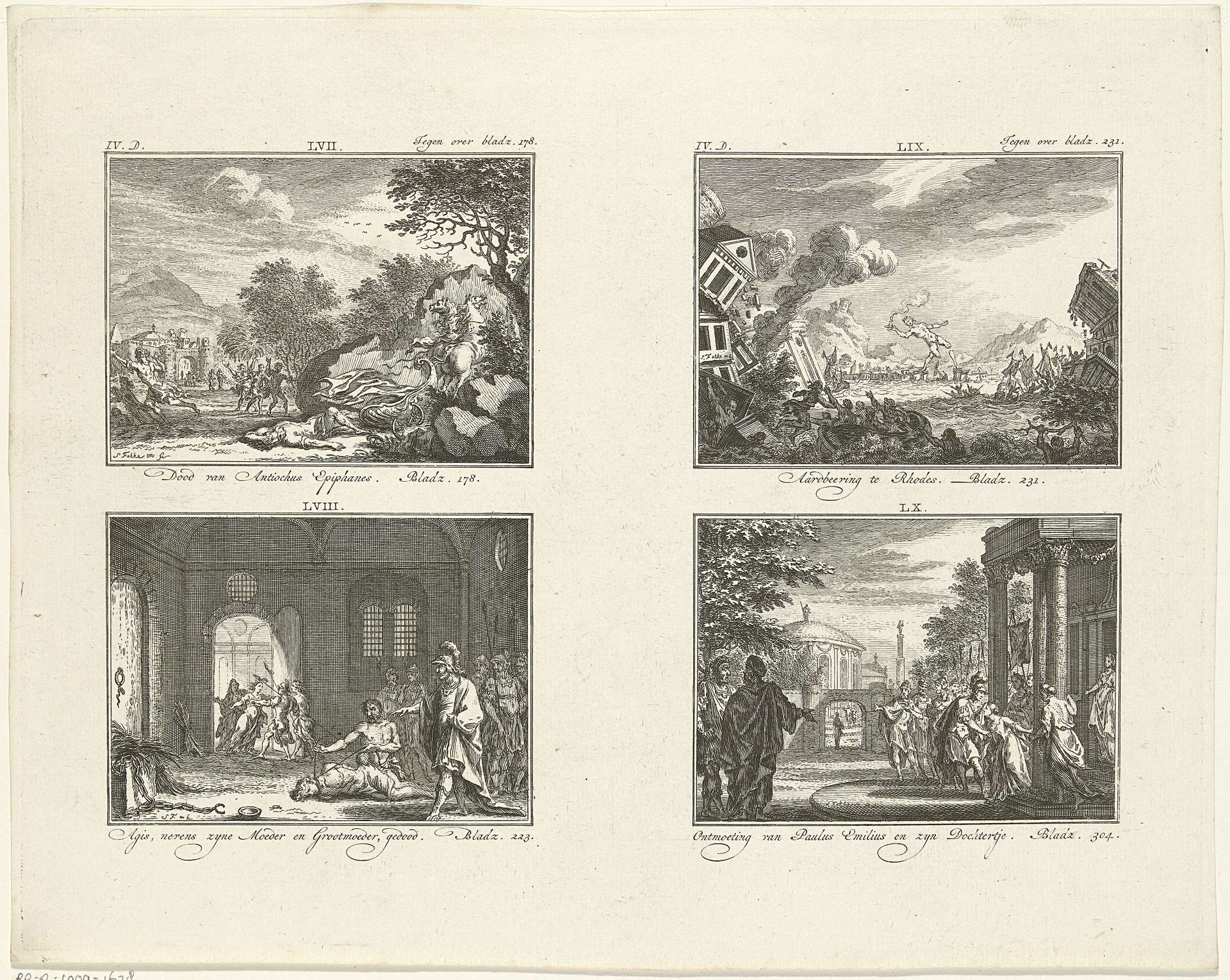
This print, titled "Vier voorstellingen uit de klassieke geschiedenis," was made by Simon Fokke in the Netherlands sometime in the 18th century. It is comprised of four separate scenes, all related to historical events. Fokke's work exists within a vibrant print culture, and we can read the image as participating in a public discourse about the past and the present. Prints like these helped spread ideas and information during the Enlightenment, and were deeply embedded in social and political life. This print's focus on classical history is itself a product of its time. The 18th century witnessed a surge of interest in ancient Greece and Rome, as people sought to understand the origins of Western civilization. Such prints not only reflected but actively shaped how people understood their place in the world, inviting viewers to contemplate their relationship to the past and their own civic responsibilities. Historians consult a wide range of sources such as period publications and institutional records in their work to understand the role of art in society.
Vier voorstellingen uit de klassieke geschiedenis 1722 - 1784

Simon Fokke
1712 - 1784Location
RijksmuseumArtwork details
- Medium
- drawing, graphic-art, print, engraving
- Dimensions
- height 223 mm, width 283 mm
- Location
- Rijksmuseum
- Copyright
- Rijks Museum: Open Domain
Tags
drawing
graphic-art
baroque
old engraving style
history-painting
engraving
Comments
No comments
About this artwork
This print, titled "Vier voorstellingen uit de klassieke geschiedenis," was made by Simon Fokke in the Netherlands sometime in the 18th century. It is comprised of four separate scenes, all related to historical events. Fokke's work exists within a vibrant print culture, and we can read the image as participating in a public discourse about the past and the present. Prints like these helped spread ideas and information during the Enlightenment, and were deeply embedded in social and political life. This print's focus on classical history is itself a product of its time. The 18th century witnessed a surge of interest in ancient Greece and Rome, as people sought to understand the origins of Western civilization. Such prints not only reflected but actively shaped how people understood their place in the world, inviting viewers to contemplate their relationship to the past and their own civic responsibilities. Historians consult a wide range of sources such as period publications and institutional records in their work to understand the role of art in society.
Comments
No comments