About this artwork
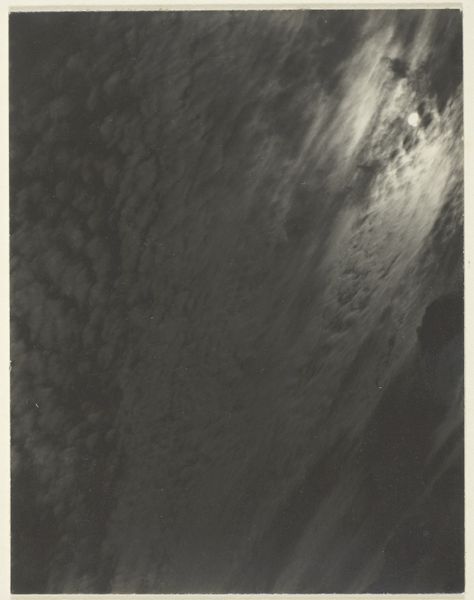
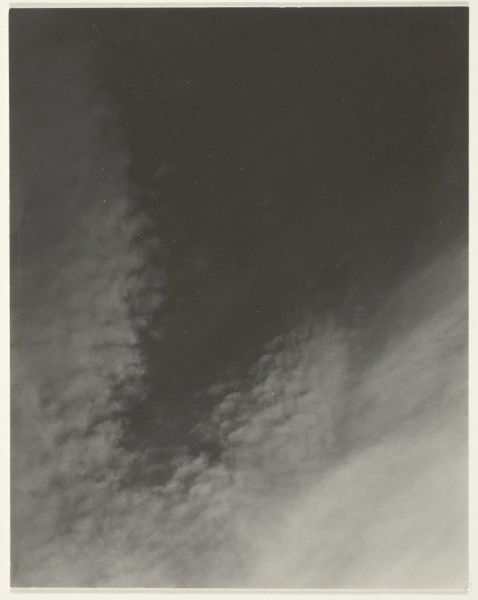
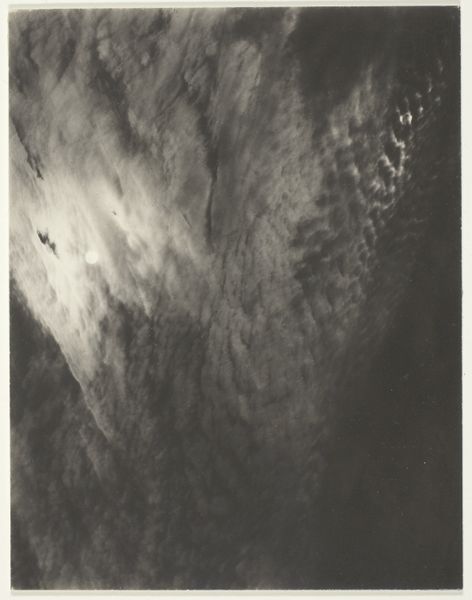
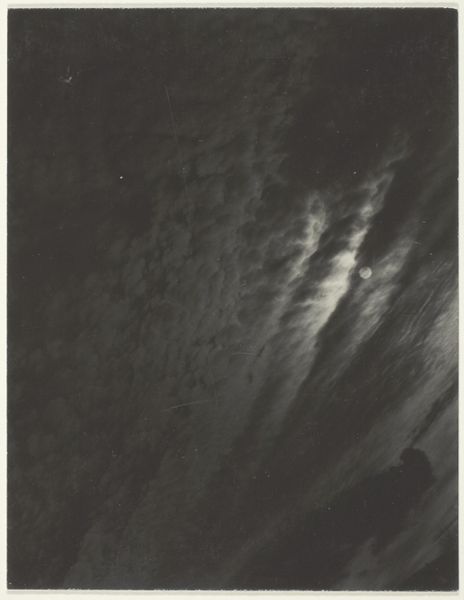
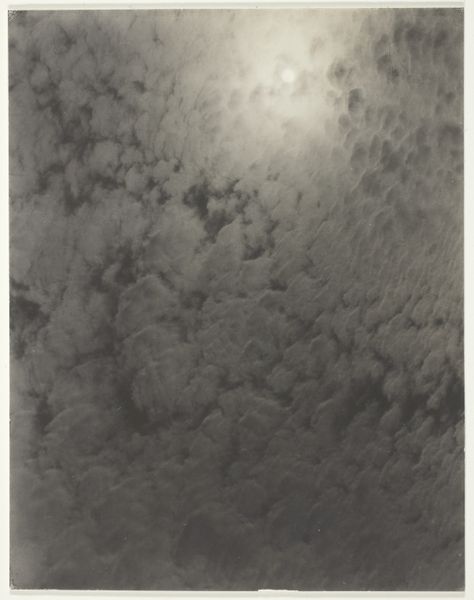
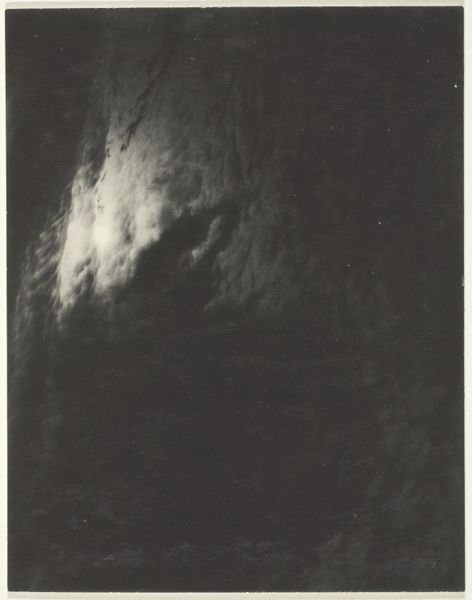
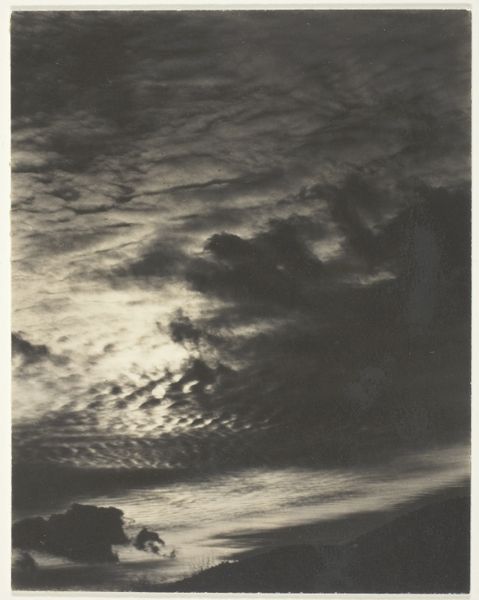
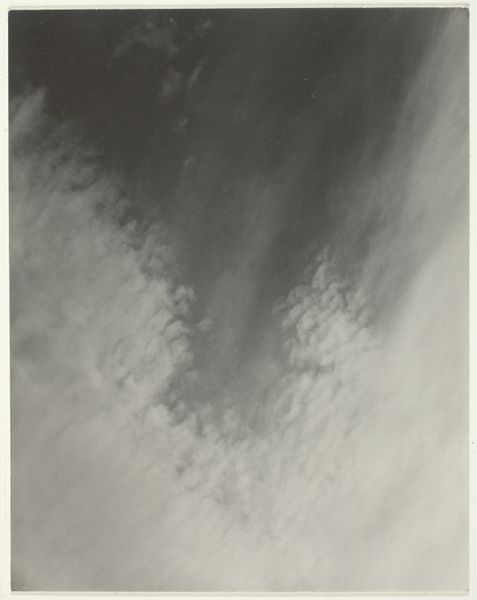
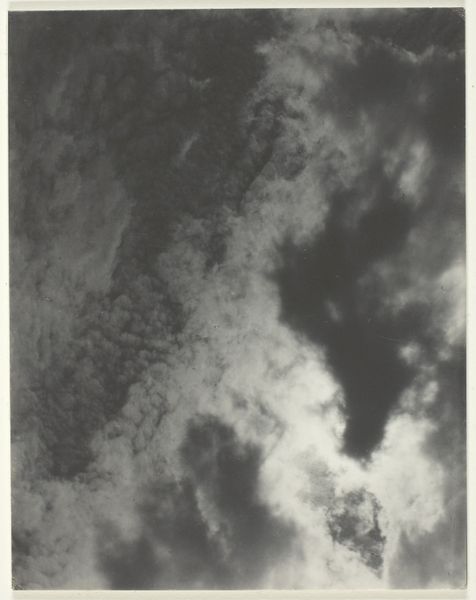
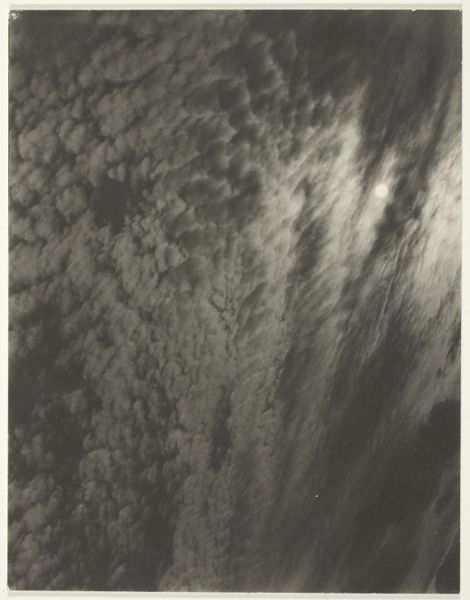
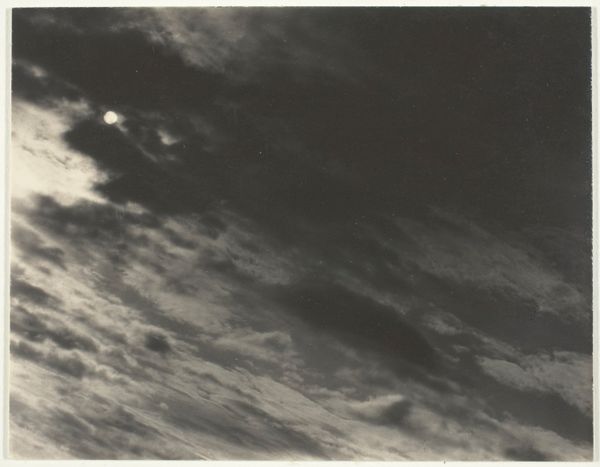
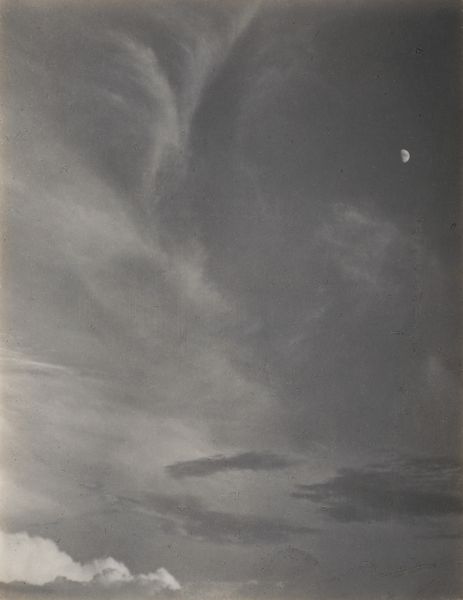
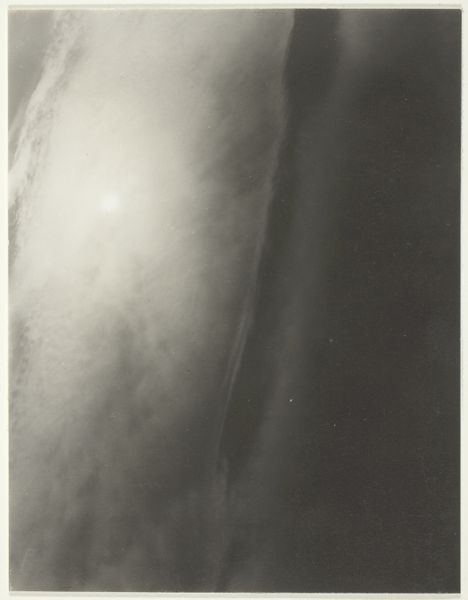
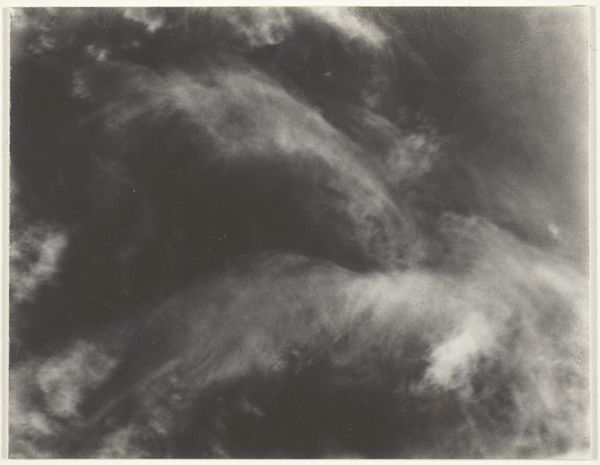
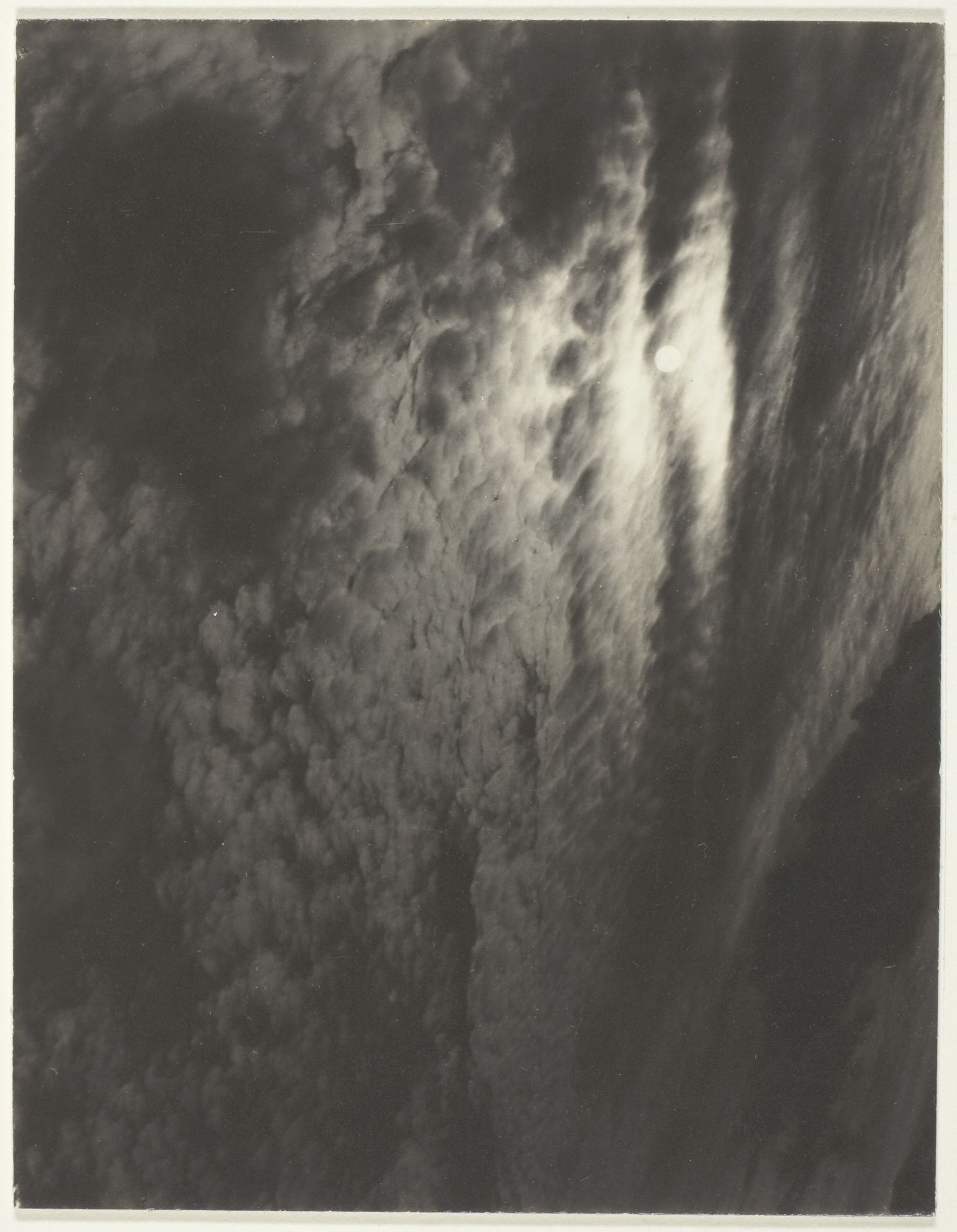
Alfred Stieglitz made this gelatin silver print, titled Equivalent, sometime in the first half of the 20th century; it's a photograph of clouds, but in his hands, the darks and lights become as plastic as paint. Looking at this, I’m thinking about how artists make the invisible visible. The way Stieglitz renders these clouds, it’s as if he’s sculpting them from light itself. See how the forms build up, almost like daubs of paint, creating layers of texture that evoke a sense of depth and atmosphere? There’s this one area, just above the center, where the clouds seem to break open, revealing a burst of light behind them. It’s a small detail, but it acts as a focal point, drawing your eye into the vastness of the sky. Stieglitz reminds me of Gerhard Richter, who also blurred the lines between representation and abstraction. Both artists invite us to see the world, not as it is, but as it feels.
Equivalent, from Set A (Third Set, Print 2)
1929


Artwork details
- Medium
- silver, paper, photography
- Dimensions
- 11.9 × 9.2 cm (image/paper/first mount); 35 × 27.6 cm (second mount)
- Location
- The Art Institute of Chicago
- Copyright
- Public Domain
Tags
Comments
Share your thoughts
About this artwork
Alfred Stieglitz made this gelatin silver print, titled Equivalent, sometime in the first half of the 20th century; it's a photograph of clouds, but in his hands, the darks and lights become as plastic as paint. Looking at this, I’m thinking about how artists make the invisible visible. The way Stieglitz renders these clouds, it’s as if he’s sculpting them from light itself. See how the forms build up, almost like daubs of paint, creating layers of texture that evoke a sense of depth and atmosphere? There’s this one area, just above the center, where the clouds seem to break open, revealing a burst of light behind them. It’s a small detail, but it acts as a focal point, drawing your eye into the vastness of the sky. Stieglitz reminds me of Gerhard Richter, who also blurred the lines between representation and abstraction. Both artists invite us to see the world, not as it is, but as it feels.
Comments
Share your thoughts