About this artwork
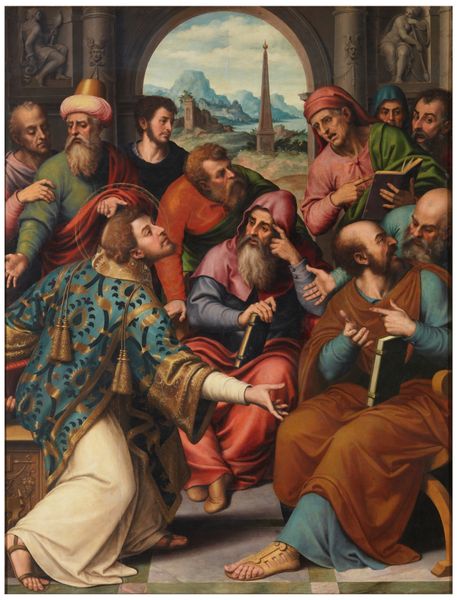
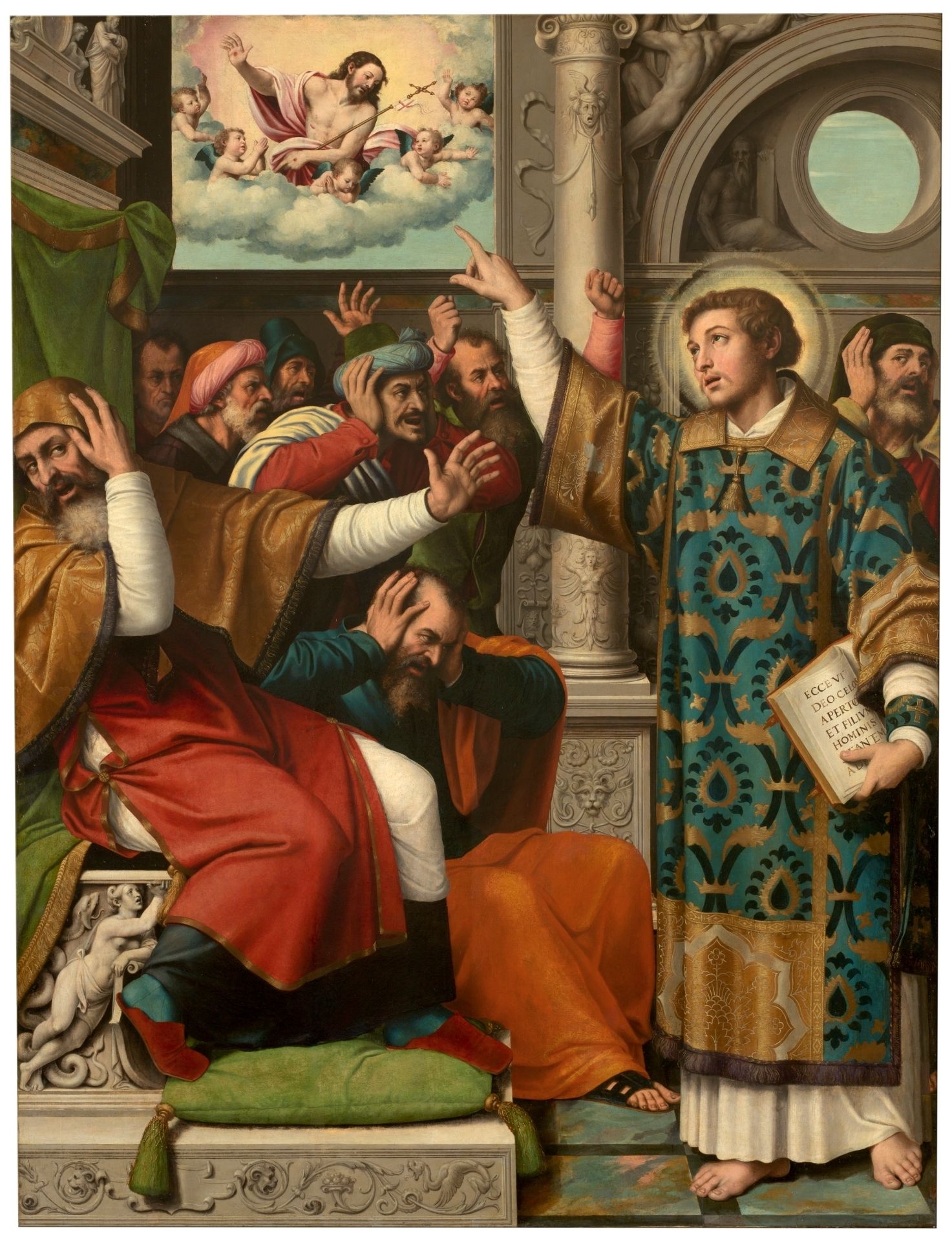
Vicente Juan Masip painted “San Esteban Acusado De Blasfemo”, in the 16th century in oil on panel. The painting captures a pivotal moment with Saint Stephen, his eyes raised to the heavens, directly encountering a vision of Christ. The accusing figures, recoiling with hands covering their ears and eyes, display a primal response to the divine. This gesture of aversion, seen across various cultures and eras, echoes the fear and awe humans feel when confronted with the divine. Consider the motif of the raised hand, Stephen's, pointing upwards versus the accusers gesturing to turn away. This can be seen in antiquity through today. These gestures reflect a deeply rooted psychological tension between faith and doubt. Note the bare feet in the figure of Saint Stephen: this symbol of humility is later echoed in Mannerist and Baroque art. The emotional power embedded in these gestures and symbols engages viewers on a subconscious level, illustrating the cyclical progression of such motifs as they resurface and evolve through history.
San Esteban Acusado De Blasfemo
1562

Vicente Juan Masip
1507 - 1579Location
Museo del Prado, Madrid, SpainArtwork details
- Medium
- painting, oil-paint
- Dimensions
- 160 x 123 cm
- Location
- Museo del Prado, Madrid, Spain
- Copyright
- Public domain
Tags
Comments
Share your thoughts
About this artwork
Vicente Juan Masip painted “San Esteban Acusado De Blasfemo”, in the 16th century in oil on panel. The painting captures a pivotal moment with Saint Stephen, his eyes raised to the heavens, directly encountering a vision of Christ. The accusing figures, recoiling with hands covering their ears and eyes, display a primal response to the divine. This gesture of aversion, seen across various cultures and eras, echoes the fear and awe humans feel when confronted with the divine. Consider the motif of the raised hand, Stephen's, pointing upwards versus the accusers gesturing to turn away. This can be seen in antiquity through today. These gestures reflect a deeply rooted psychological tension between faith and doubt. Note the bare feet in the figure of Saint Stephen: this symbol of humility is later echoed in Mannerist and Baroque art. The emotional power embedded in these gestures and symbols engages viewers on a subconscious level, illustrating the cyclical progression of such motifs as they resurface and evolve through history.
Comments
Share your thoughts