About this artwork
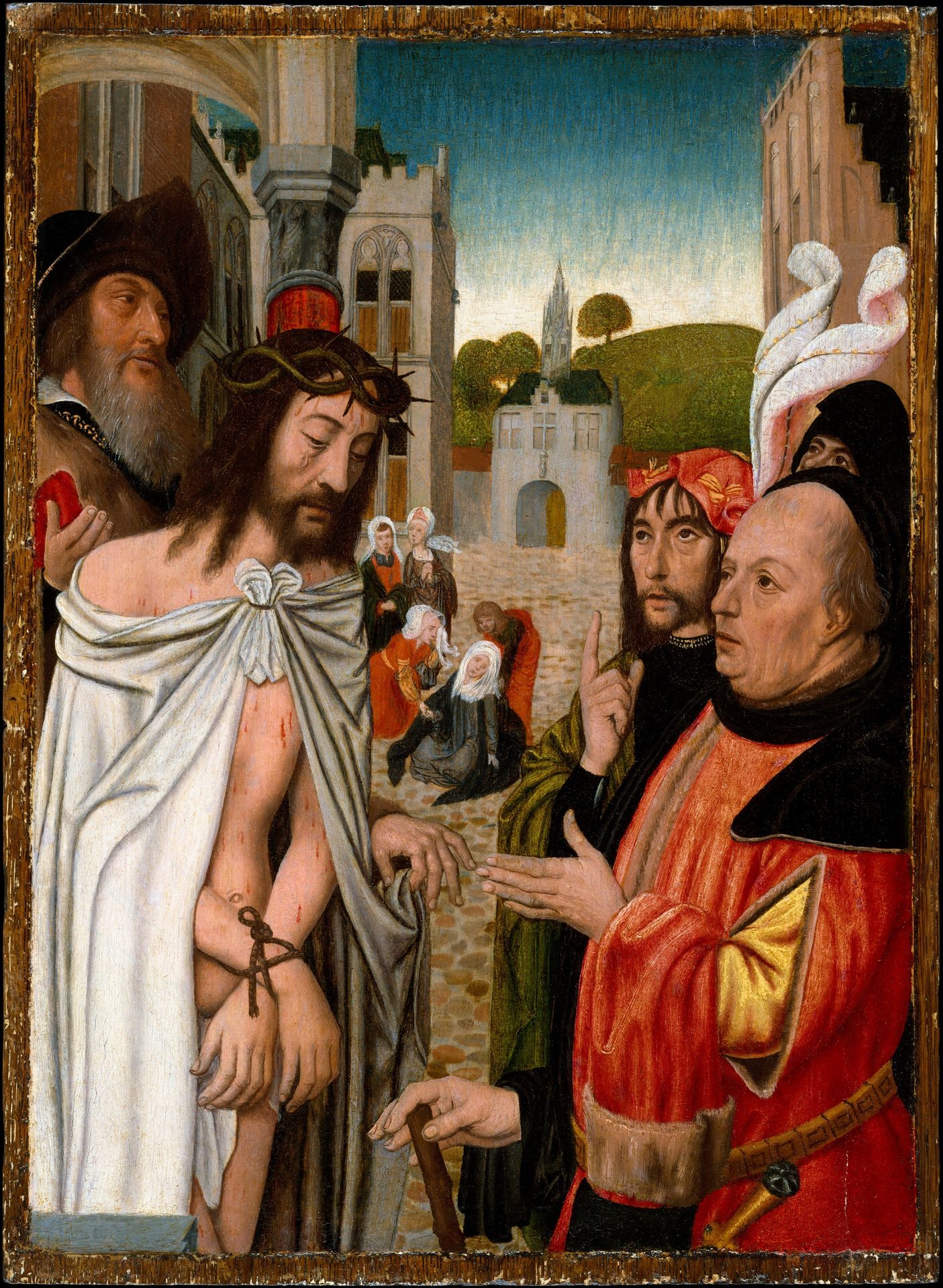
Jan Mostaert painted ‘Christ Shown to the People’ around 1500, presenting us with a scene laden with powerful symbols. The crown of thorns, the bound hands, and the pitiful gaze of Christ – these are not merely narrative elements. They are potent symbols drawn from the depths of human suffering and religious fervor. Consider the crown of thorns. We see echoes of this motif in ancient vegetation rituals, where the wearing of thorny crowns symbolized both pain and a connection to nature’s cycles of death and rebirth. This symbol transcends Christianity, tapping into primal fears and hopes surrounding mortality. It carries an intense emotional weight, compelling viewers to confront profound themes of suffering and redemption. These symbols create a cyclical progression, resurfacing and evolving across different historical contexts. Each appearance imbues them with new layers of meaning, revealing the enduring power of cultural memory.
Christ Shown to the People
1510 - 1515


Artwork details
- Medium
- painting, oil-paint
- Dimensions
- Overall 12 x 8 7/8 in. (30.5 x 22.5 cm); painted surface 11 1/2 x 8 1/4 in. (29.2 x 21 cm)
- Location
- Metropolitan Museum of Art, New York, NY
- Copyright
- Public Domain
Tags
Comments
Share your thoughts
About this artwork
Jan Mostaert painted ‘Christ Shown to the People’ around 1500, presenting us with a scene laden with powerful symbols. The crown of thorns, the bound hands, and the pitiful gaze of Christ – these are not merely narrative elements. They are potent symbols drawn from the depths of human suffering and religious fervor. Consider the crown of thorns. We see echoes of this motif in ancient vegetation rituals, where the wearing of thorny crowns symbolized both pain and a connection to nature’s cycles of death and rebirth. This symbol transcends Christianity, tapping into primal fears and hopes surrounding mortality. It carries an intense emotional weight, compelling viewers to confront profound themes of suffering and redemption. These symbols create a cyclical progression, resurfacing and evolving across different historical contexts. Each appearance imbues them with new layers of meaning, revealing the enduring power of cultural memory.
Comments
Share your thoughts