About this artwork
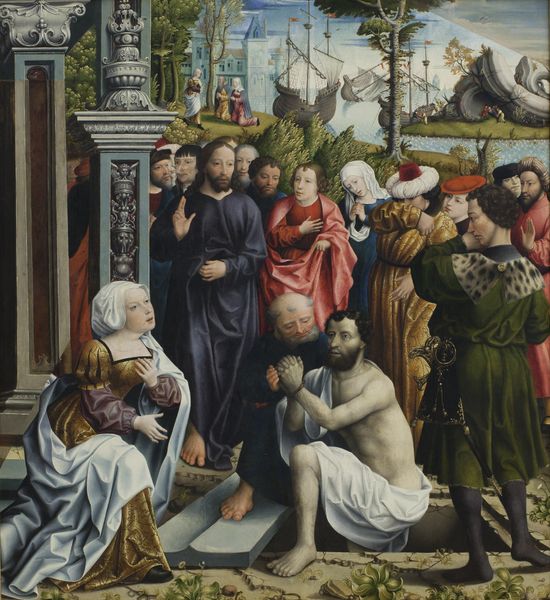
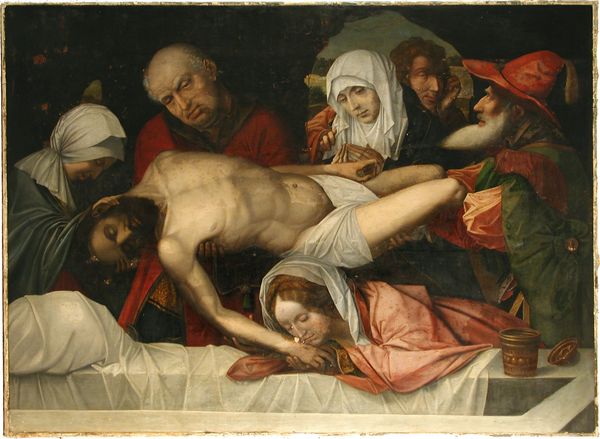
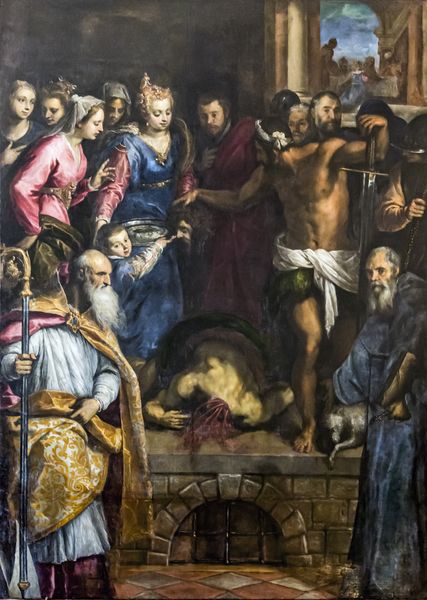
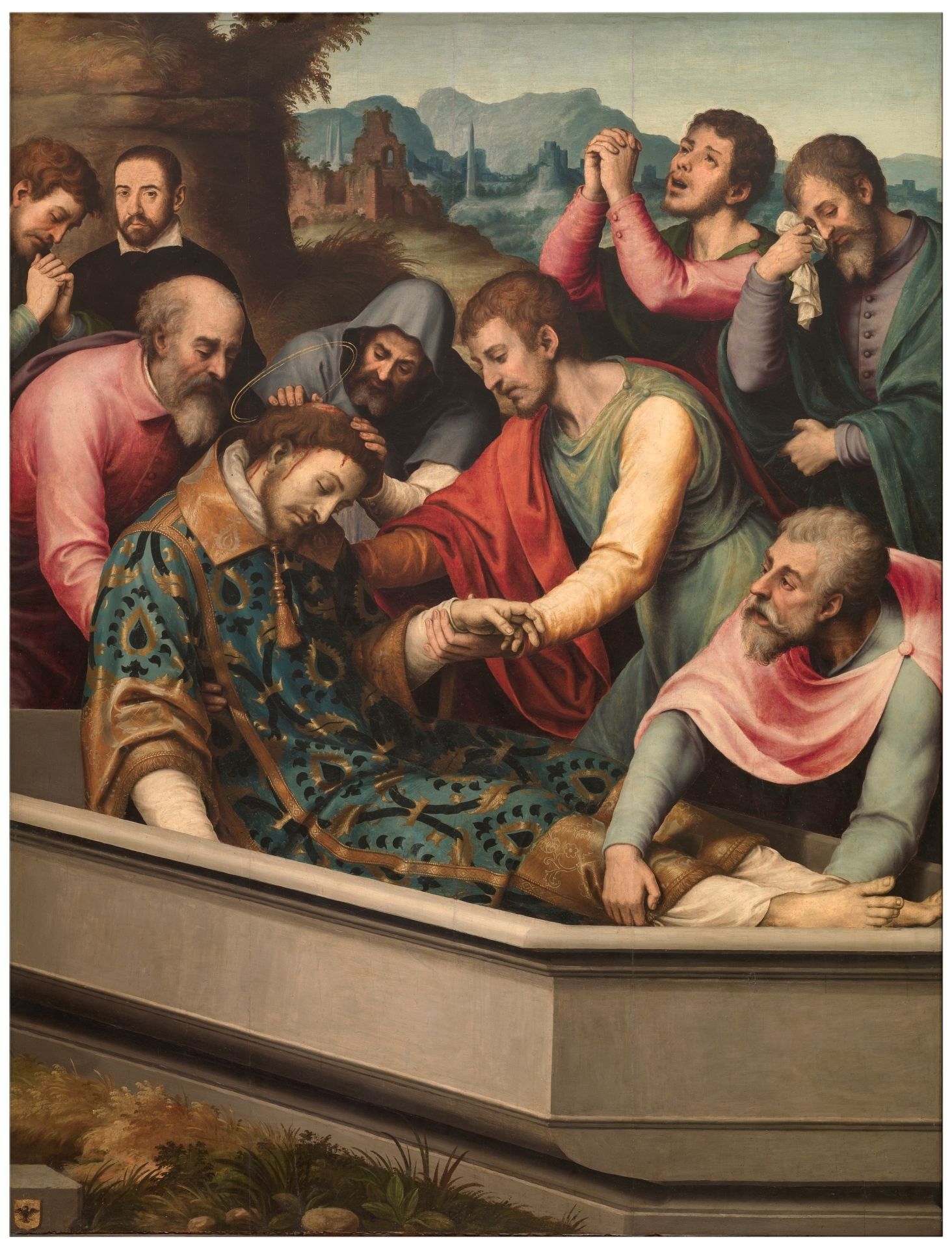
Vicente Juan Masip painted ‘The Burial of Saint Stephen’ in oil on panel sometime in the mid-16th century. The painting invites us into a scene framed by a somber palette and classical composition. Here, color and form articulate grief through the curved lines of the mourners and the stark geometry of the tomb. Observe how Masip contrasts the rigid architecture with the fluid drapery and skin tones of the figures; this interplay of form and color guides our eye, structuring the emotional narrative. Within the historical context of the Renaissance, such compositional choices are not merely aesthetic but are imbued with meaning. The work uses Renaissance artistic conventions to elicit emotion and guide the viewer's interpretation of the scene. The painting's power lies in its ability to blend formal elements, creating a space for contemplating faith, loss, and the structures that govern our understanding of these profound human experiences.
Entierro De San Esteban
1562

Vicente Juan Masip
1507 - 1579Location
Museo del Prado, Madrid, SpainArtwork details
- Medium
- painting, oil-paint
- Dimensions
- 160 x 123 cm
- Location
- Museo del Prado, Madrid, Spain
- Copyright
- Public domain
Tags
Comments
Share your thoughts
About this artwork
Vicente Juan Masip painted ‘The Burial of Saint Stephen’ in oil on panel sometime in the mid-16th century. The painting invites us into a scene framed by a somber palette and classical composition. Here, color and form articulate grief through the curved lines of the mourners and the stark geometry of the tomb. Observe how Masip contrasts the rigid architecture with the fluid drapery and skin tones of the figures; this interplay of form and color guides our eye, structuring the emotional narrative. Within the historical context of the Renaissance, such compositional choices are not merely aesthetic but are imbued with meaning. The work uses Renaissance artistic conventions to elicit emotion and guide the viewer's interpretation of the scene. The painting's power lies in its ability to blend formal elements, creating a space for contemplating faith, loss, and the structures that govern our understanding of these profound human experiences.
Comments
Share your thoughts