1841 - 1884
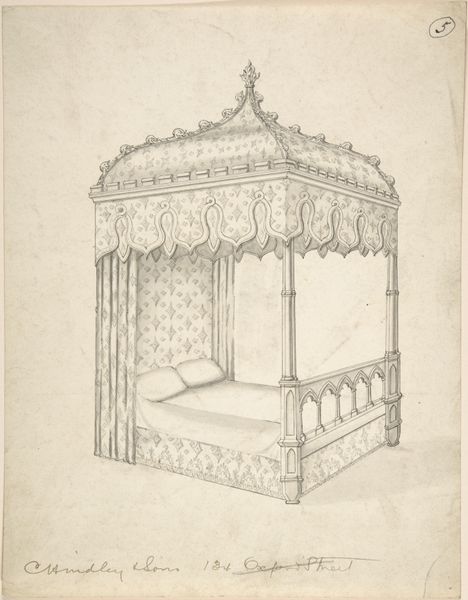
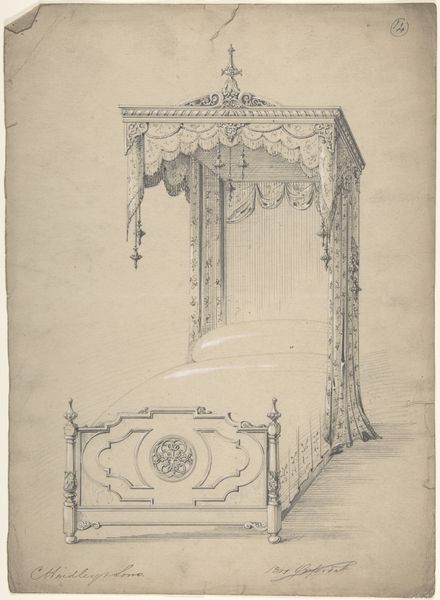
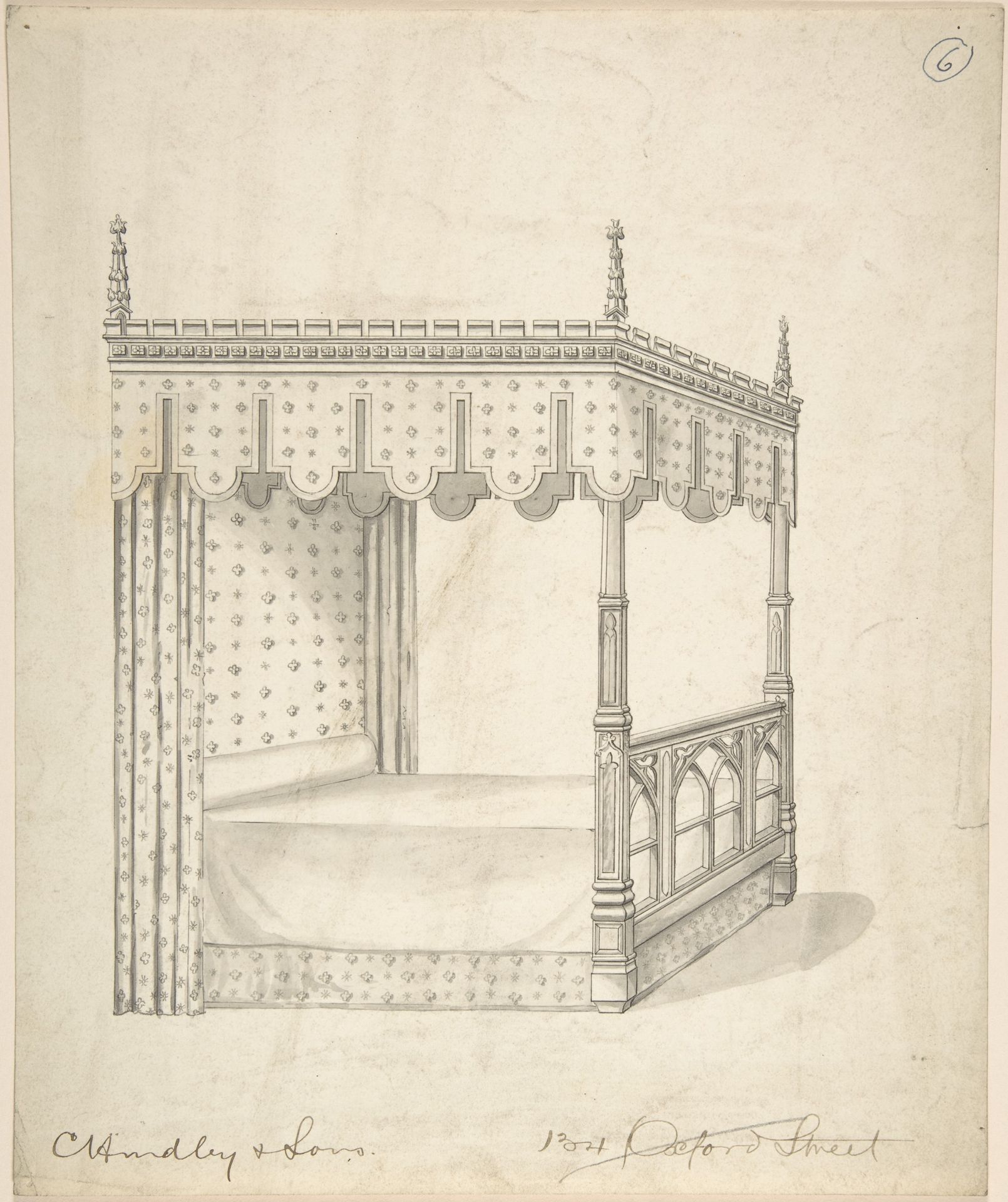
Design for a Gothic Bed with Canopy

Charles Hindley and Sons
1841 - 1917
The Metropolitan Museum of Art
Metropolitan Museum of Art, New York, NYListen to curator's interpretation
Curatorial notes
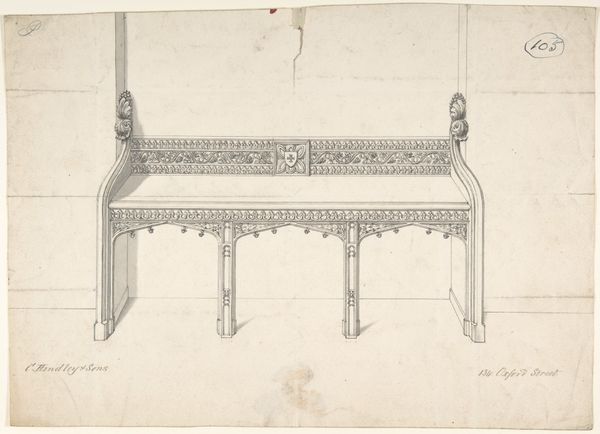
Curator: This is “Design for a Gothic Bed with Canopy,” a pencil and ink drawing from between 1841 and 1884 by Charles Hindley and Sons. It’s currently housed here at the Metropolitan Museum of Art. Editor: The austerity strikes me first. The drawing style, with its emphasis on line, communicates a strange sense of cool comfort... I can imagine resting there, but in a rather formal way. Curator: "Formal" is key. Gothic design is so evocative. You see these pointed arches echoed throughout. What do those shapes evoke in you? Are there any traditional iconographic or cultural memory components that you identify? Editor: It does suggest the architecture of cathedrals and monasteries. I see this piece as an aspiration toward some spiritual purity embodied in the domestic sphere through materials and design. I find the labor implied in its production somewhat divorced from the apparent user, the resident of the house… It is both beautiful and perhaps uncomfortably isolating. Curator: Yes, that tension is very interesting! To me, Gothic architecture suggests a longing for order and for some degree of heavenly ascent. Do you think this bed could be read as a sacred space? It has the pattern repeated and echoed on all sides like many Byzantine decorations that echo themselves on the walls of old sanctuaries. Editor: Interesting! But is that heavenly aspiration equally available for those involved in constructing the bed? How many hours were spent on these repeated details? The symmetry of course speaks to design, planning, production… it feels distinctly like capital at rest. Curator: True. This tension between earthly production and idealized forms really encapsulates a lot of the concerns from the era that echo across so many centuries before it. It represents both beauty and burden… all framed here within our cultural understanding of comfort and luxury. Editor: Precisely. The object reflects layers of socioeconomic tension and aspirations materialized with material things, while being in some way oddly familiar for any age. Thanks for untangling that with me!