About this artwork
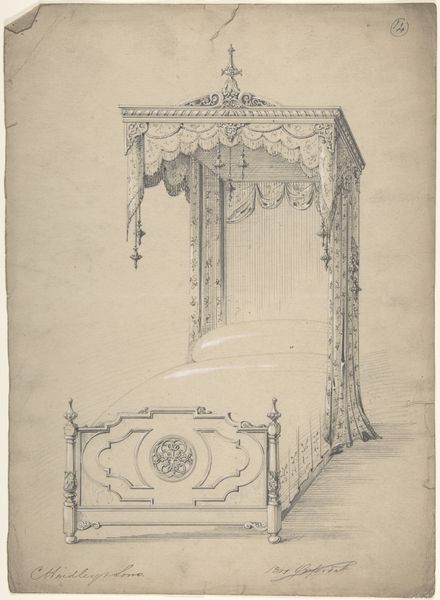
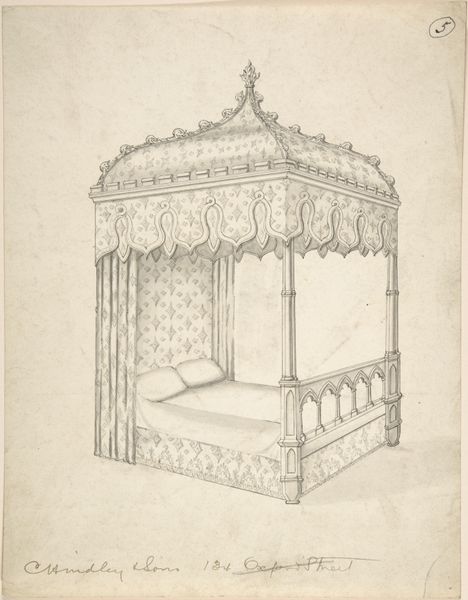
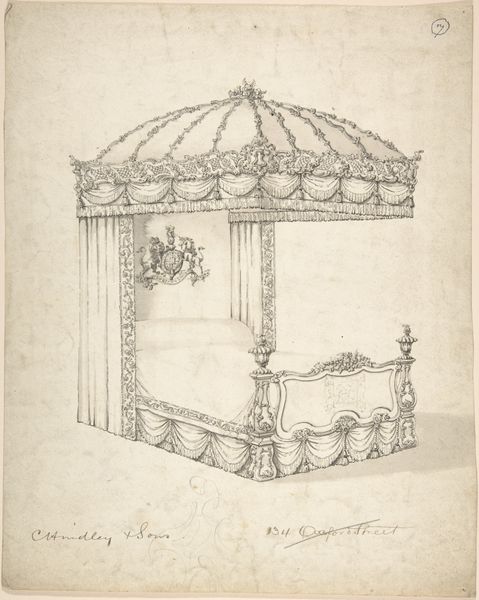
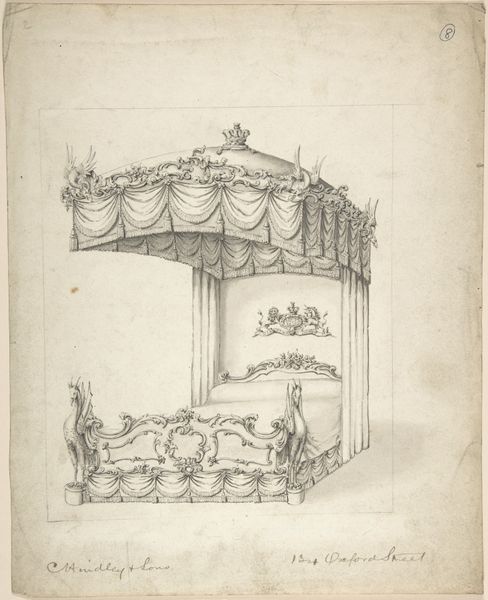
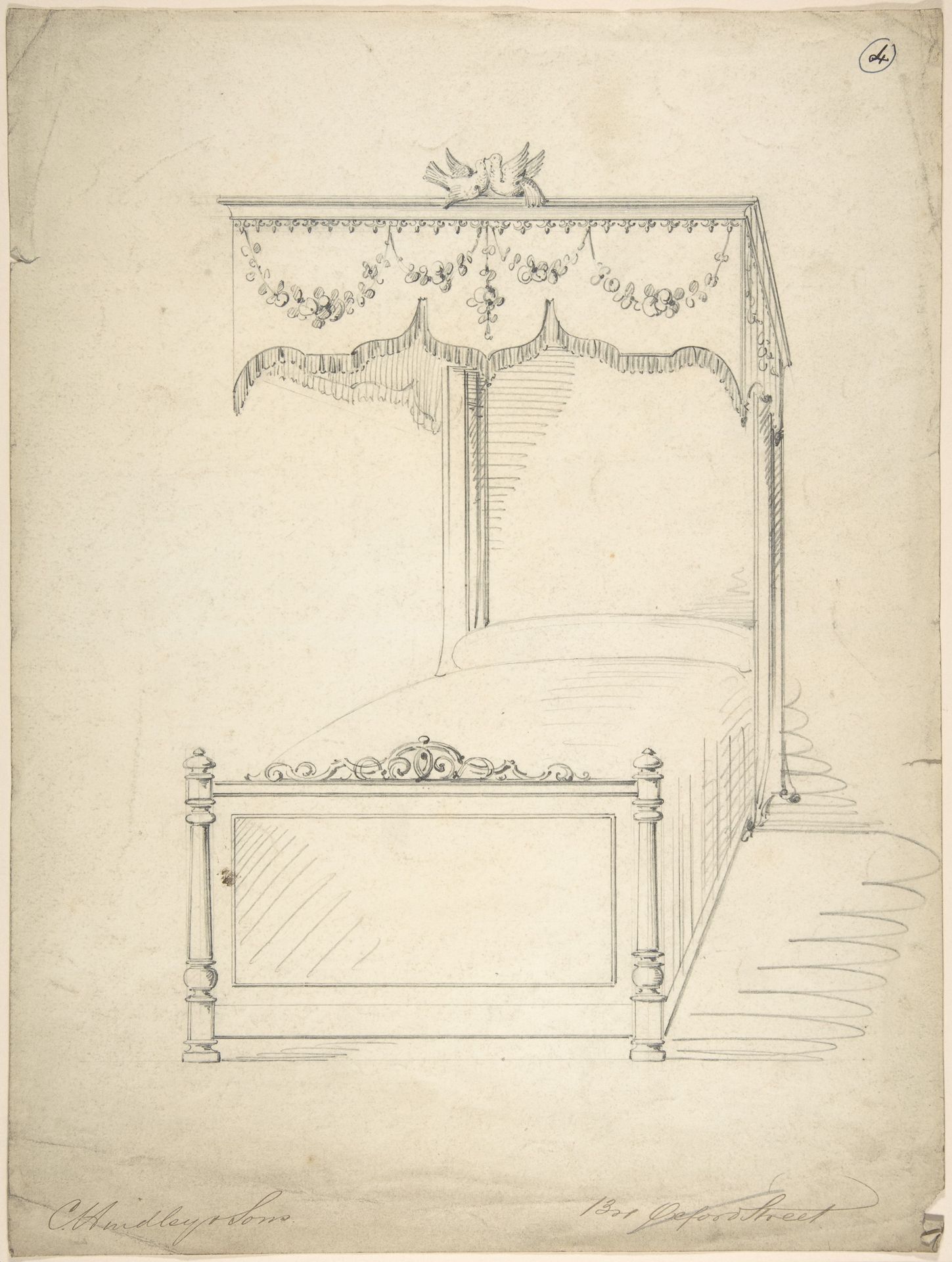
This drawing of a bed with a canopy was created by Charles Hindley and Sons, using graphite on paper. Even in sketch form, you get a sense of the labor involved in producing such a design, and its translation into furniture. The canopy bed was a specialized craft object that required skilled hands. The work would have been divided between carvers, joiners, and upholsters. All of these highly specialized trades had a long history, and the Hindley firm would have been acutely aware of it. The cost of a piece like this meant that it would have been commissioned by someone with significant means. What's interesting about looking at an object like this through the lens of craft is that it invites you to consider who made it, and who could afford to own it. It challenges the divide between the fine arts and the more workaday practices of design and manufacture.
Design for Bed with Canopy
1841 - 1884

Charles Hindley and Sons
1841 - 1917
The Metropolitan Museum of Art
Metropolitan Museum of Art, New York, NYArtwork details
- Medium
- drawing, print, etching, paper
- Dimensions
- sheet: 14 1/8 x 10 5/8 in. (35.8 x 27 cm)
- Location
- Metropolitan Museum of Art, New York, NY
- Copyright
- Public Domain
Tags
Comments
Share your thoughts
About this artwork
This drawing of a bed with a canopy was created by Charles Hindley and Sons, using graphite on paper. Even in sketch form, you get a sense of the labor involved in producing such a design, and its translation into furniture. The canopy bed was a specialized craft object that required skilled hands. The work would have been divided between carvers, joiners, and upholsters. All of these highly specialized trades had a long history, and the Hindley firm would have been acutely aware of it. The cost of a piece like this meant that it would have been commissioned by someone with significant means. What's interesting about looking at an object like this through the lens of craft is that it invites you to consider who made it, and who could afford to own it. It challenges the divide between the fine arts and the more workaday practices of design and manufacture.
Comments
Share your thoughts