About this artwork
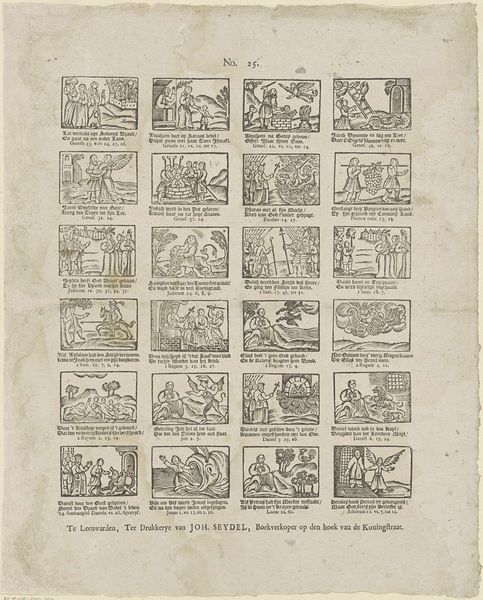
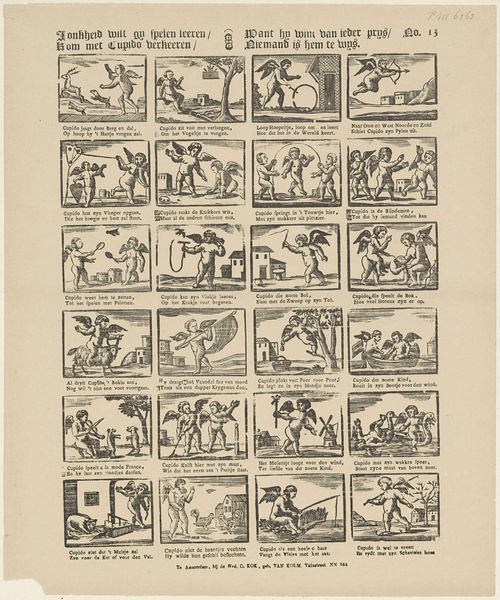
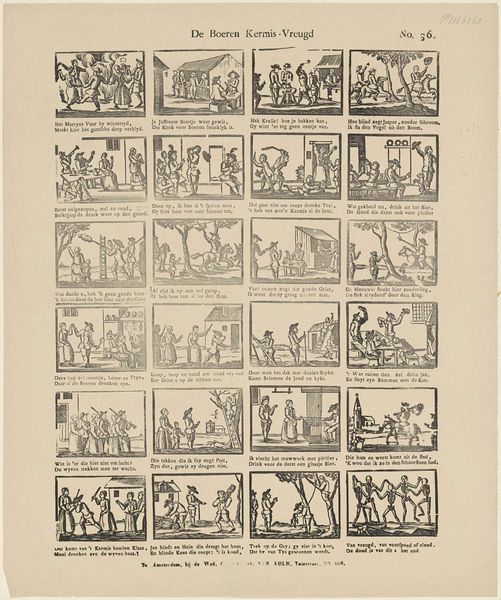
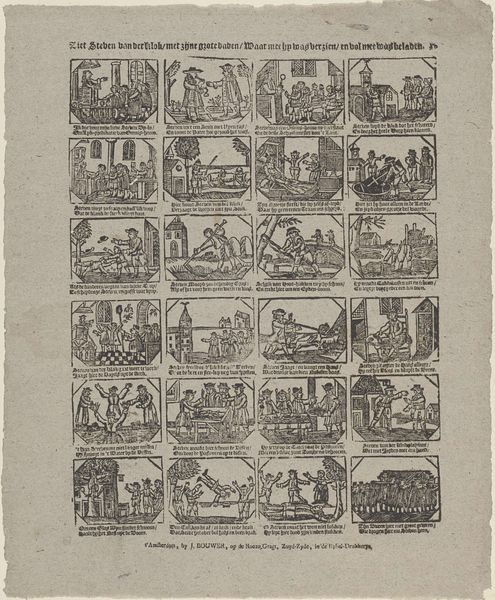
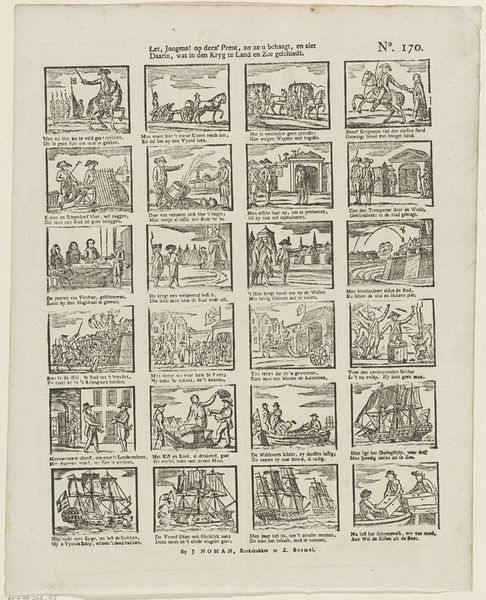
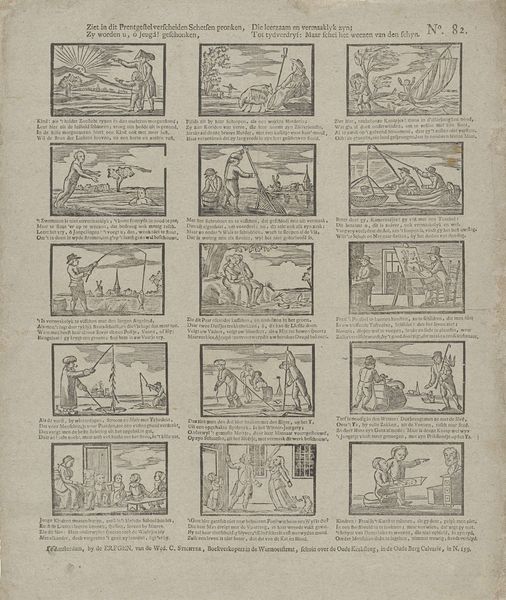
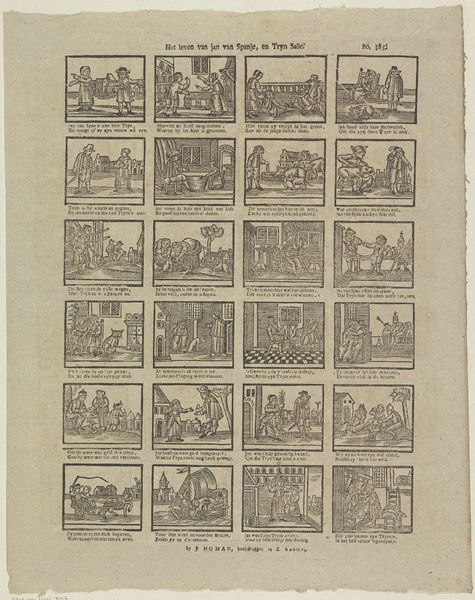
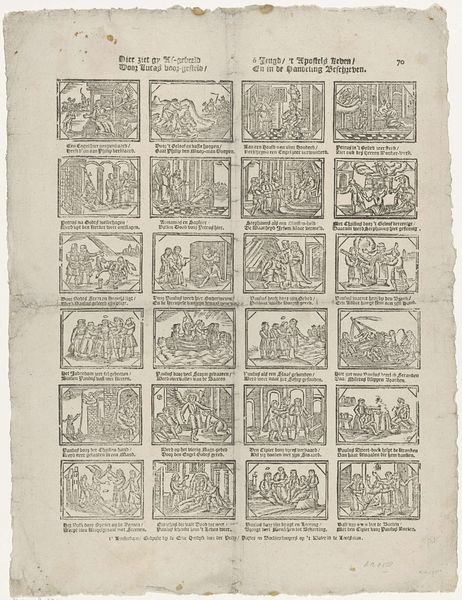
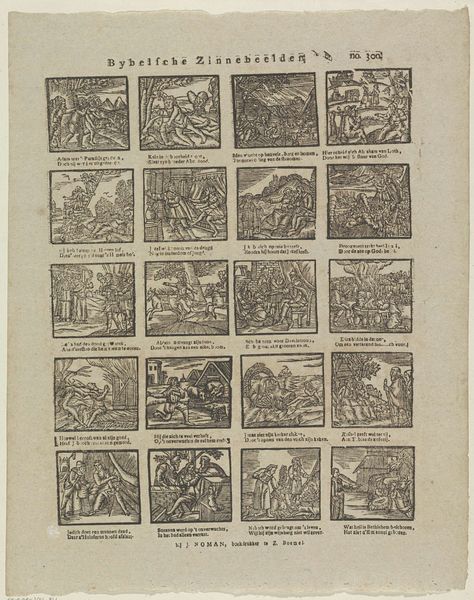
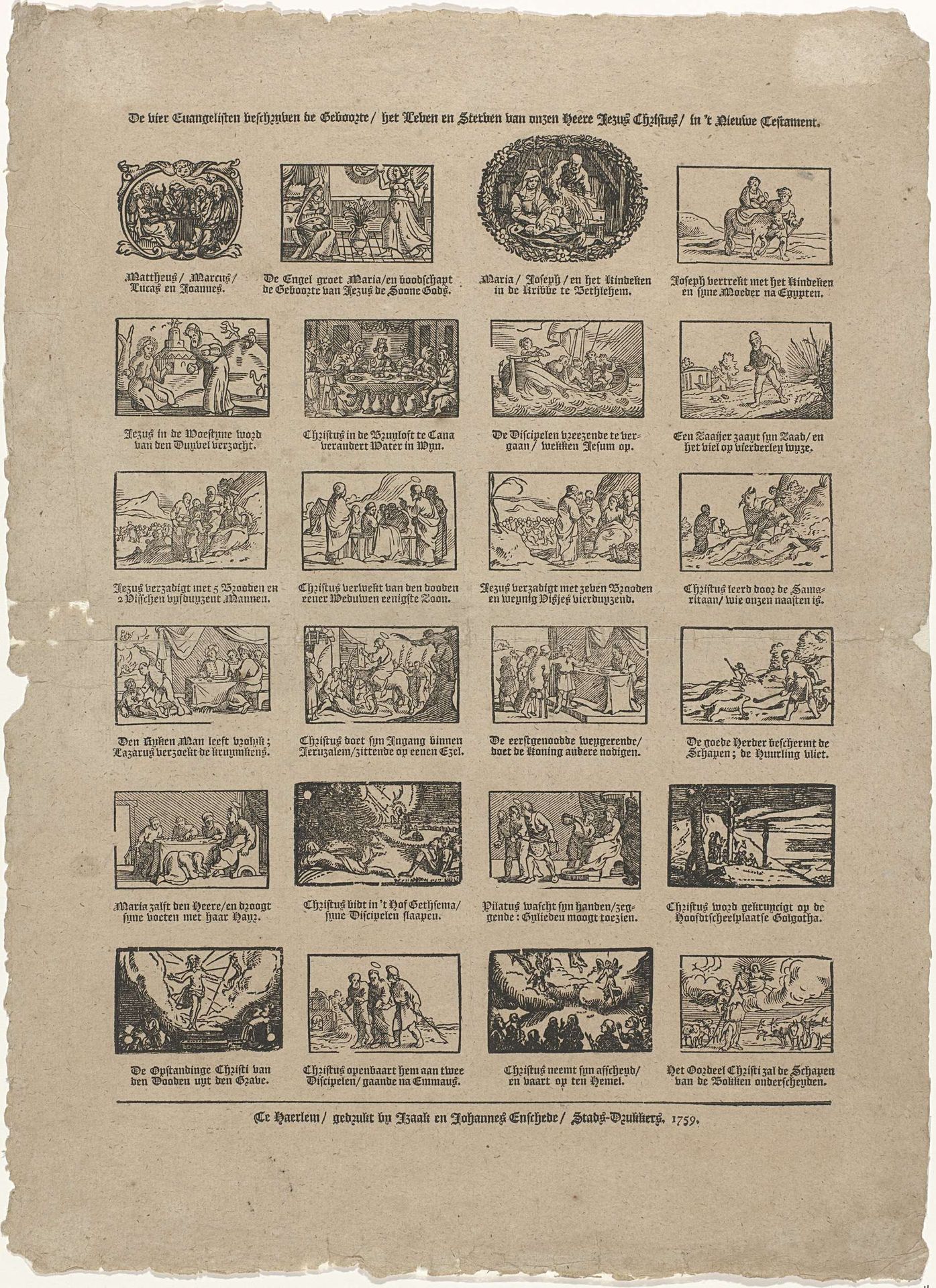
This print, titled "The four evangelists describe the birth / the life and death of our lord Jesus Christ / in the New Testament," was made by Izaak Enschedé in the Netherlands. Prints like these, circulated widely, played a crucial role in shaping popular understanding and devotion to religious narratives. Enschedé's choice to depict the life of Jesus through the lens of the four evangelists is telling. It underscores the significance of individual perspectives and interpretations within a larger, shared religious framework. The scenes, presented in a grid, evoke a sense of both order and accessibility. Each small window offers a glimpse into a pivotal moment, inviting viewers to reflect on the emotional and spiritual dimensions of the story. By making these images widely available, Enschedé contributed to the democratization of religious knowledge. He gave ordinary people the chance to engage with sacred stories in their own homes and communities.
De vier evangelisten beschryven de geboorte / het leven en sterven van onzen heere Jezus Christus / in 't Nieuwe Testament
1759

Izaak Enschedé
@izaakenschedeLocation
RijksmuseumArtwork details
- Medium
- print, paper, engraving
- Dimensions
- height 420 mm, width 305 mm
- Location
- Rijksmuseum
- Copyright
- Rijks Museum: Open Domain
Tags
Comments
Share your thoughts
About this artwork
This print, titled "The four evangelists describe the birth / the life and death of our lord Jesus Christ / in the New Testament," was made by Izaak Enschedé in the Netherlands. Prints like these, circulated widely, played a crucial role in shaping popular understanding and devotion to religious narratives. Enschedé's choice to depict the life of Jesus through the lens of the four evangelists is telling. It underscores the significance of individual perspectives and interpretations within a larger, shared religious framework. The scenes, presented in a grid, evoke a sense of both order and accessibility. Each small window offers a glimpse into a pivotal moment, inviting viewers to reflect on the emotional and spiritual dimensions of the story. By making these images widely available, Enschedé contributed to the democratization of religious knowledge. He gave ordinary people the chance to engage with sacred stories in their own homes and communities.
Comments
Share your thoughts