About this artwork
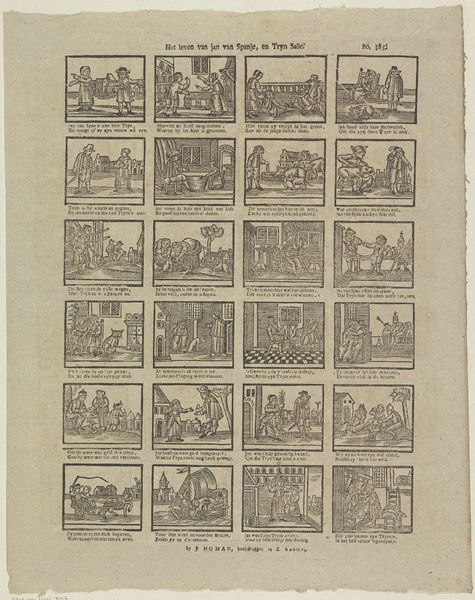
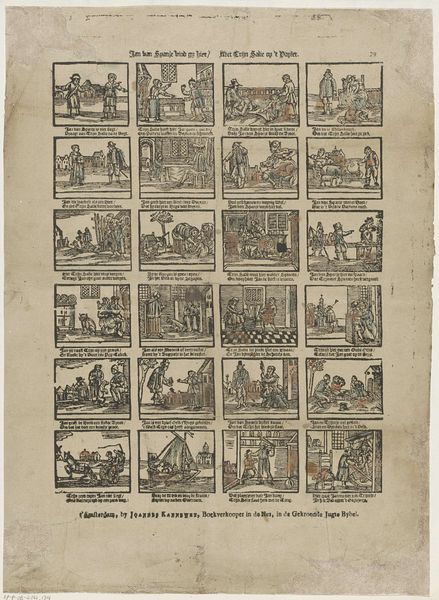
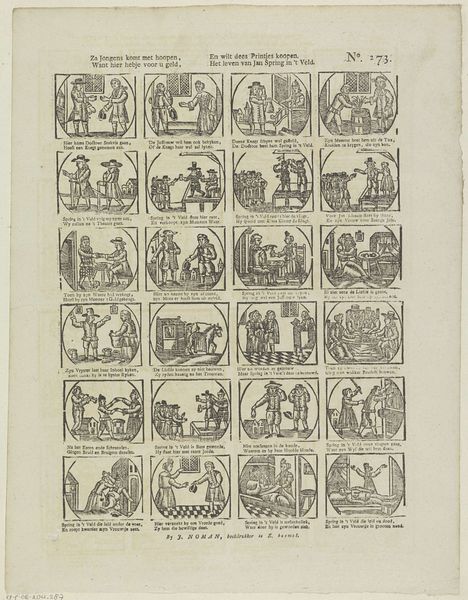
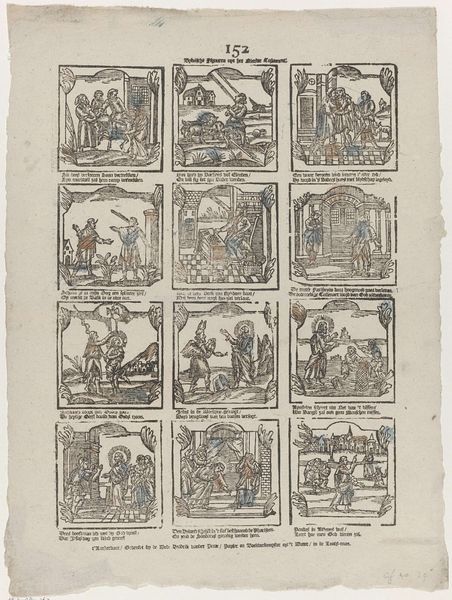
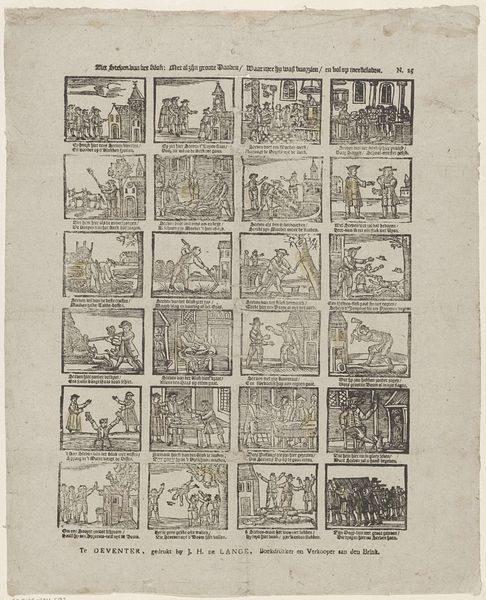
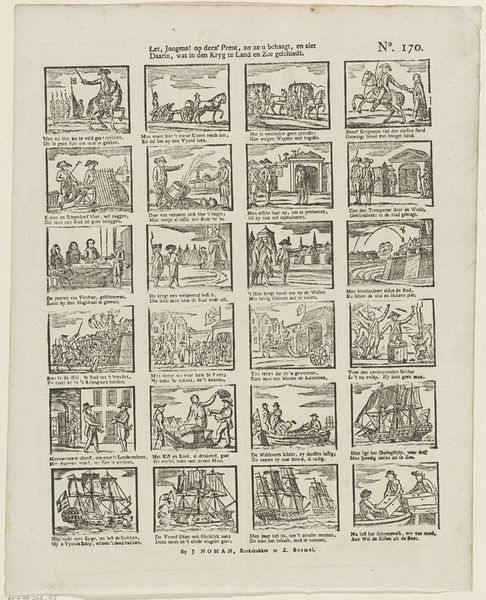
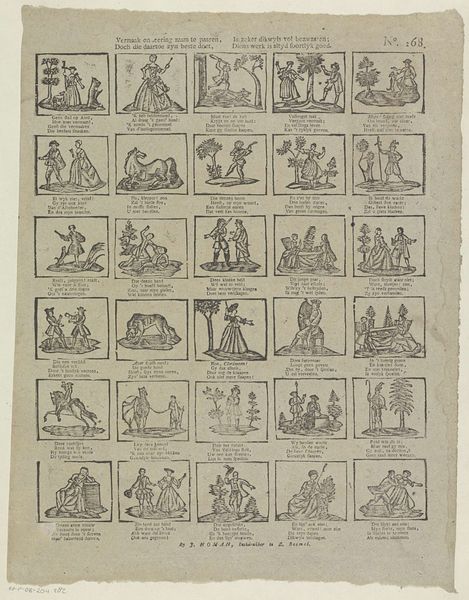
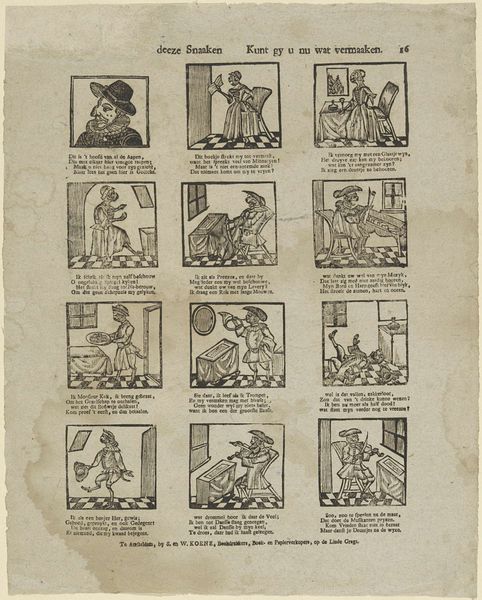
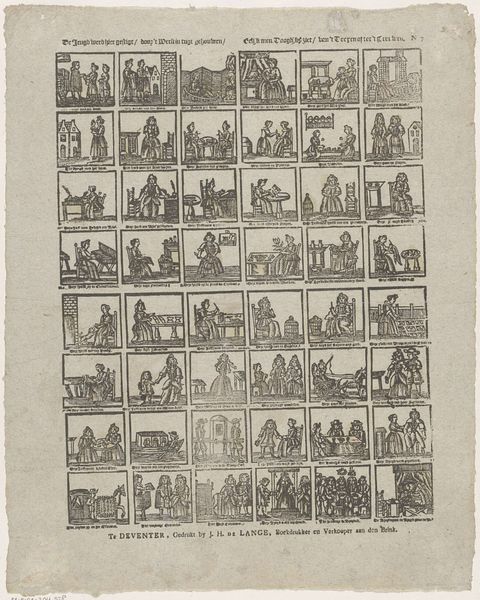
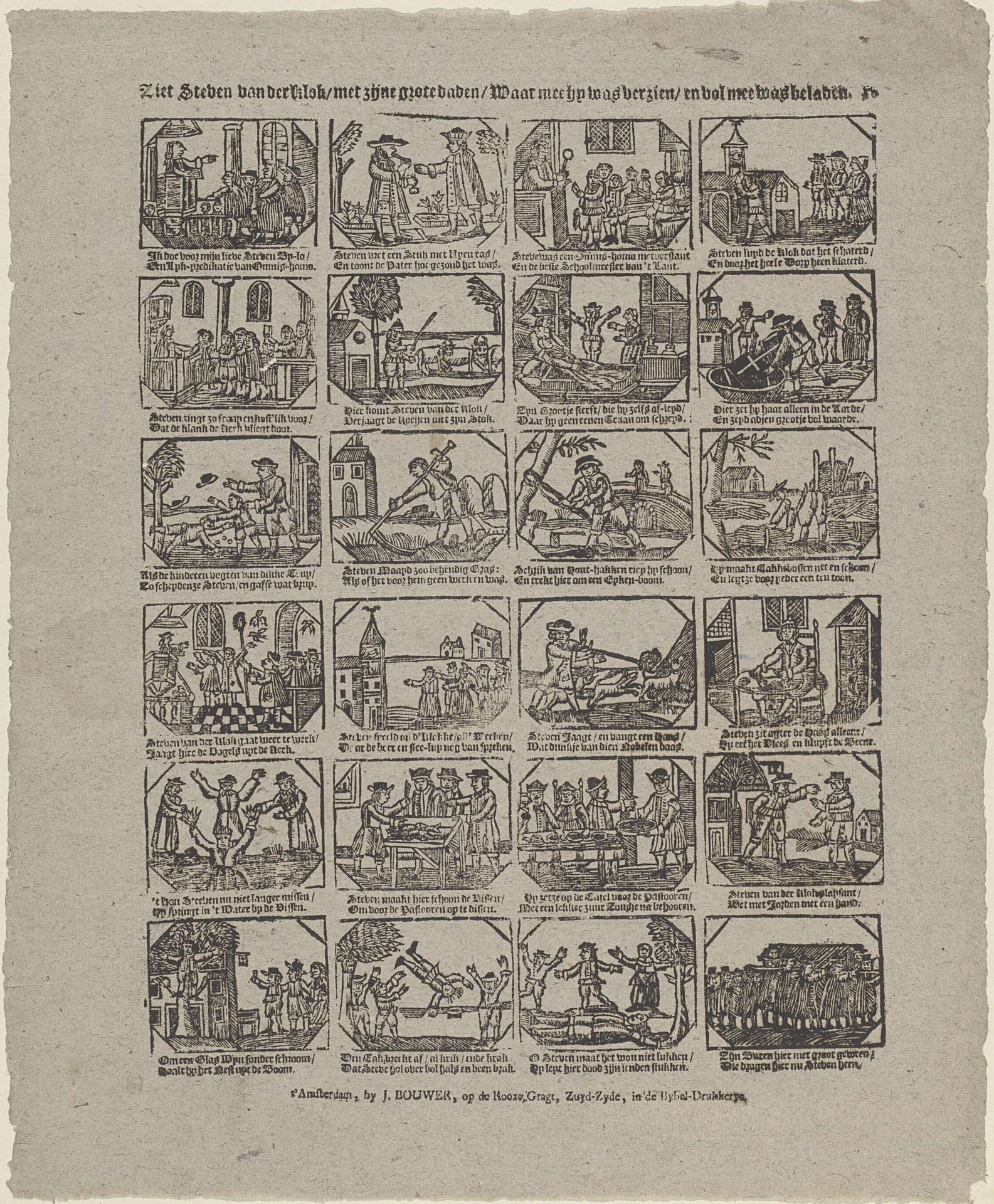
Johannes Bouwer created this print, titled “Ziet Steven van der Klok,” in the Netherlands, but the exact date is unknown. This series of vignettes, a sort of proto-comic strip, tells the story of Steven van der Klok’s deeds. Prints like these were a common form of mass media, circulating stories and moral lessons. Looking closer, we might ask, who was Steven van der Klok? Was he a real historical figure, a folk hero, or a fictional character used to convey specific values? The Rijksmuseum, where this print is housed, offers a particular institutional context. It shapes how we understand the print today, framing it as a historical artifact and a work of art. Understanding this print fully would require delving into Dutch folklore, popular literature of the period, and the social values that Bouwer was promoting or critiquing. By researching such sources, we can understand art as not just aesthetic objects, but reflections of the societies that produced them.
Ziet Steven van der Klok / met zijne grote daden / Waar mee hy was verzien / en vol mee was beladen
1805 - 1808

Johannes Bouwer
@johannesbouwerLocation
RijksmuseumArtwork details
- Medium
- graphic-art, print, woodcut, engraving
- Dimensions
- height 400 mm, width 329 mm
- Location
- Rijksmuseum
- Copyright
- Rijks Museum: Open Domain
Tags
Comments
Share your thoughts
About this artwork
Johannes Bouwer created this print, titled “Ziet Steven van der Klok,” in the Netherlands, but the exact date is unknown. This series of vignettes, a sort of proto-comic strip, tells the story of Steven van der Klok’s deeds. Prints like these were a common form of mass media, circulating stories and moral lessons. Looking closer, we might ask, who was Steven van der Klok? Was he a real historical figure, a folk hero, or a fictional character used to convey specific values? The Rijksmuseum, where this print is housed, offers a particular institutional context. It shapes how we understand the print today, framing it as a historical artifact and a work of art. Understanding this print fully would require delving into Dutch folklore, popular literature of the period, and the social values that Bouwer was promoting or critiquing. By researching such sources, we can understand art as not just aesthetic objects, but reflections of the societies that produced them.
Comments
Share your thoughts