About this artwork
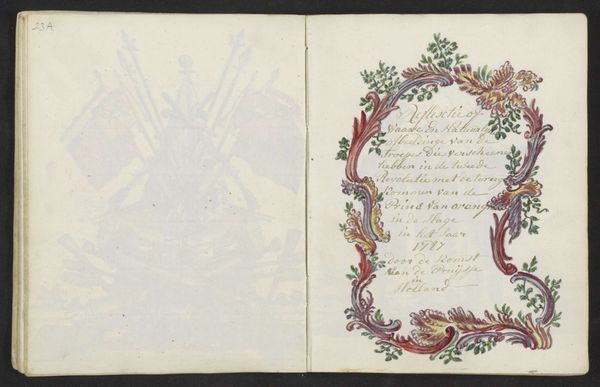
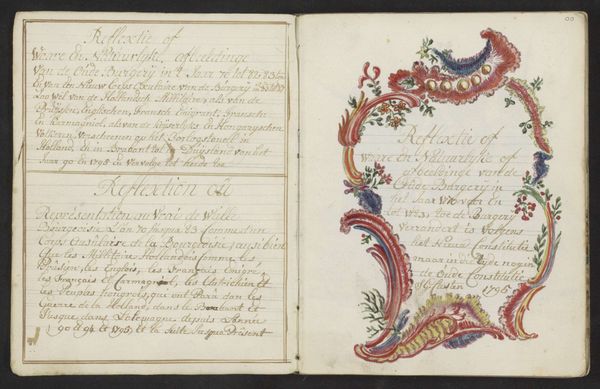
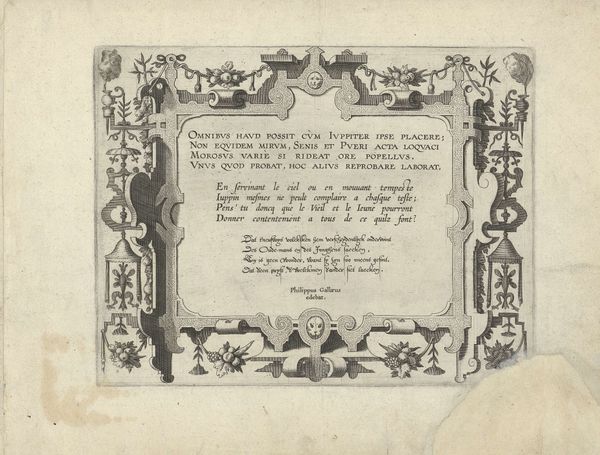
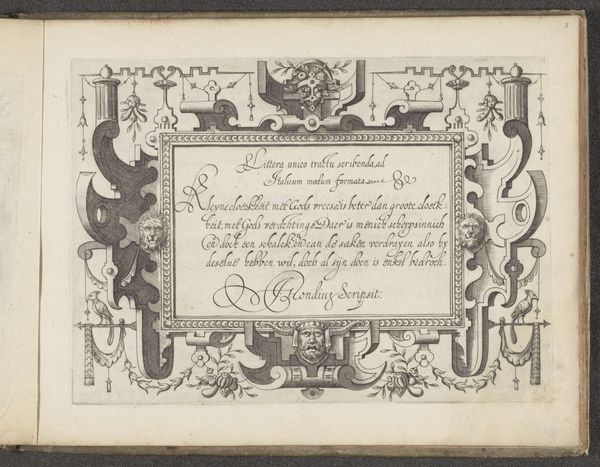
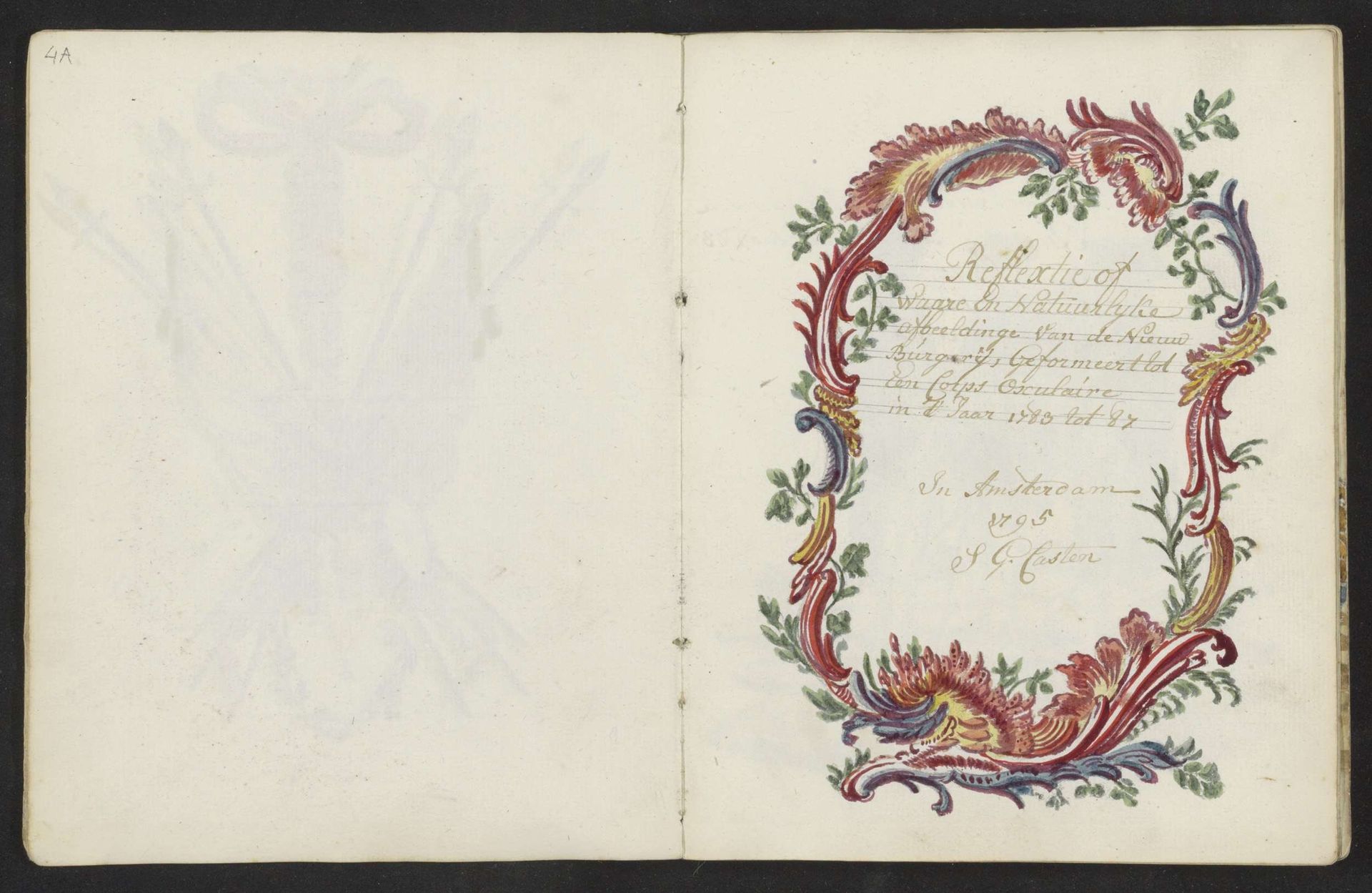
This is S.G. Casten’s ‘Title for the second chapter about the new Amsterdam militia from 1783-1787’, made in Amsterdam in 1795. It is an intriguing title page, isn't it? The Dutch militia, or “schutterij,” were civic guard units composed of middle-class citizens which had deep roots in the social and political life of the Netherlands. During the late 18th century, the Patriot movement sought democratic reforms, and the militia became entangled in political change. Casten’s title page speaks to this moment of transformation when the militia's role was being redefined amidst the changing political landscape. Notice the ornate frame with its organic flourishes contrasting with the formal, almost bureaucratic text it surrounds. The Patriot movement sought to reshape traditional power structures, and artworks like this offer a glimpse into the ways in which the shifting identities and social roles were navigated in the Netherlands. They prompt us to reflect on the individuals who sought to redefine civic participation.
Titel voor het tweede hoofdstuk over de nieuwe Amsterdamse schutterij van 1783-1787
1795

Artwork details
- Medium
- drawing, graphic-art, coloured-pencil, paper, ink
- Dimensions
- height 197 mm, width 310 mm
- Copyright
- Rijks Museum: Open Domain
Tags
Comments
Share your thoughts
About this artwork
This is S.G. Casten’s ‘Title for the second chapter about the new Amsterdam militia from 1783-1787’, made in Amsterdam in 1795. It is an intriguing title page, isn't it? The Dutch militia, or “schutterij,” were civic guard units composed of middle-class citizens which had deep roots in the social and political life of the Netherlands. During the late 18th century, the Patriot movement sought democratic reforms, and the militia became entangled in political change. Casten’s title page speaks to this moment of transformation when the militia's role was being redefined amidst the changing political landscape. Notice the ornate frame with its organic flourishes contrasting with the formal, almost bureaucratic text it surrounds. The Patriot movement sought to reshape traditional power structures, and artworks like this offer a glimpse into the ways in which the shifting identities and social roles were navigated in the Netherlands. They prompt us to reflect on the individuals who sought to redefine civic participation.
Comments
Share your thoughts