About this artwork
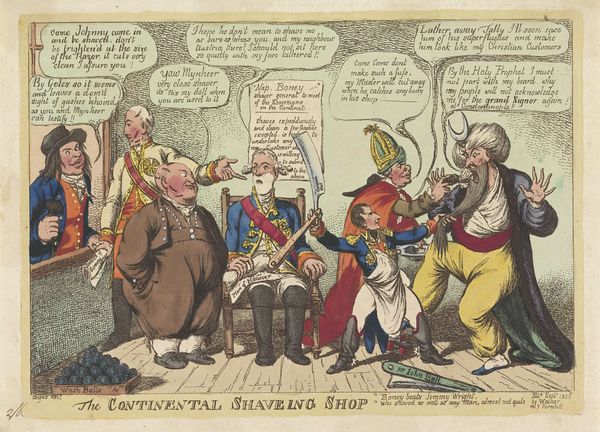
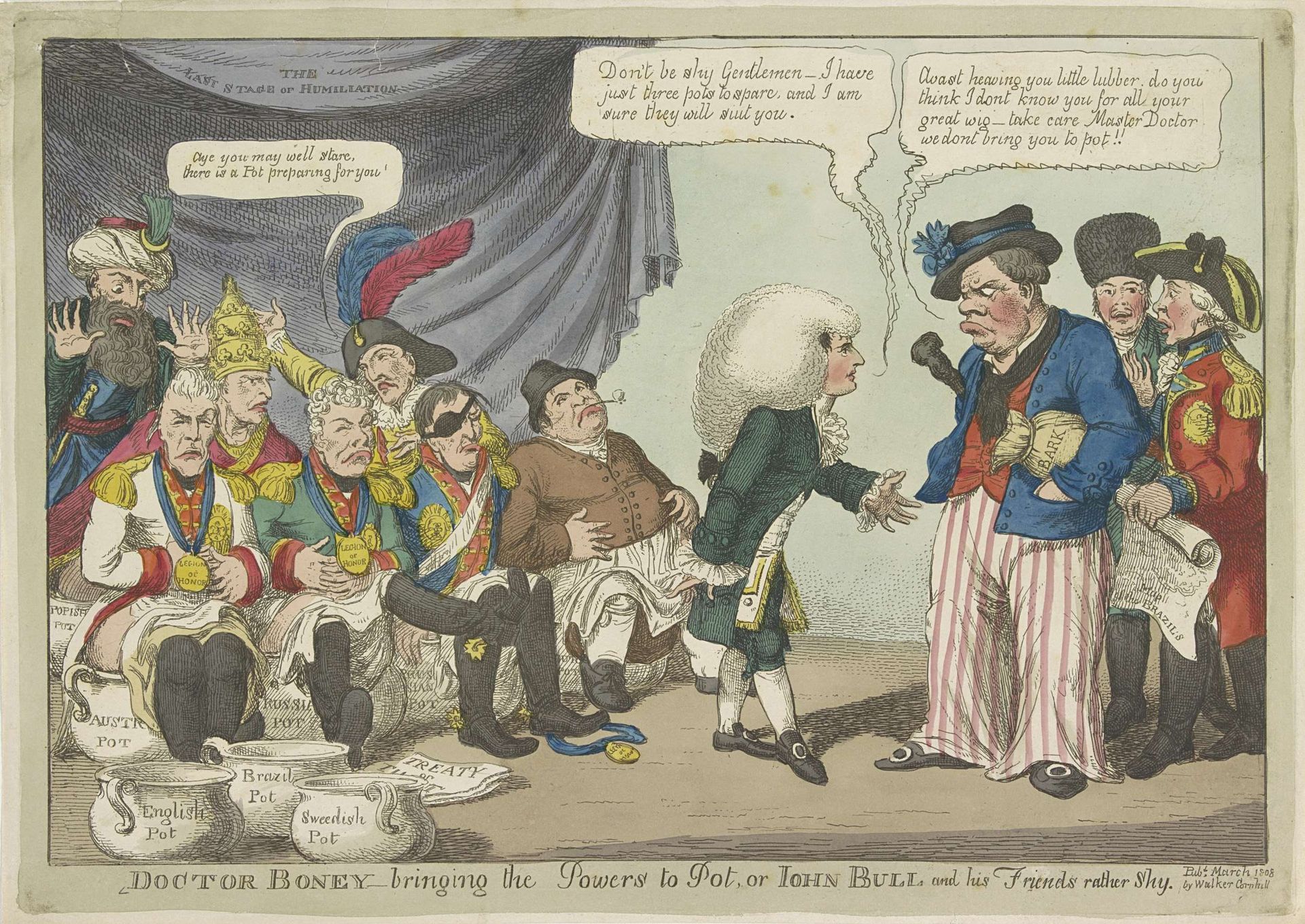
Charles Williams created this hand-colored etching in 1808. It’s a piece of political satire now held in the Rijksmuseum. The print depicts Napoleon, here called "Doctor Boney," forcing European monarchs to sit on chamber pots labeled with their countries. This crude scene visually expresses the political dominance Napoleon exerted over much of Europe at the time. On the right, John Bull, representing Britain, threatens Napoleon. With his fists clenched, he holds a bag of gold, symbolising Britain's financial power. The print reflects the intense political rivalry between Britain and France during the Napoleonic era. Satirical prints like these were a popular form of social and political commentary in Britain. They circulated widely and played a significant role in shaping public opinion. To fully understand this image, one might research the political alliances and conflicts of the Napoleonic Wars, along with the role of caricature in British political culture.
Dokter Napoleon zet de Europese vorsten op de pot, 1808 1808

Charles Williams
@charleswilliamsLocation
RijksmuseumArtwork details
- Medium
- print, etching
- Dimensions
- height 255 mm, width 360 mm
- Location
- Rijksmuseum
- Copyright
- Rijks Museum: Open Domain
Tags
narrative-art
etching
caricature
caricature
romanticism
Comments
No comments
About this artwork
Charles Williams created this hand-colored etching in 1808. It’s a piece of political satire now held in the Rijksmuseum. The print depicts Napoleon, here called "Doctor Boney," forcing European monarchs to sit on chamber pots labeled with their countries. This crude scene visually expresses the political dominance Napoleon exerted over much of Europe at the time. On the right, John Bull, representing Britain, threatens Napoleon. With his fists clenched, he holds a bag of gold, symbolising Britain's financial power. The print reflects the intense political rivalry between Britain and France during the Napoleonic era. Satirical prints like these were a popular form of social and political commentary in Britain. They circulated widely and played a significant role in shaping public opinion. To fully understand this image, one might research the political alliances and conflicts of the Napoleonic Wars, along with the role of caricature in British political culture.
Comments
No comments