About this artwork
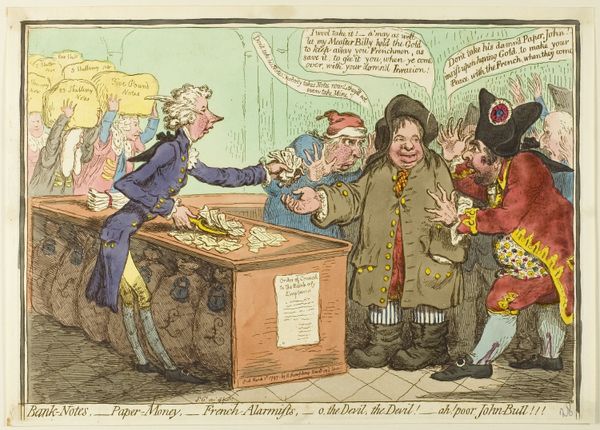
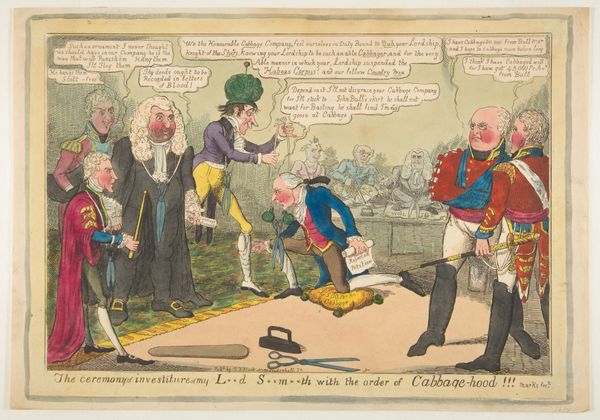
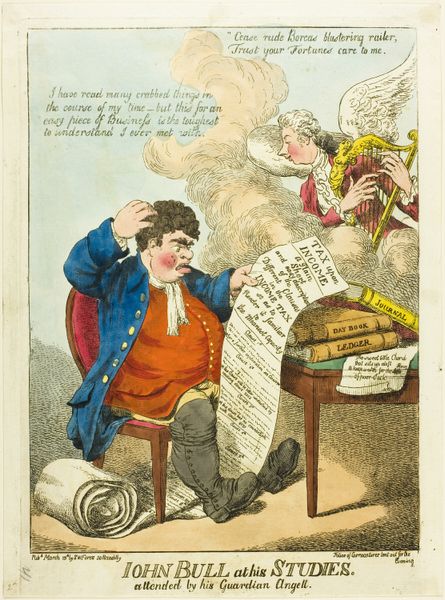
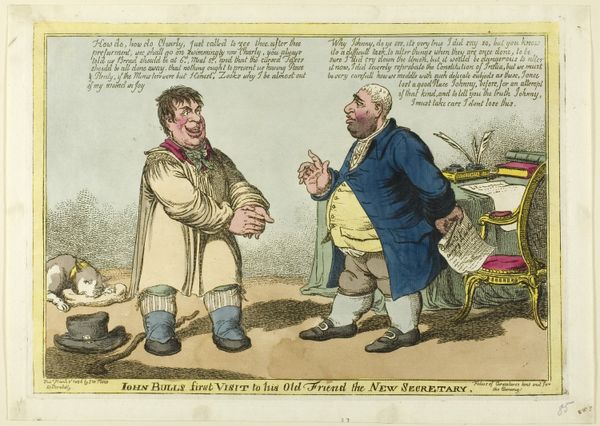
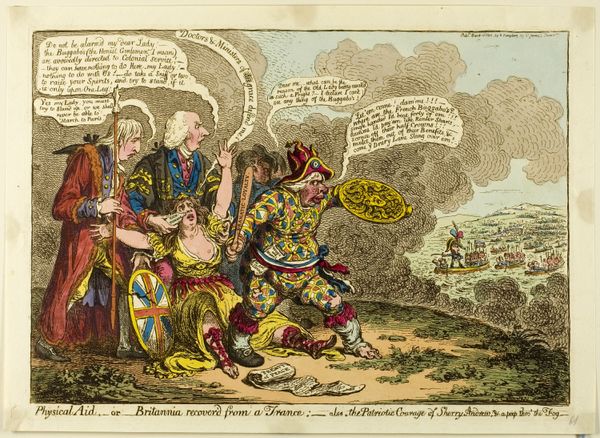
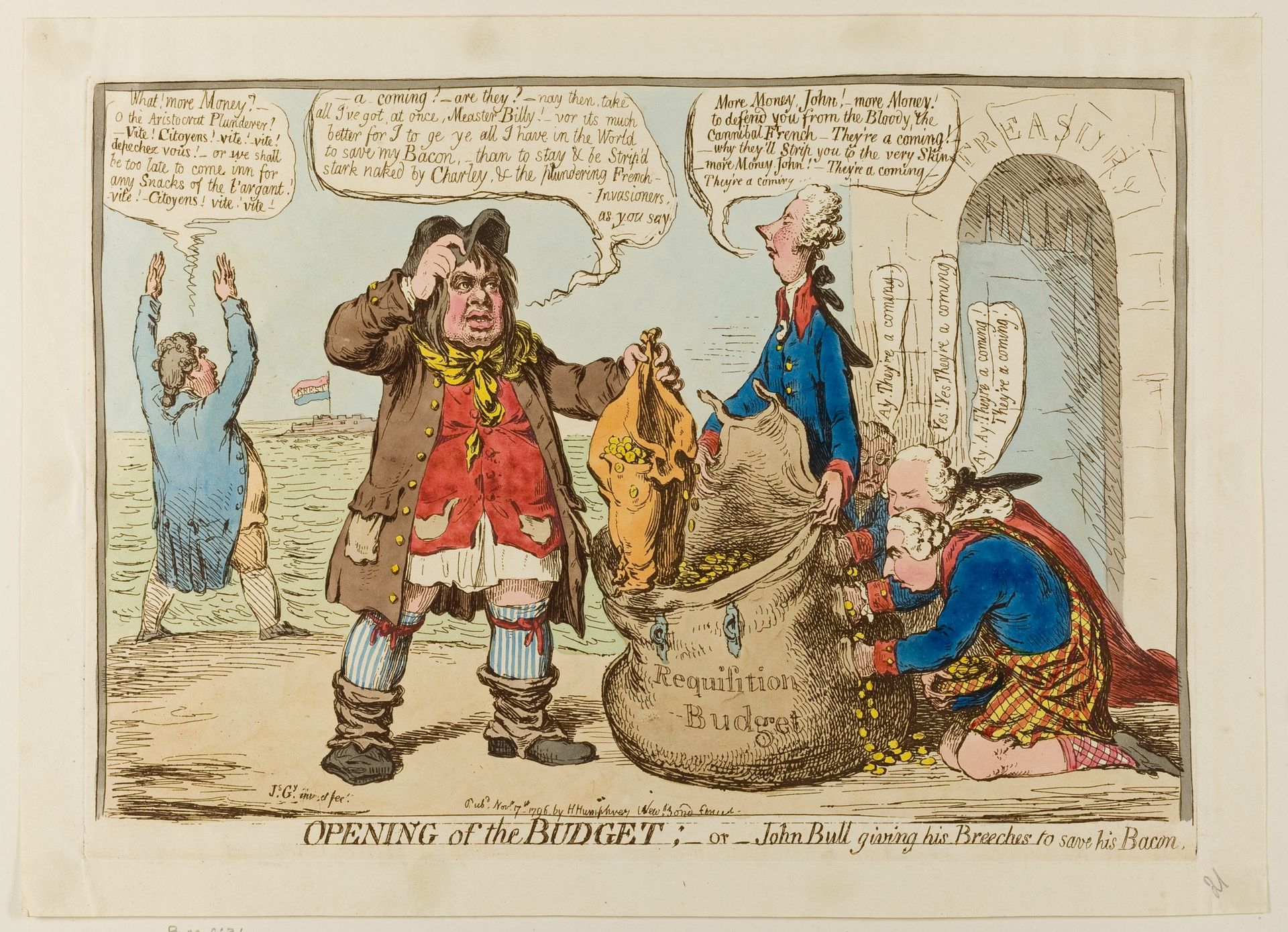
This hand-colored etching, made by James Gillray in England, satirizes the economic pressures of war. It depicts the British government, represented by figures like Prime Minister William Pitt, squeezing funds from the common person, 'John Bull', to finance military endeavors. Gillray was a leading figure in the Georgian satirical print culture. His works commented on the political landscape, often critiquing the monarchy, government policies, and social norms. This print is a powerful statement on the financial strain placed on the British populace due to ongoing conflicts. The image creates meaning through caricature, exaggeration, and symbolic representation. The artist used visual cues to critique the policies of his day. To fully understand Gillray’s work, we can consult historical records, political pamphlets, and other visual sources of the period. The meaning of art, like this etching, changes as its social and institutional context evolves.
Opening of the Budget Possibly 1796


Artwork details
- Medium
- drawing, print, etching, paper, watercolor
- Dimensions
- 249 × 352 mm (image); 253 × 357 mm (plate); 289 × 398 mm (sheet)
- Location
- The Art Institute of Chicago
- Copyright
- Public Domain
Tags
drawing
neoclacissism
narrative-art
etching
caricature
caricature
paper
watercolor
romanticism
watercolour illustration
Comments
No comments
About this artwork
This hand-colored etching, made by James Gillray in England, satirizes the economic pressures of war. It depicts the British government, represented by figures like Prime Minister William Pitt, squeezing funds from the common person, 'John Bull', to finance military endeavors. Gillray was a leading figure in the Georgian satirical print culture. His works commented on the political landscape, often critiquing the monarchy, government policies, and social norms. This print is a powerful statement on the financial strain placed on the British populace due to ongoing conflicts. The image creates meaning through caricature, exaggeration, and symbolic representation. The artist used visual cues to critique the policies of his day. To fully understand Gillray’s work, we can consult historical records, political pamphlets, and other visual sources of the period. The meaning of art, like this etching, changes as its social and institutional context evolves.
Comments
No comments