About this artwork
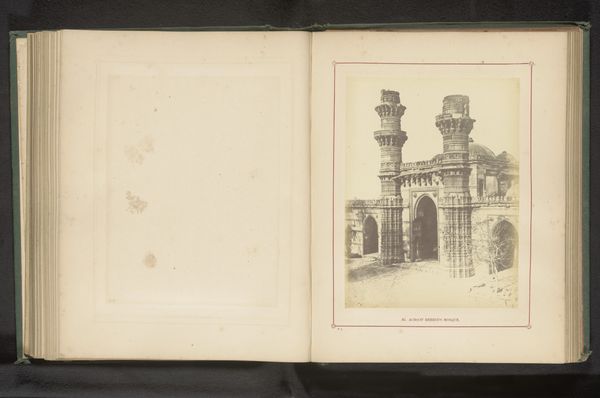
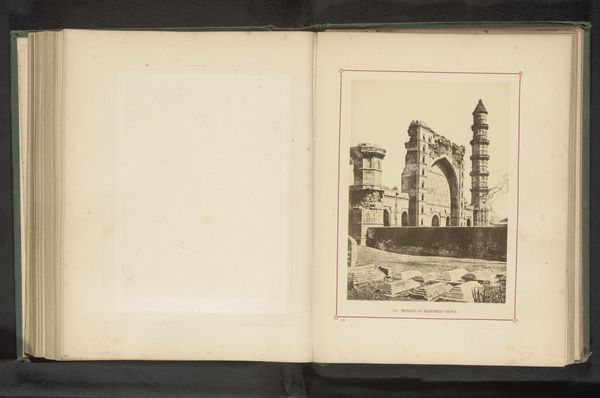
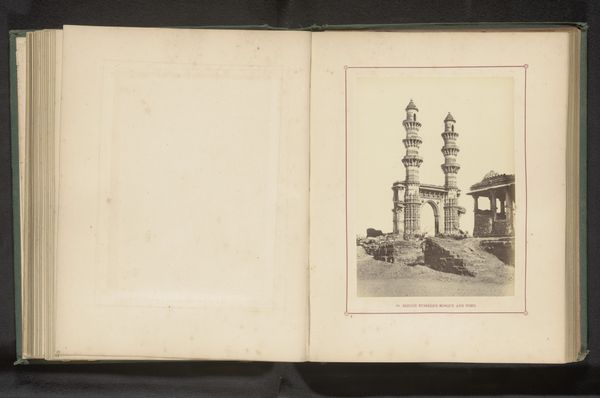
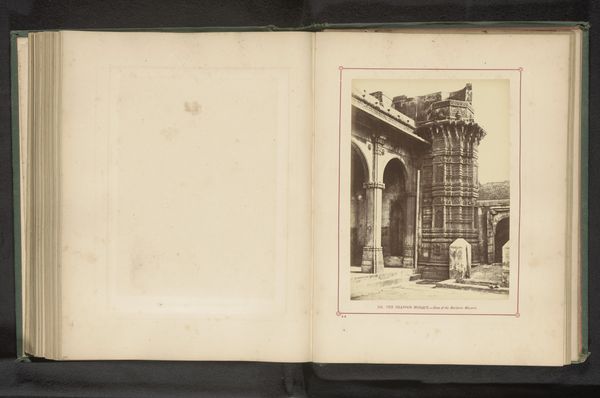
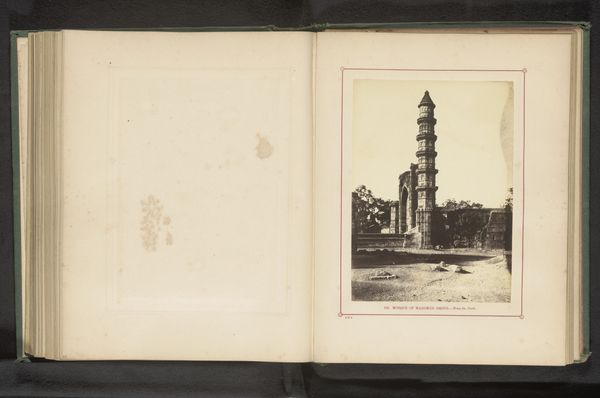
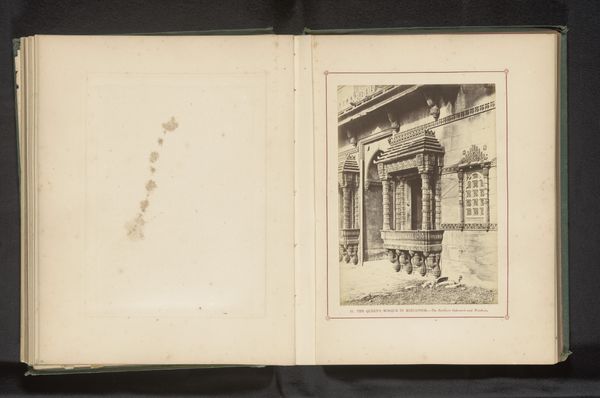
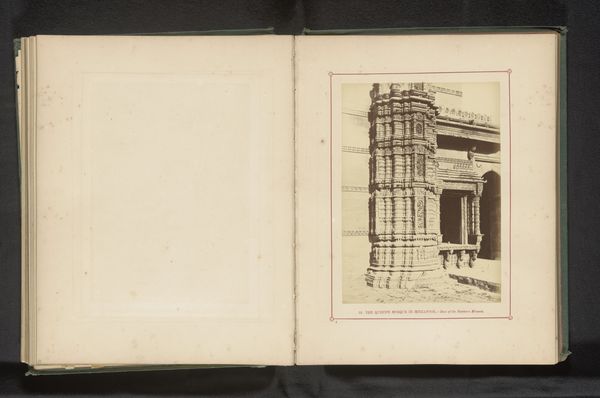
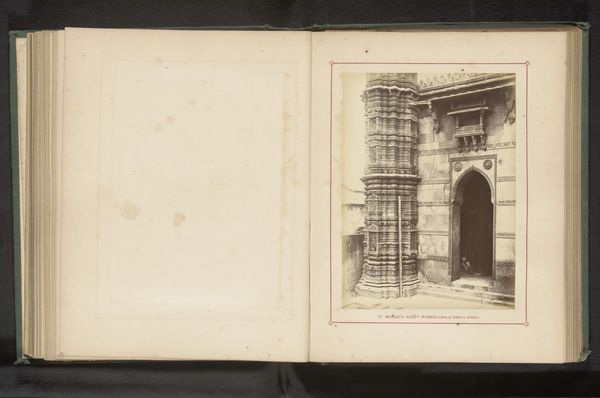
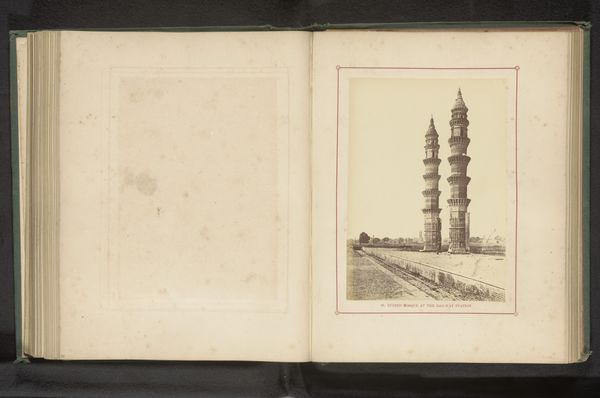
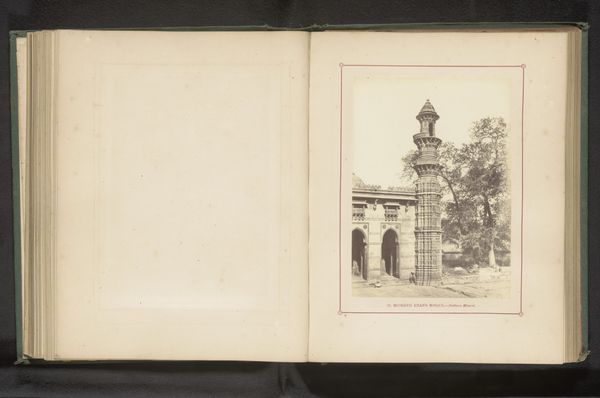
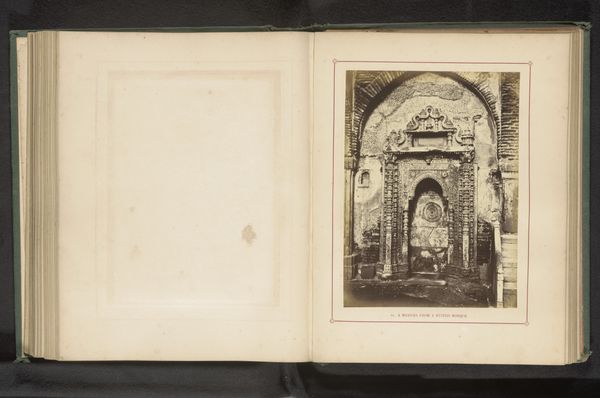
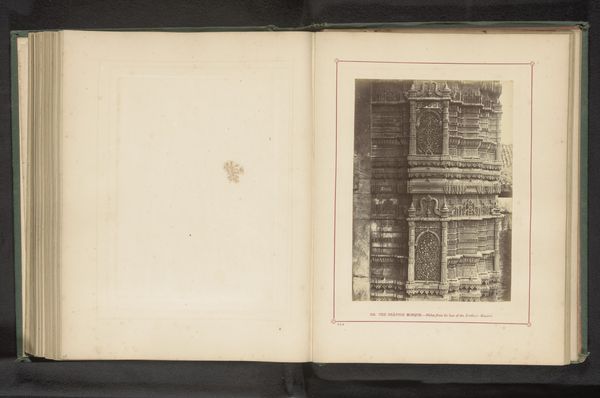
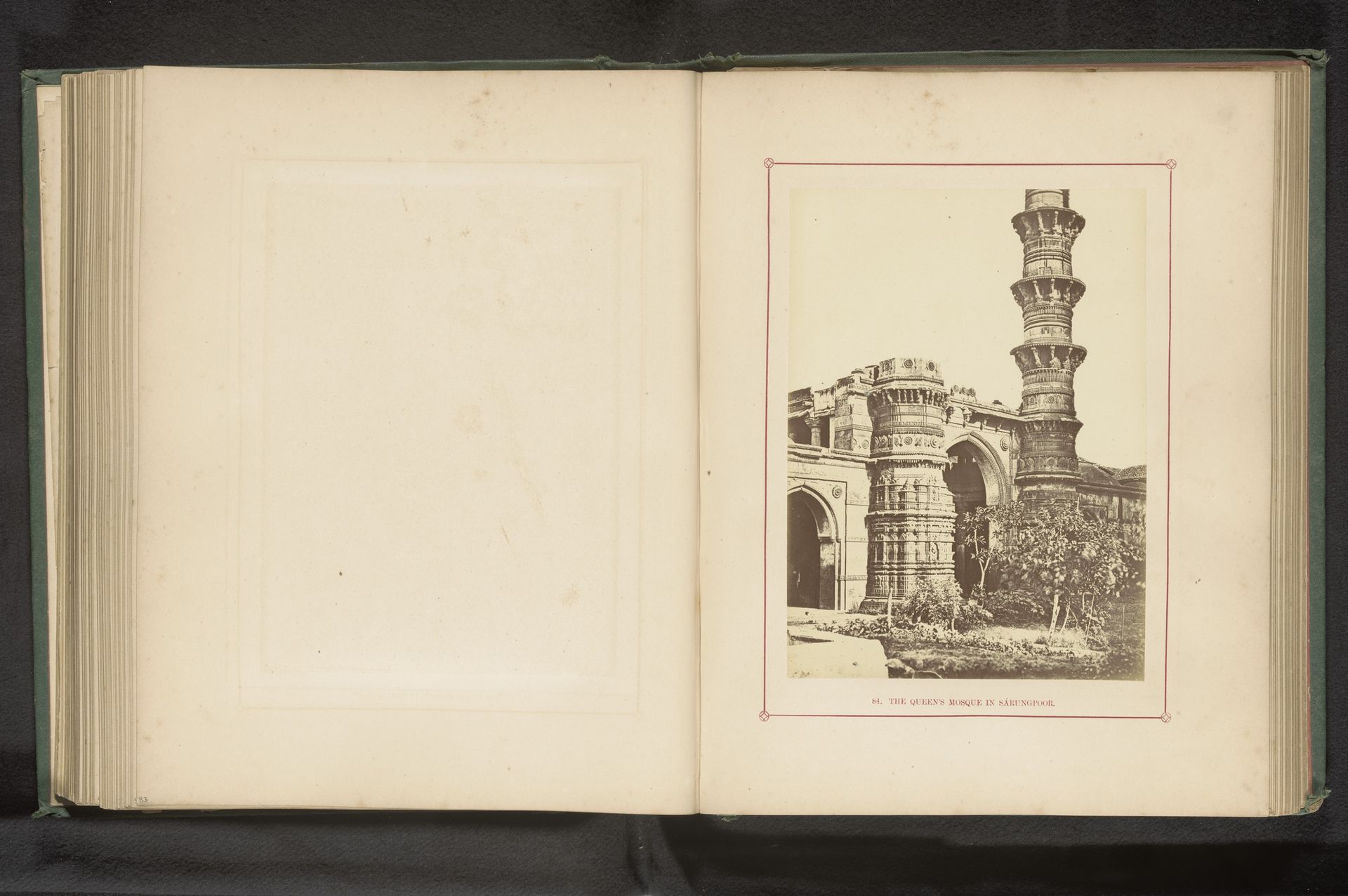
This is a photograph of a mosque in Ahmedabad, India, taken by Thomas Biggs. Photographs like this one were made using light-sensitive chemistry on paper, requiring specialized knowledge and equipment. It's easy to overlook the material reality of photography, but actually it was a very hands-on process. Before the advent of digital photography, it was a craft as much as an art. This particular image is part of a bound volume, suggesting it was intended as a collectible item for display, or documentation. Photographs taken in colonial contexts like this one often served to promote a certain view of a place and its people. Here, the architectural skill of the mosque is evident. However, by presenting it as a static object, Biggs frames it as a relic of the past, rather than a site of ongoing cultural importance. Paying attention to these aspects of materials, making, and context helps us to understand the full meaning of the image, and to challenge traditional distinctions between documentation and art.

Artwork details
- Medium
- print, photography
- Dimensions
- height 186 mm, width 136 mm
- Copyright
- Rijks Museum: Open Domain
Tags
landscape
photography
orientalism
cityscape
islamic-art
Comments
No comments
About this artwork
This is a photograph of a mosque in Ahmedabad, India, taken by Thomas Biggs. Photographs like this one were made using light-sensitive chemistry on paper, requiring specialized knowledge and equipment. It's easy to overlook the material reality of photography, but actually it was a very hands-on process. Before the advent of digital photography, it was a craft as much as an art. This particular image is part of a bound volume, suggesting it was intended as a collectible item for display, or documentation. Photographs taken in colonial contexts like this one often served to promote a certain view of a place and its people. Here, the architectural skill of the mosque is evident. However, by presenting it as a static object, Biggs frames it as a relic of the past, rather than a site of ongoing cultural importance. Paying attention to these aspects of materials, making, and context helps us to understand the full meaning of the image, and to challenge traditional distinctions between documentation and art.
Comments
No comments