About this artwork
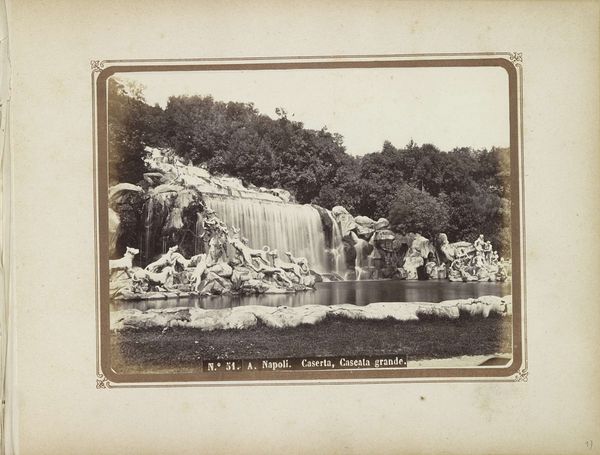
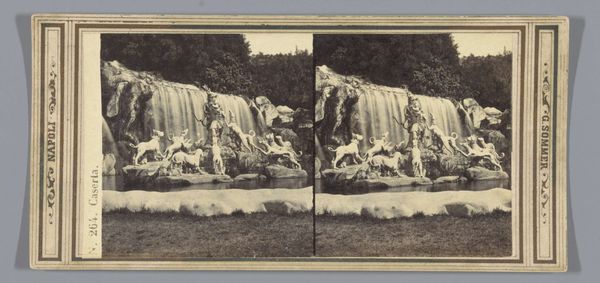
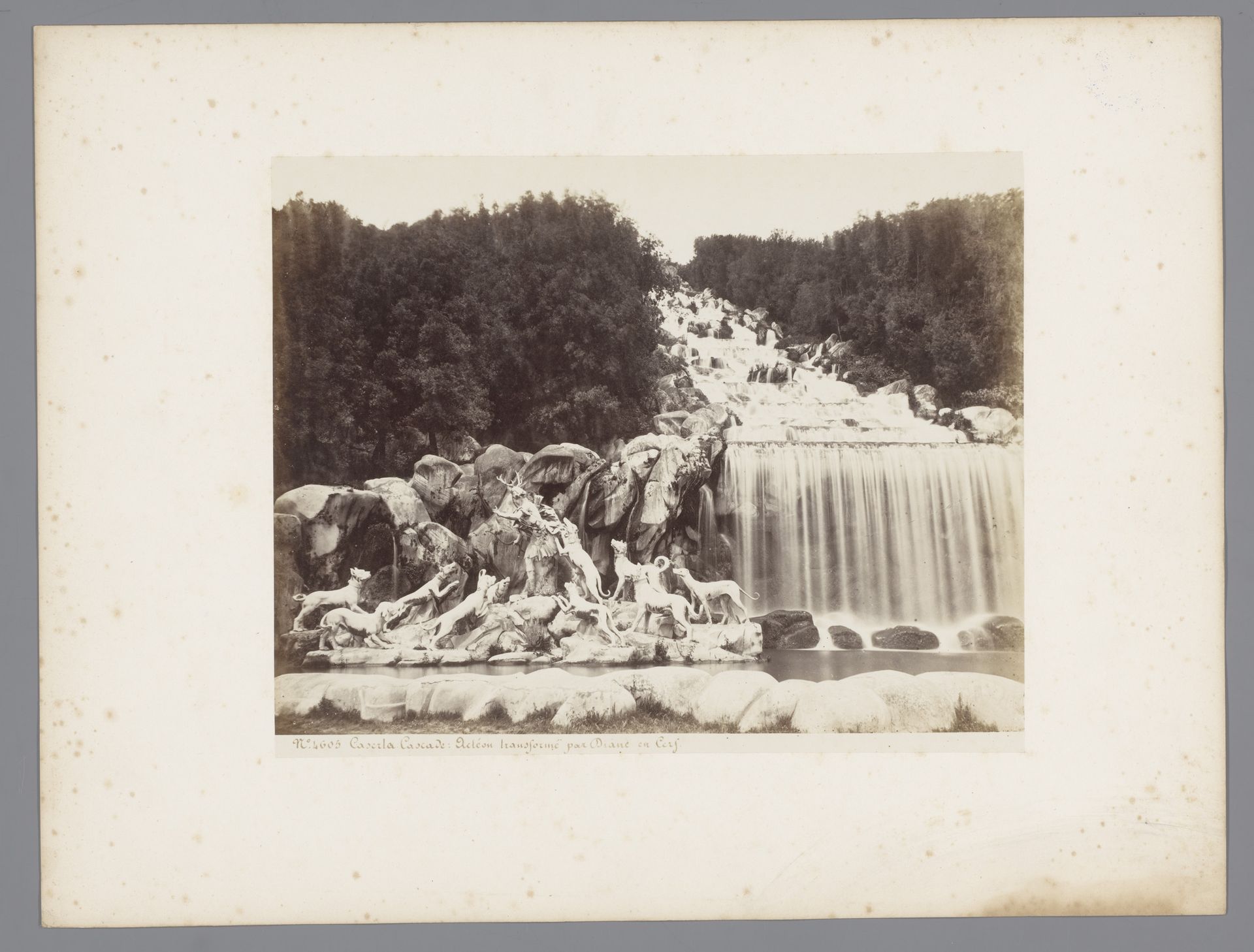
This photograph by Giorgio Sommer captures the Fountain of Diana and Actaeon in the gardens of the Palace of Caserta near Naples. Sommer, who was German, made his career in Italy catering to tourists, who flocked to the country in the 19th century to see its famous sites. The photograph itself is albumen print, made by coating paper with egg white and then exposing it to light through a negative. This process yields a smooth, glossy surface with rich tonal range, well-suited to capturing the play of light on the fountain’s cascading water and sculpted figures. Of course, the fountain is not only a beautiful image, but also an engineering marvel. The amount of planning and labor to create such a water feature at the time is something to consider: the workers who quarried the stone, carved the sculptures, and installed the plumbing, all enabled the luxury enjoyed by those who commissioned and visited the Palace. Sommer’s photograph, then, is more than a record. It’s a portrait of a place inseparable from the labor that made it possible.
Fontein van Diana en Actaeon in de tuinen van het paleis van Caserte te Napels, Italië 1857 - 1914

Giorgio Sommer
1834 - 1914Location
RijksmuseumArtwork details
- Medium
- photography, gelatin-silver-print
- Dimensions
- height 307 mm, width 403 mm
- Location
- Rijksmuseum
- Copyright
- Rijks Museum: Open Domain
Tags
landscape
classical-realism
photography
gelatin-silver-print
Comments
No comments
About this artwork
This photograph by Giorgio Sommer captures the Fountain of Diana and Actaeon in the gardens of the Palace of Caserta near Naples. Sommer, who was German, made his career in Italy catering to tourists, who flocked to the country in the 19th century to see its famous sites. The photograph itself is albumen print, made by coating paper with egg white and then exposing it to light through a negative. This process yields a smooth, glossy surface with rich tonal range, well-suited to capturing the play of light on the fountain’s cascading water and sculpted figures. Of course, the fountain is not only a beautiful image, but also an engineering marvel. The amount of planning and labor to create such a water feature at the time is something to consider: the workers who quarried the stone, carved the sculptures, and installed the plumbing, all enabled the luxury enjoyed by those who commissioned and visited the Palace. Sommer’s photograph, then, is more than a record. It’s a portrait of a place inseparable from the labor that made it possible.
Comments
No comments