About this artwork
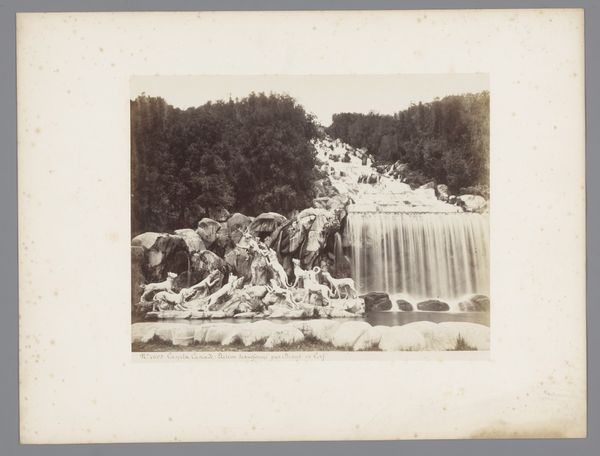
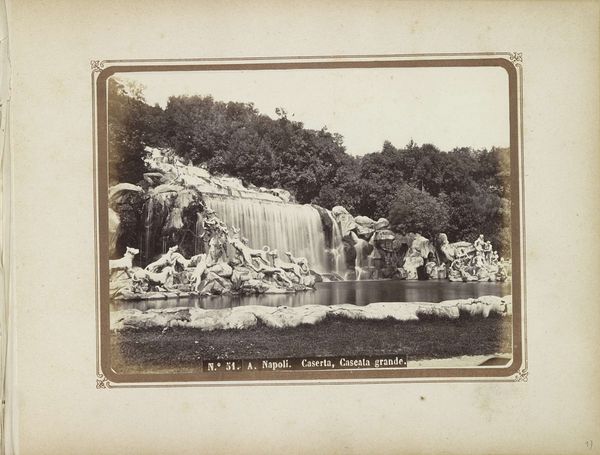
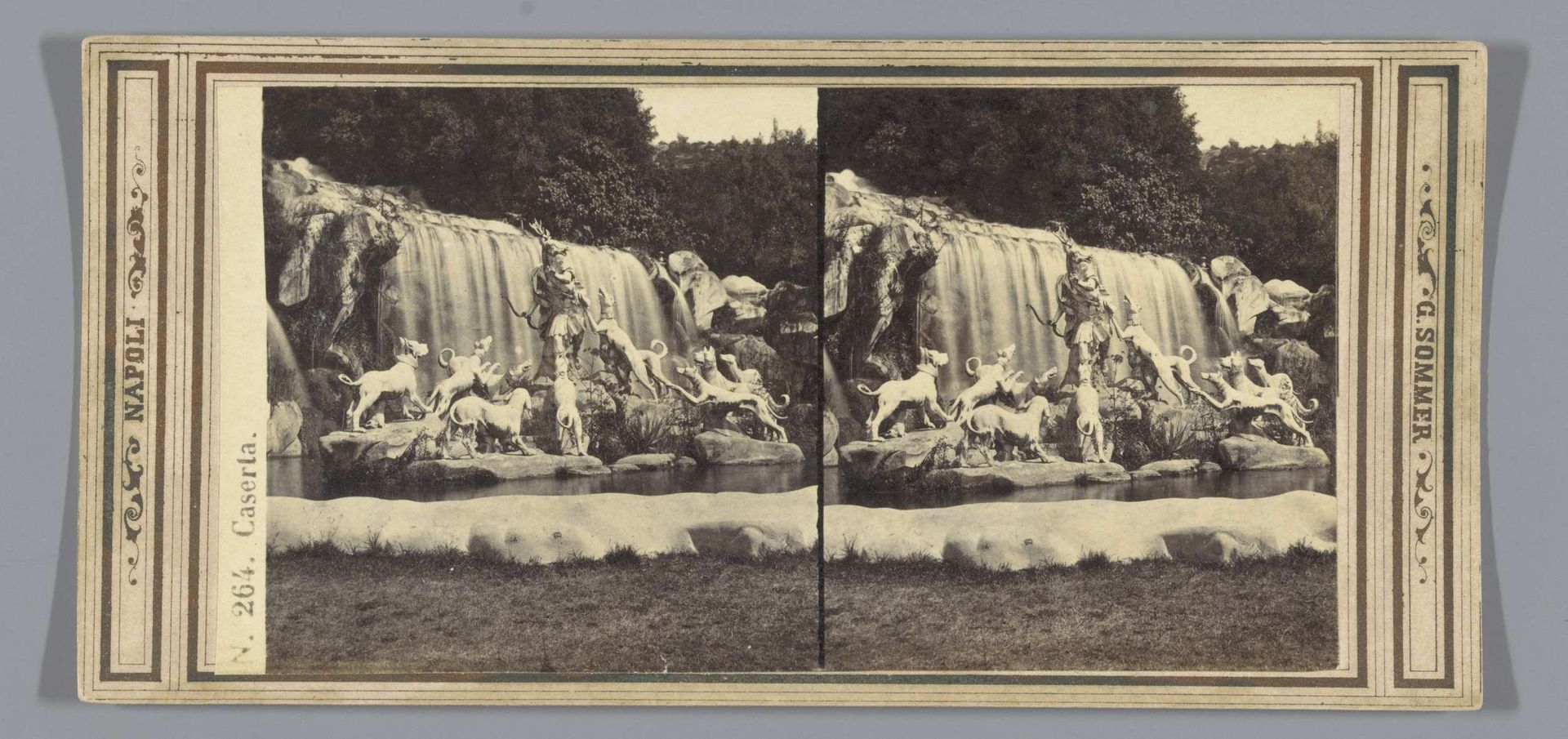
Captured by Giorgio Sommer, this photograph immortalizes the sculpture of Actaeon's tragic demise, set within the Palace of Caserta's gardens. Here, Actaeon, a skilled hunter, is torn apart by his own hounds, a brutal punishment for his transgression against Diana, the goddess of the hunt. This scene is replete with potent symbolism. Actaeon, the hunter becomes the hunted, a motif that echoes through time. Consider Saint Sebastian, pierced by arrows, or even Christ on the cross – the archetypal figure of the sacrificed. The hounds, traditionally symbols of loyalty, transform into agents of destruction, a powerful inversion that evokes deep unease. This motif recurs across centuries; we see it evolve, for example, into more abstract forms of betrayal and internal conflict in modern art. The emotional weight of Actaeon's suffering resonates with the viewer, engaging primal fears of vulnerability and loss. The cyclical nature of this image—hunter and hunted, loyalty and betrayal—speaks to a non-linear progression, its meanings evolving with each retelling, each new artistic interpretation.
Beeldengroep van Actaeon die door zijn eigen jachthonden verslonden wordt in een vijver in de tuin van het Paleis van Caserta
c. 1860 - 1880

Giorgio Sommer
1834 - 1914Location
RijksmuseumArtwork details
- Medium
- photography, sculpture, albumen-print
- Dimensions
- height 83 mm, width 173 mm
- Location
- Rijksmuseum
- Copyright
- Rijks Museum: Open Domain
Tags
Comments
Share your thoughts
About this artwork
Captured by Giorgio Sommer, this photograph immortalizes the sculpture of Actaeon's tragic demise, set within the Palace of Caserta's gardens. Here, Actaeon, a skilled hunter, is torn apart by his own hounds, a brutal punishment for his transgression against Diana, the goddess of the hunt. This scene is replete with potent symbolism. Actaeon, the hunter becomes the hunted, a motif that echoes through time. Consider Saint Sebastian, pierced by arrows, or even Christ on the cross – the archetypal figure of the sacrificed. The hounds, traditionally symbols of loyalty, transform into agents of destruction, a powerful inversion that evokes deep unease. This motif recurs across centuries; we see it evolve, for example, into more abstract forms of betrayal and internal conflict in modern art. The emotional weight of Actaeon's suffering resonates with the viewer, engaging primal fears of vulnerability and loss. The cyclical nature of this image—hunter and hunted, loyalty and betrayal—speaks to a non-linear progression, its meanings evolving with each retelling, each new artistic interpretation.
Comments
Share your thoughts