About this artwork
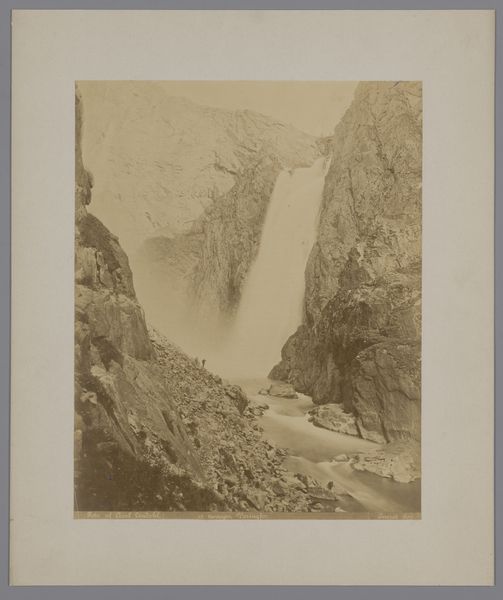
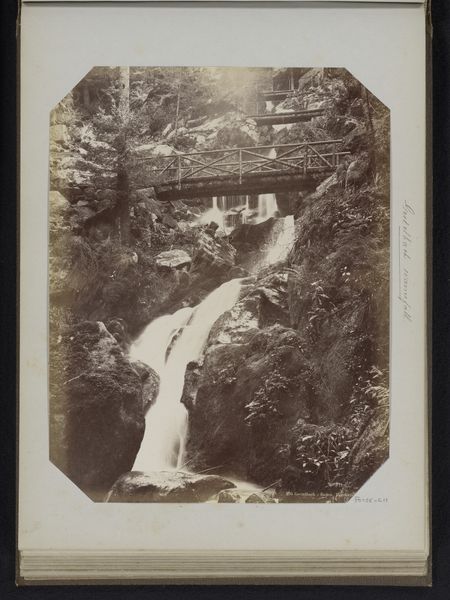
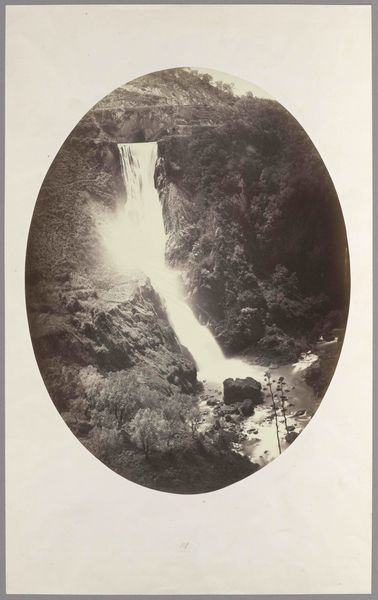
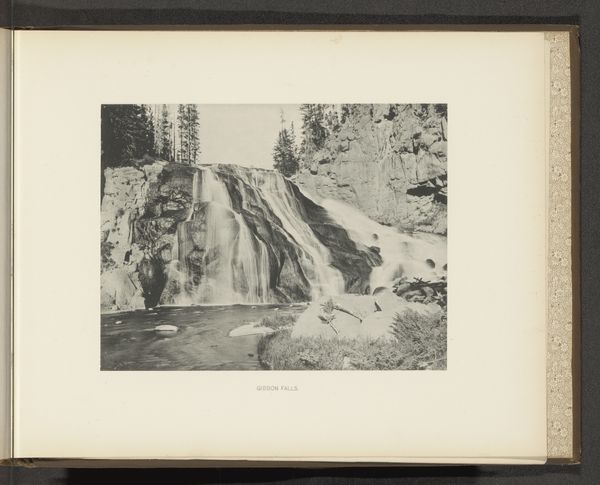
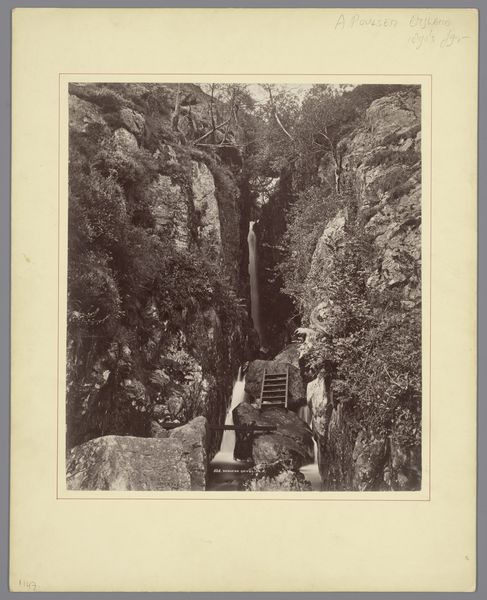
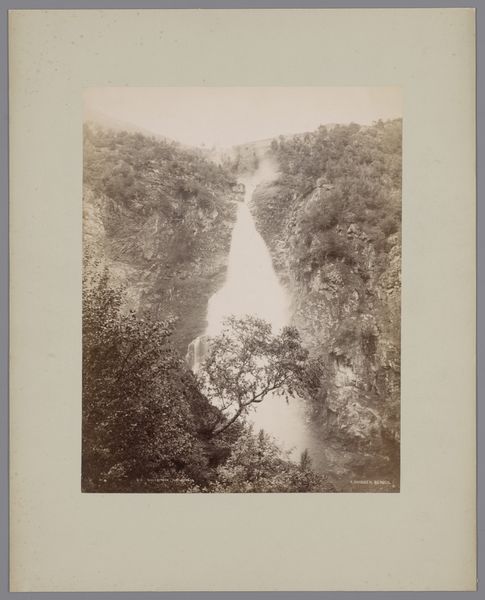
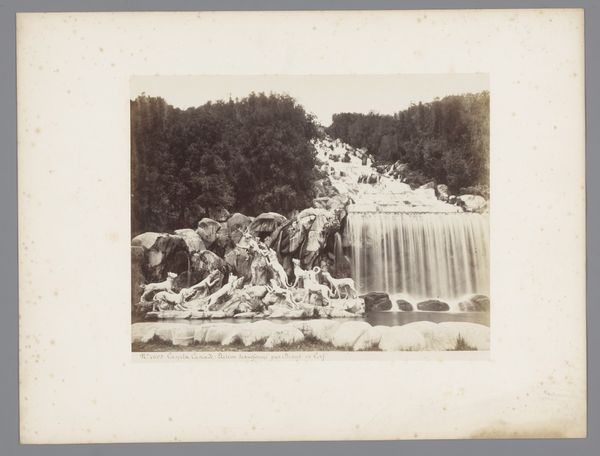
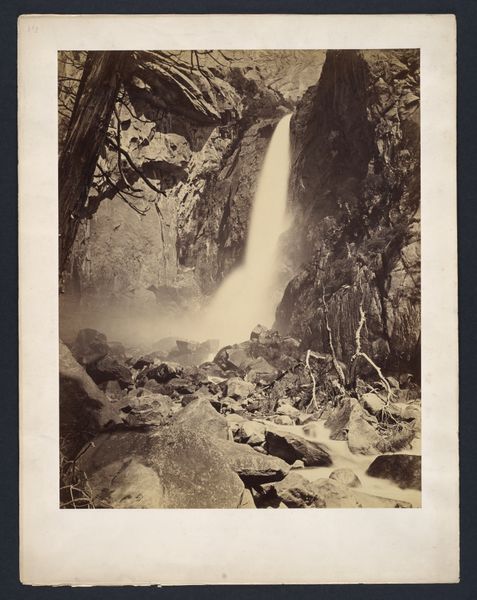
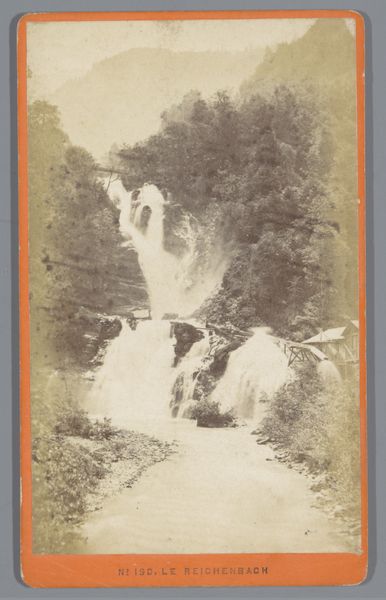
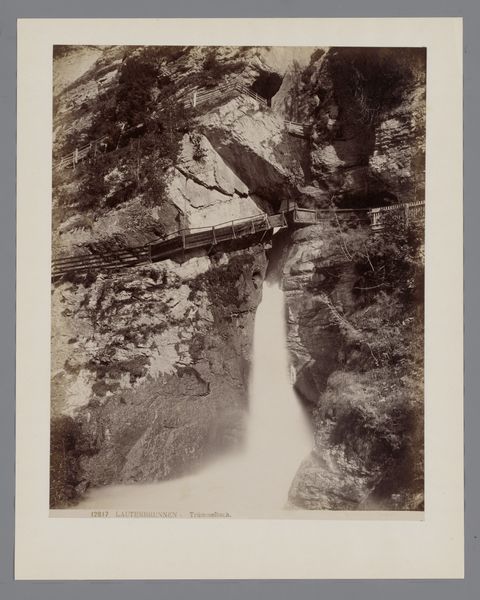
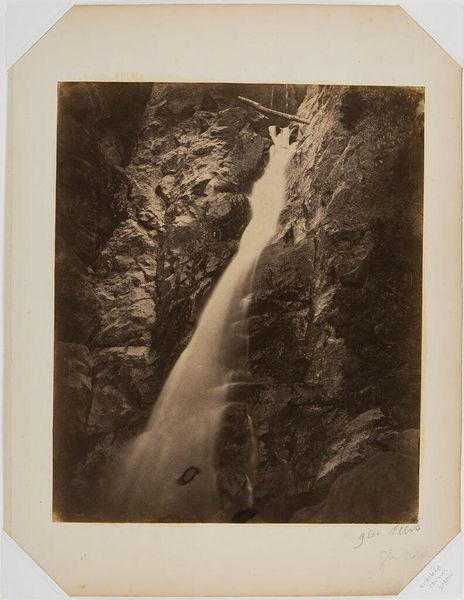
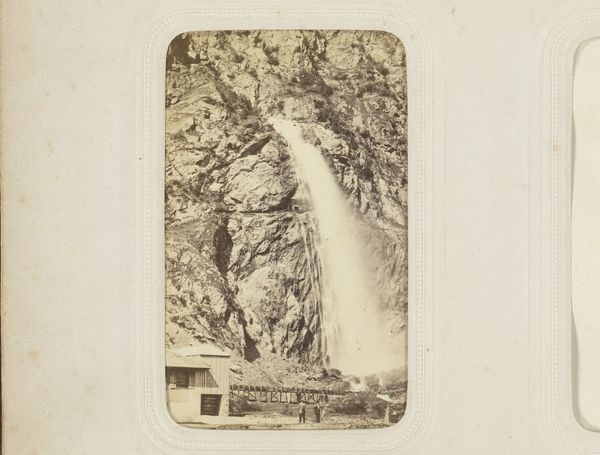
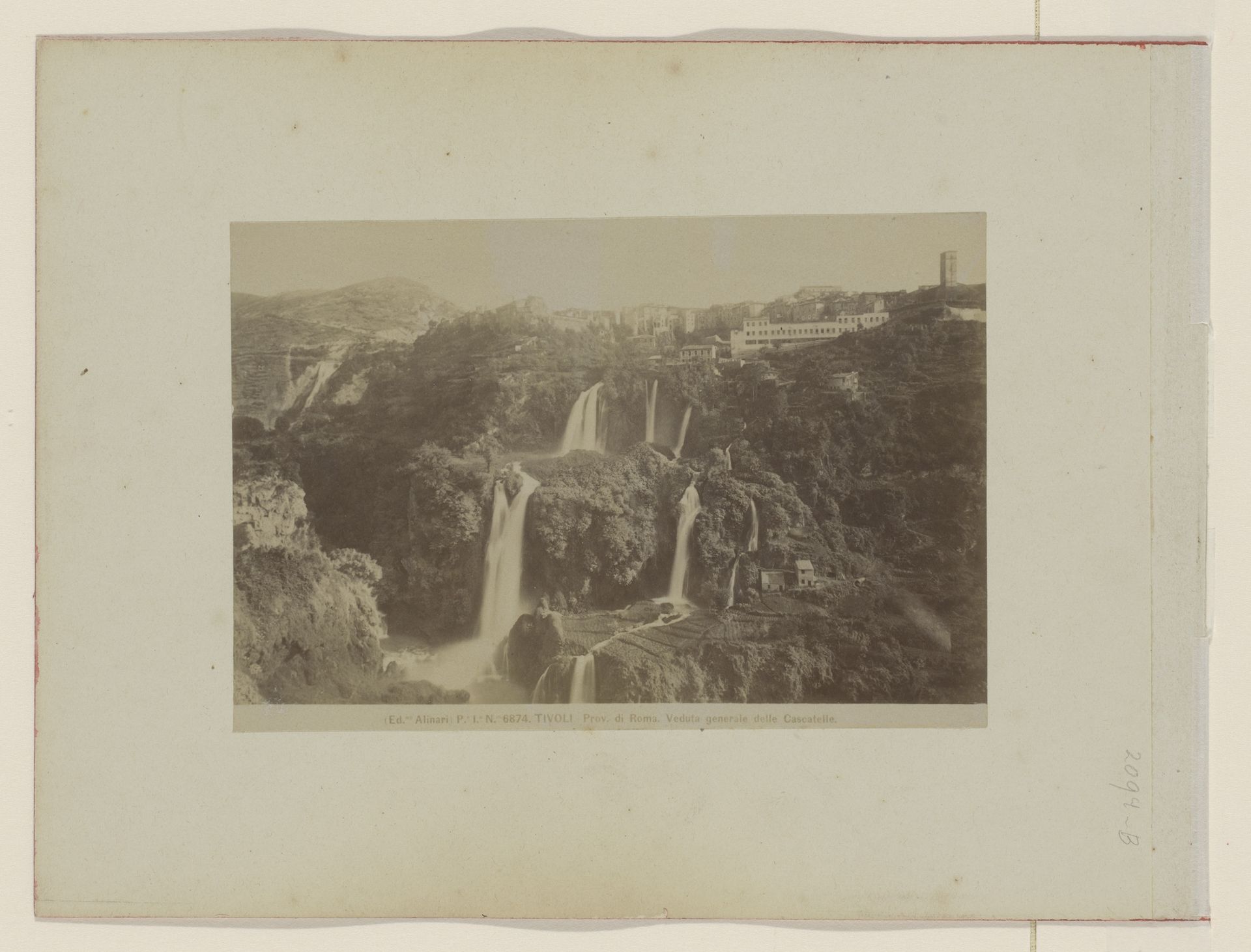
The Alinari brothers made this photograph of the waterfalls at Tivoli, Italy, using an albumen silver print. The image is made by coating a paper base with an emulsion of egg white and silver nitrate, resulting in a smooth surface with fine detail. The tonality is rich and sepia-like due to the materials used in its production. It’s fascinating to consider the chemistry involved: manipulating organic substances and light-sensitive compounds to fix an image permanently. This laborious process was the foundation of early commercial photography, before industrialization streamlined the operation. There's a direct correlation between this artistic vision, and the manual labor involved in its creation. The image captures a romantic view of nature, yet it was enabled by a complex system of labor, science, and commerce. By appreciating these elements, we understand photography not just as a means of representation, but as a product of its time.
Gezicht op de watervallen bij Tivoli, Italië
1857 - 1900

Fratelli Alinari
@fratellialinariLocation
RijksmuseumArtwork details
- Dimensions
- height 97 mm, width 144 mm, height 168 mm, width 224 mm
- Location
- Rijksmuseum
- Copyright
- Rijks Museum: Open Domain
Comments
Share your thoughts
About this artwork
The Alinari brothers made this photograph of the waterfalls at Tivoli, Italy, using an albumen silver print. The image is made by coating a paper base with an emulsion of egg white and silver nitrate, resulting in a smooth surface with fine detail. The tonality is rich and sepia-like due to the materials used in its production. It’s fascinating to consider the chemistry involved: manipulating organic substances and light-sensitive compounds to fix an image permanently. This laborious process was the foundation of early commercial photography, before industrialization streamlined the operation. There's a direct correlation between this artistic vision, and the manual labor involved in its creation. The image captures a romantic view of nature, yet it was enabled by a complex system of labor, science, and commerce. By appreciating these elements, we understand photography not just as a means of representation, but as a product of its time.
Comments
Share your thoughts