About this artwork
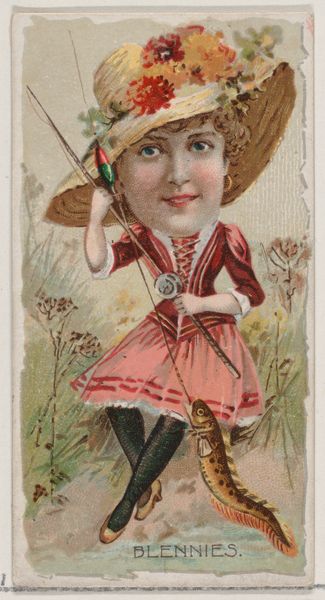
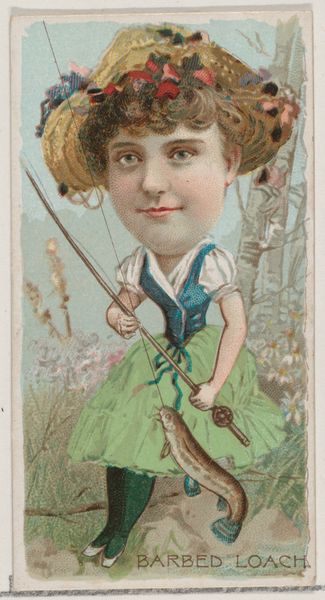
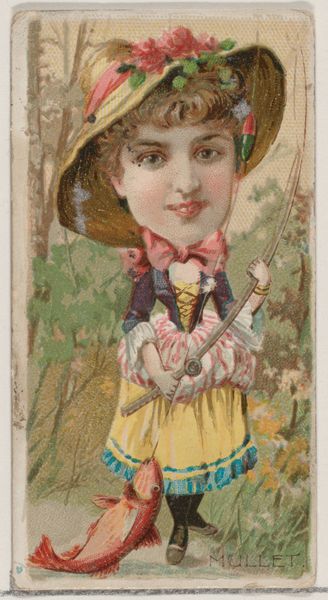
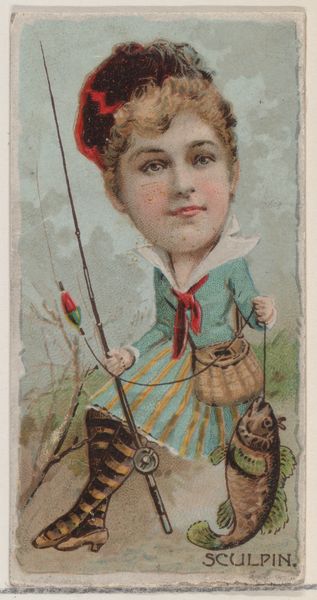
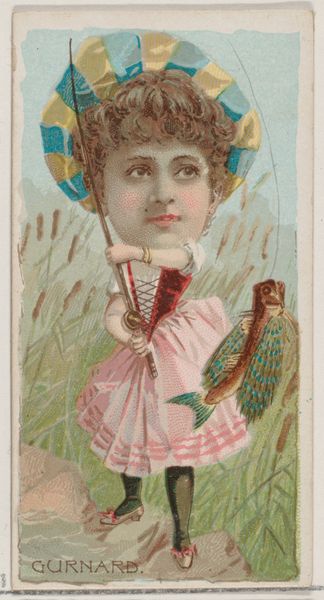
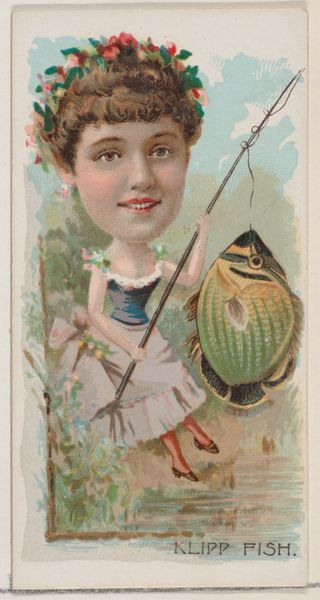
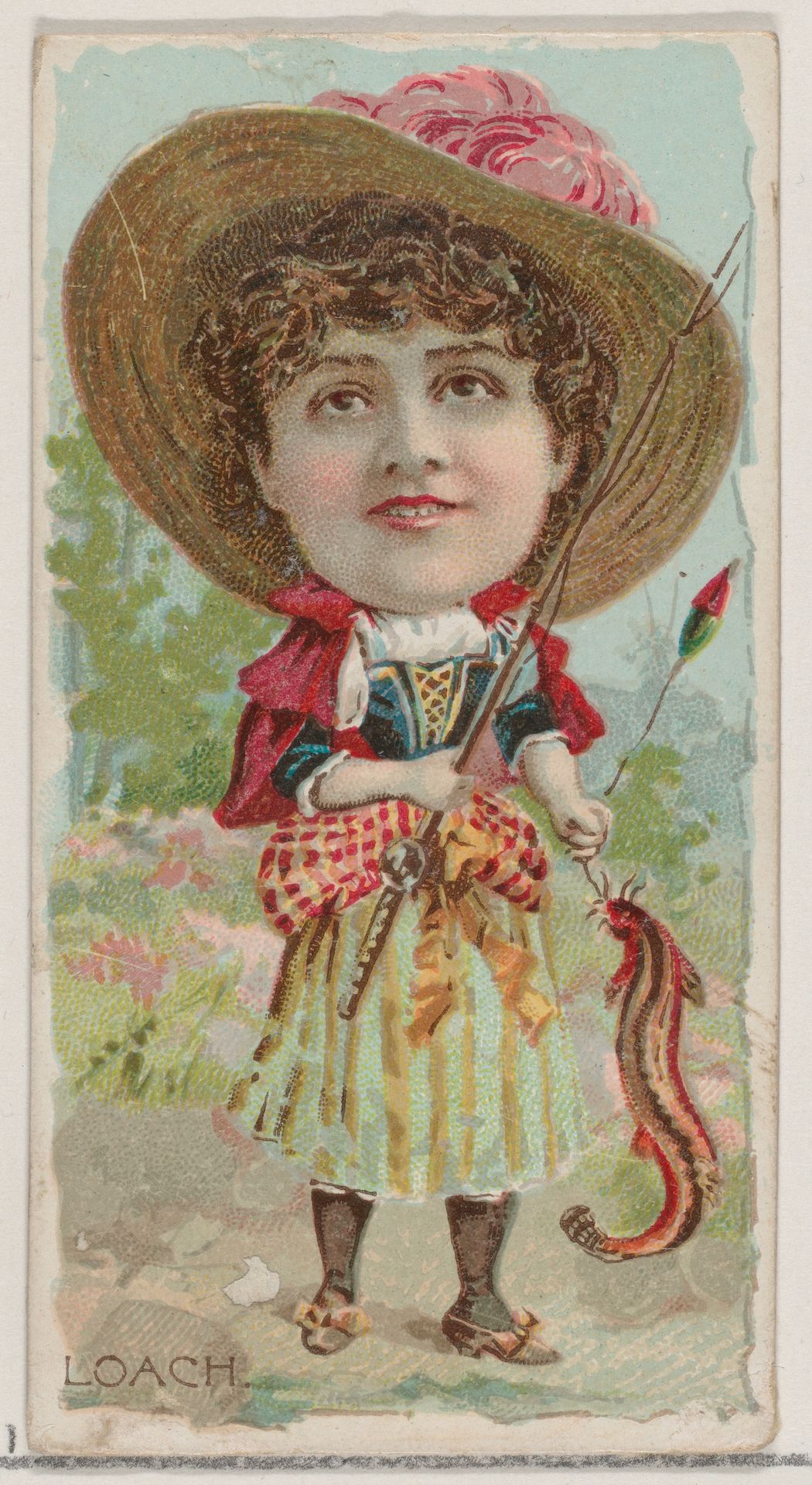
This is "Loach," a small-scale print designed as part of a series of cigarette cards by Knapp & Company. The composition is dominated by the figure of a young woman, her head exaggeratedly large, which creates an immediate sense of playful distortion. The color palette is soft and pastel, lending the image a delicate, almost dreamlike quality. Note how the artist uses vertical stripes in her skirt. The figure’s costume blends the rustic with the refined: a large floppy hat adorned with flowers sits atop her head, while a small red cape covers her shoulders. She holds a fishing rod with a loach – a type of fish – dangling from the line. The card challenges the conventional boundaries between image and commodity by questioning the values of representation and commercial promotion. The print thus becomes an artifact of cultural and semiotic exchange, inviting us to reflect on the complex interplay between art, commerce, and visual communication.
Loach, from the series Fishers and Fish (N74) for Duke brand cigarettes
1888


Artwork details
- Dimensions
- Sheet: 2 3/4 × 1 7/16 in. (7 × 3.6 cm)
- Location
- Metropolitan Museum of Art, New York, NY
- Copyright
- Public Domain
Comments
Share your thoughts
About this artwork
This is "Loach," a small-scale print designed as part of a series of cigarette cards by Knapp & Company. The composition is dominated by the figure of a young woman, her head exaggeratedly large, which creates an immediate sense of playful distortion. The color palette is soft and pastel, lending the image a delicate, almost dreamlike quality. Note how the artist uses vertical stripes in her skirt. The figure’s costume blends the rustic with the refined: a large floppy hat adorned with flowers sits atop her head, while a small red cape covers her shoulders. She holds a fishing rod with a loach – a type of fish – dangling from the line. The card challenges the conventional boundaries between image and commodity by questioning the values of representation and commercial promotion. The print thus becomes an artifact of cultural and semiotic exchange, inviting us to reflect on the complex interplay between art, commerce, and visual communication.
Comments
Share your thoughts