About this artwork
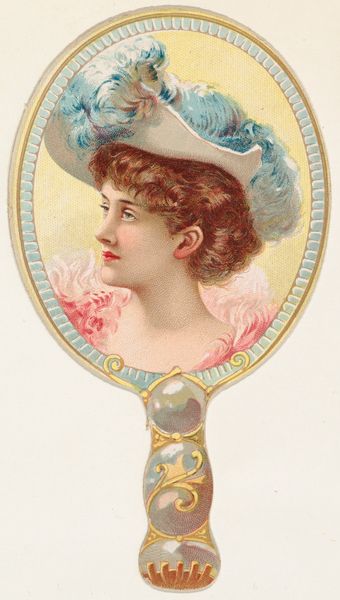
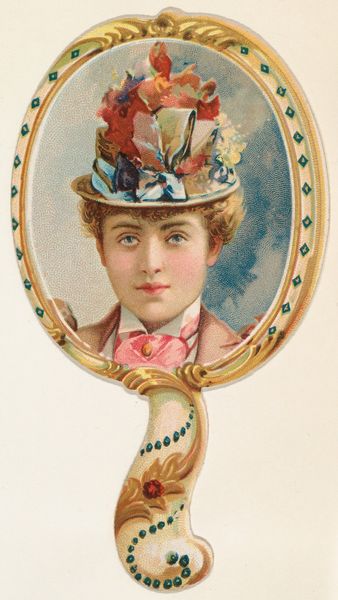
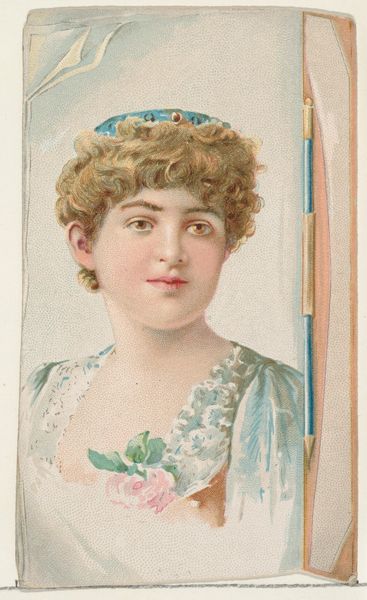
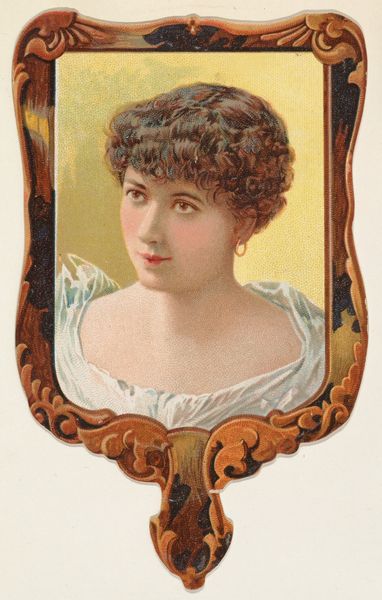
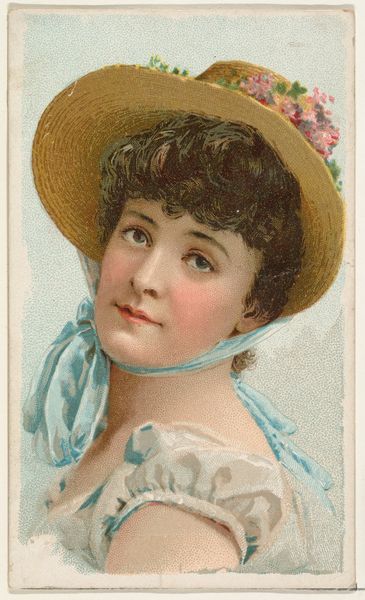
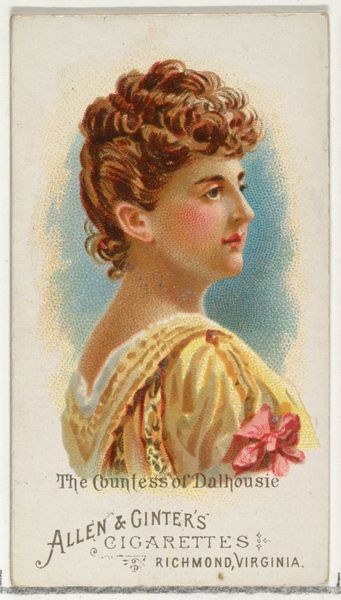
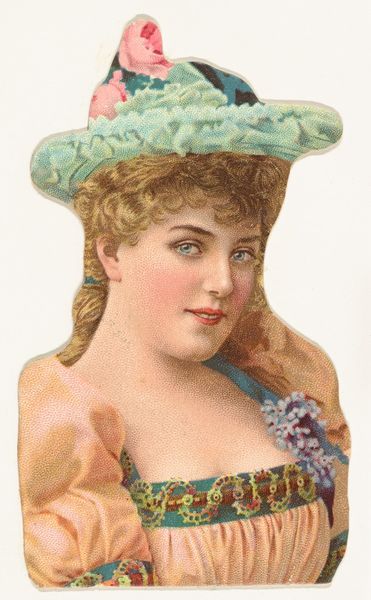
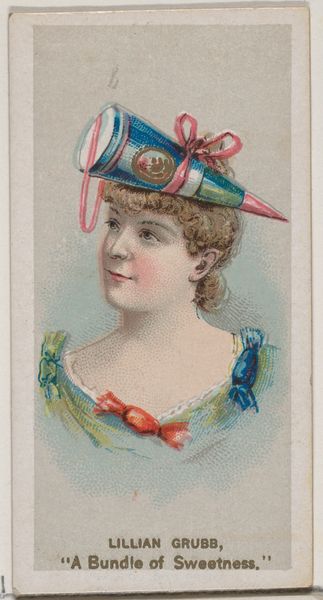
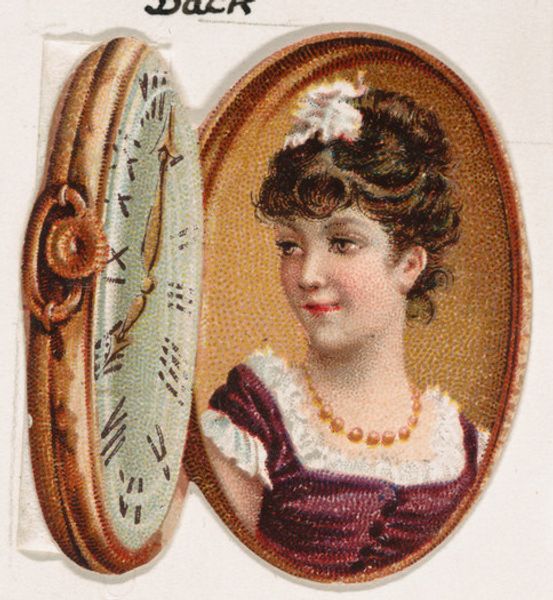
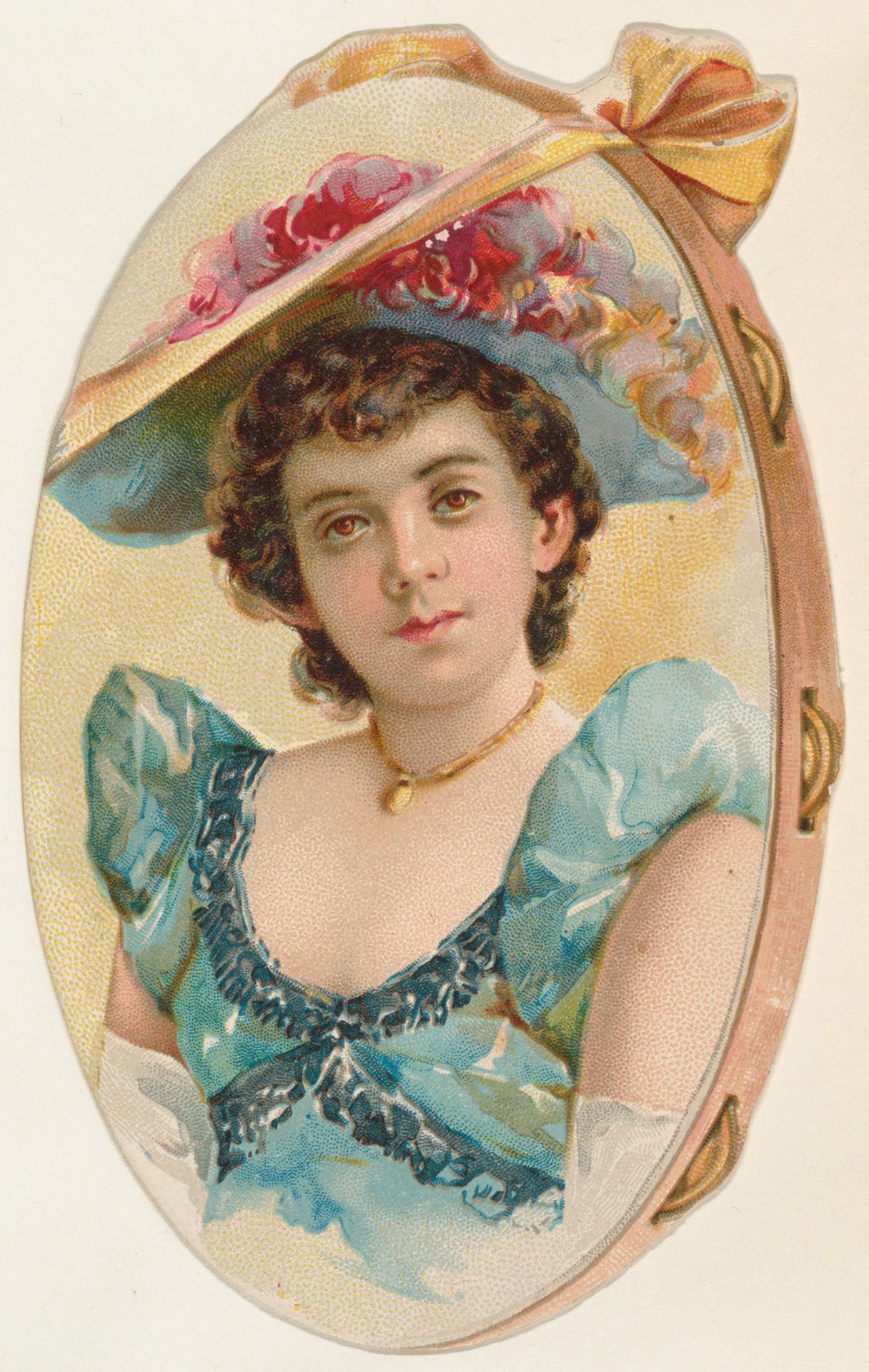
This ‘Tambourine’ trade card was printed by Gail and Ax Tobacco as part of their Novelties series. It's a small chromolithograph, a mass-produced color print, made to promote Navy Long Cut tobacco. Consider the material; thin paper, printed with an image of a fashionable woman in a hat. Chromolithography allowed manufacturers to include colorful images in packaging. This was a new type of advertisement; the cards were cheap to produce, but attractive enough to collect. It seems like a world away from traditional, unique artworks, and yet the process of making was important. The image was created through a painstaking process of layering colors. There's also a human element; the photograph had to be retouched, and skilled workers were needed to create these appealing images. Next time you see a mass-produced image, remember that it's not just about the image itself, but also the complex process of making it, and its role in a larger system of labor, commerce and consumption.
Tambourine, from the Novelties series (N122) issued by Gail & Ax Tobacco to promote Navy Long Cut
1889

Gail & Ax Tobacco
@gailaxtobacco
The Metropolitan Museum of Art
Metropolitan Museum of Art, New York, NYArtwork details
- Medium
- drawing, lithograph, print
- Dimensions
- Sheet: 4 in. × 2 1/2 in. (10.2 × 6.3 cm)
- Location
- Metropolitan Museum of Art, New York, NY
- Copyright
- Public Domain
Tags
Comments
Share your thoughts
About this artwork
This ‘Tambourine’ trade card was printed by Gail and Ax Tobacco as part of their Novelties series. It's a small chromolithograph, a mass-produced color print, made to promote Navy Long Cut tobacco. Consider the material; thin paper, printed with an image of a fashionable woman in a hat. Chromolithography allowed manufacturers to include colorful images in packaging. This was a new type of advertisement; the cards were cheap to produce, but attractive enough to collect. It seems like a world away from traditional, unique artworks, and yet the process of making was important. The image was created through a painstaking process of layering colors. There's also a human element; the photograph had to be retouched, and skilled workers were needed to create these appealing images. Next time you see a mass-produced image, remember that it's not just about the image itself, but also the complex process of making it, and its role in a larger system of labor, commerce and consumption.
Comments
Share your thoughts