About this artwork
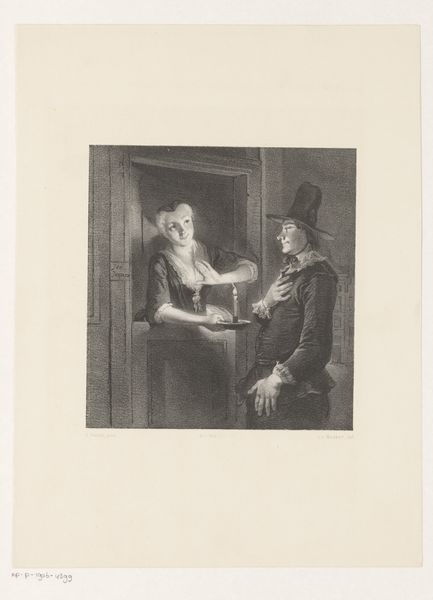
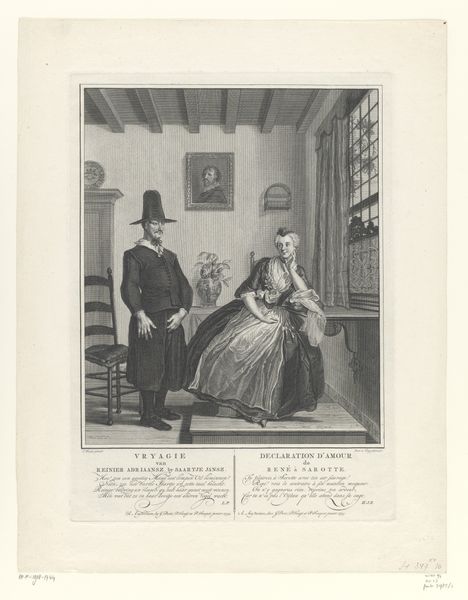
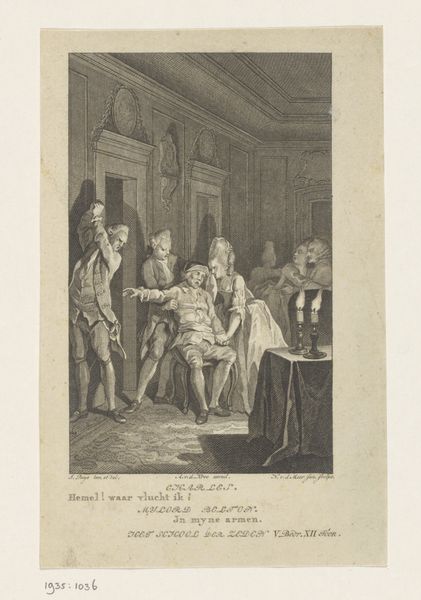
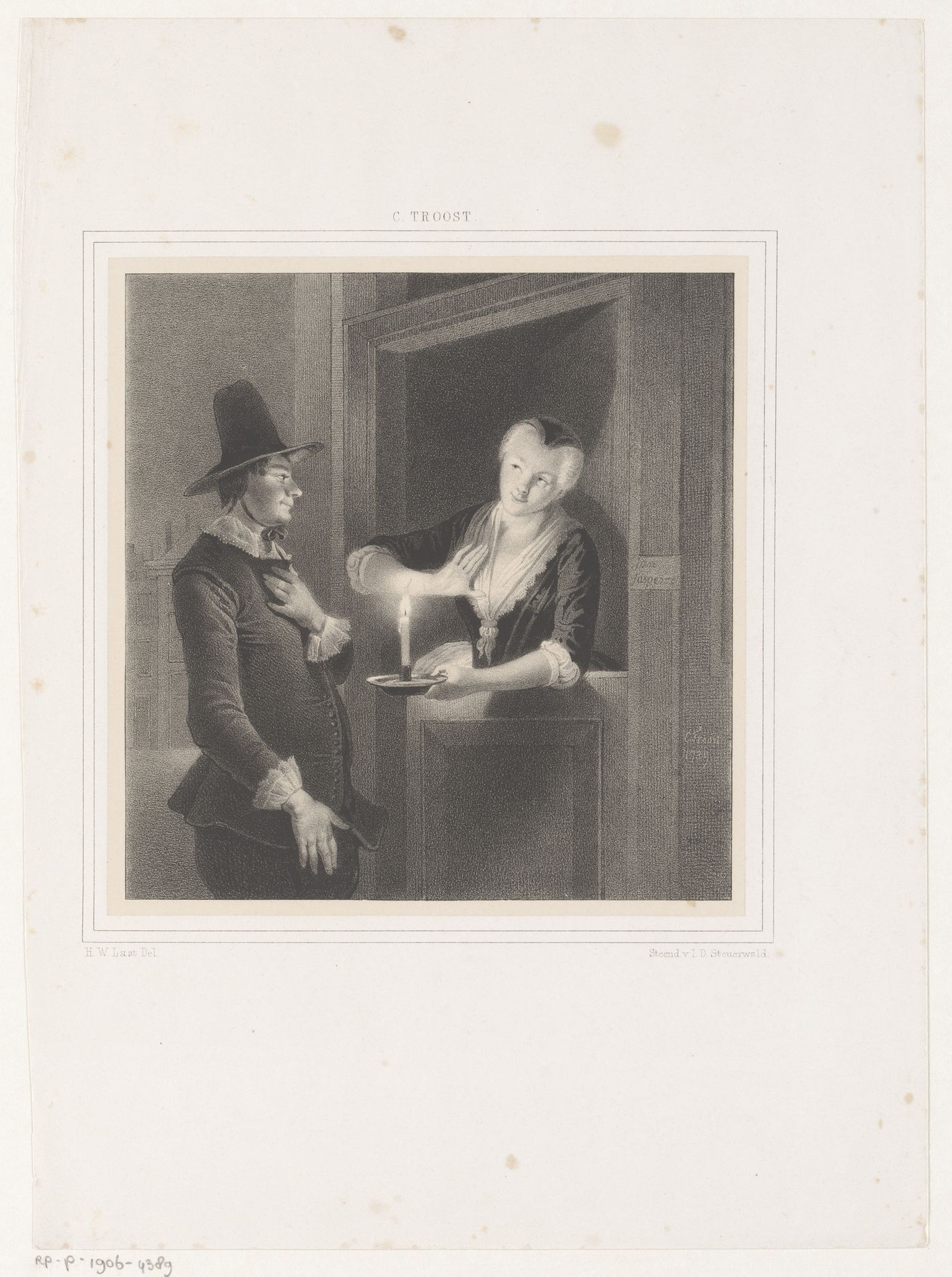
This print, made by Hendrik Wilhelmus Last in the 19th century, depicts a scene from a comedy, rendered through the intricate technique of etching. The image is built from finely engraved lines, capturing the textures of clothing, the play of light on faces, and the intimate setting of the encounter. Etching, of course, is a printmaking process, one that relies on the application of acid to incise lines into a metal plate. This required not only artistic skill, but also careful control of chemical processes. The resulting prints were then distributed widely, bringing images and ideas to a broad public. Here, the material qualities of the print—its delicate lines, the subtle gradations of tone—enhance the emotional quality of the scene. The soft light of the candle, held by the woman, illuminates the man’s hopeful expression, while the etched lines suggest the quiet intensity of this private moment. Appreciating the labor and craft involved in such a print enriches our understanding of its social and cultural value. The print becomes more than just an illustration; it’s a testament to the power of reproductive media, and the skilled labor required to produce it.
Scène uit de komedie 'Jan Klaasz. of de gewaande dienstmaagd': de liefdesverklaring van Reinier Adriaansz
c. 1822 - 1863

Hendrik Wilhelmus Last
1817 - 1873Location
RijksmuseumArtwork details
- Medium
- drawing, print, paper, engraving
- Dimensions
- height 335 mm, width 240 mm
- Location
- Rijksmuseum
- Copyright
- Rijks Museum: Open Domain
Tags
Comments
Share your thoughts
About this artwork
This print, made by Hendrik Wilhelmus Last in the 19th century, depicts a scene from a comedy, rendered through the intricate technique of etching. The image is built from finely engraved lines, capturing the textures of clothing, the play of light on faces, and the intimate setting of the encounter. Etching, of course, is a printmaking process, one that relies on the application of acid to incise lines into a metal plate. This required not only artistic skill, but also careful control of chemical processes. The resulting prints were then distributed widely, bringing images and ideas to a broad public. Here, the material qualities of the print—its delicate lines, the subtle gradations of tone—enhance the emotional quality of the scene. The soft light of the candle, held by the woman, illuminates the man’s hopeful expression, while the etched lines suggest the quiet intensity of this private moment. Appreciating the labor and craft involved in such a print enriches our understanding of its social and cultural value. The print becomes more than just an illustration; it’s a testament to the power of reproductive media, and the skilled labor required to produce it.
Comments
Share your thoughts