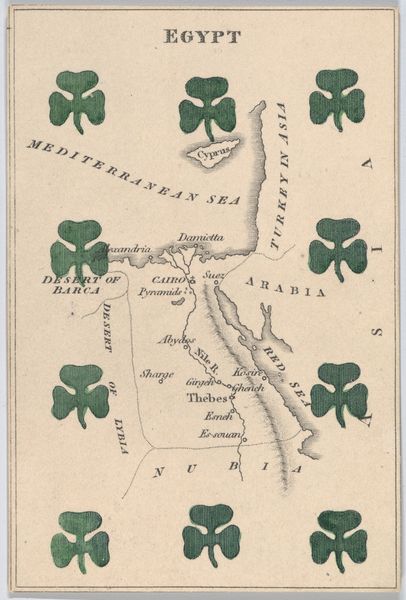
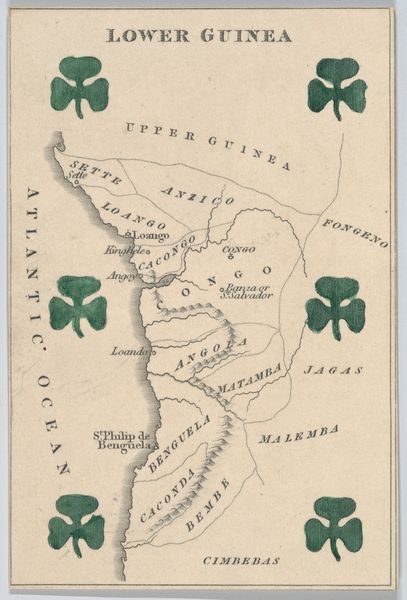
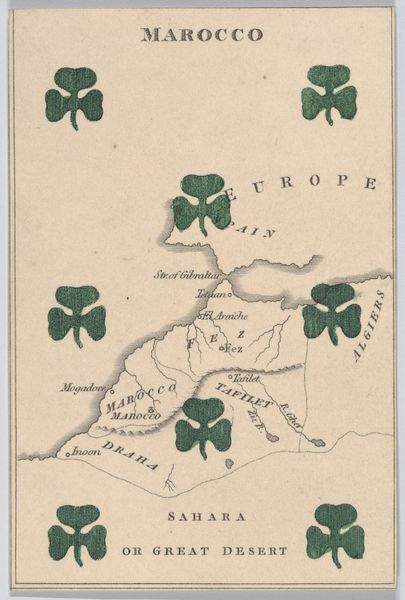
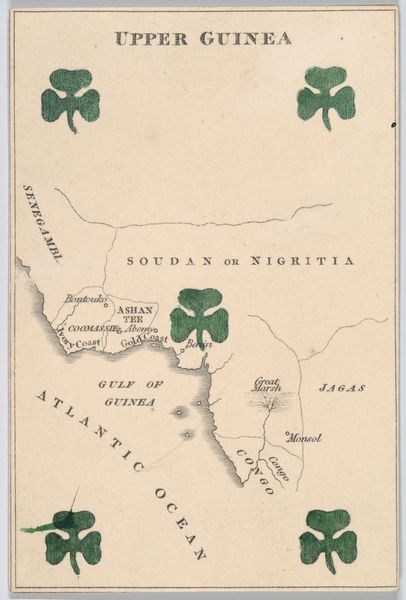
Abyssinia, from "Court Game of Geography" 1838 - 1855
0:00
0:00


drawing, print
#
drawing
# print
#
landscape
#
geometric
#
orientalism
#
line
#
watercolour illustration
Dimensions: 3 3/4 × 2 1/2 in. (9.5 × 6.4 cm)
Copyright: Public Domain
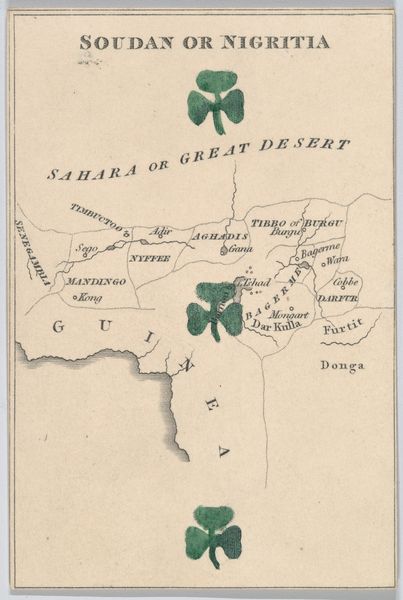
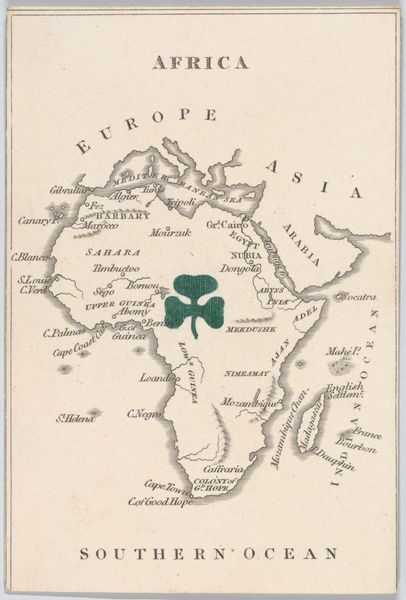
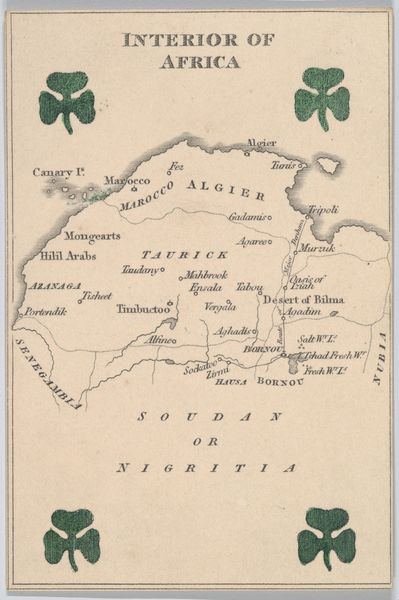
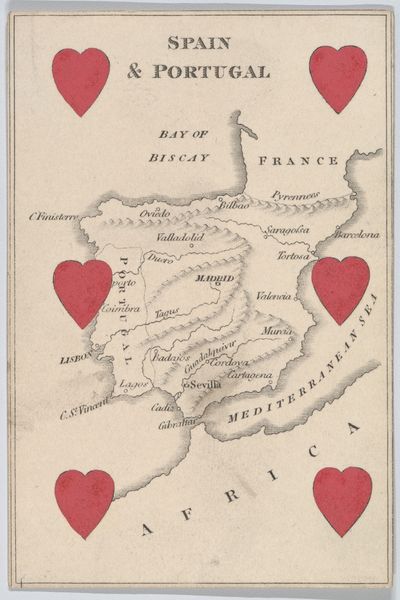
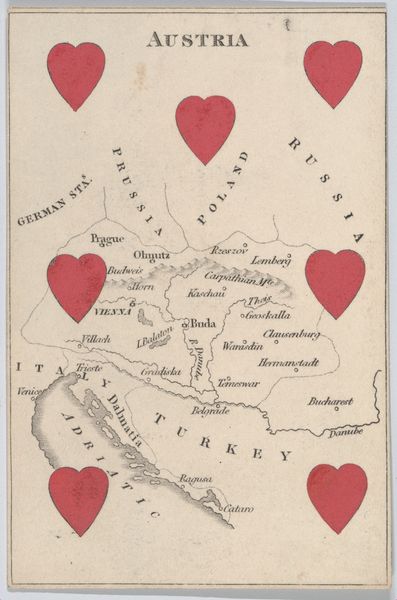
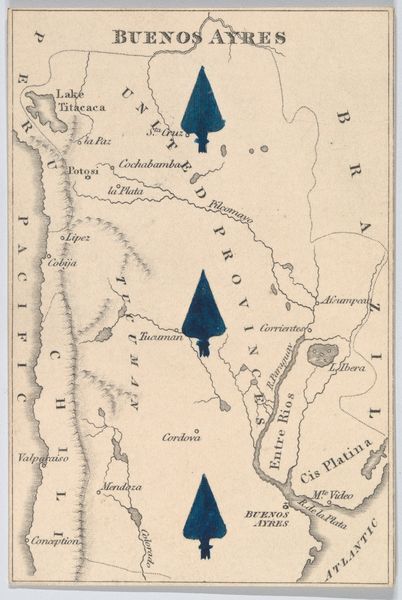
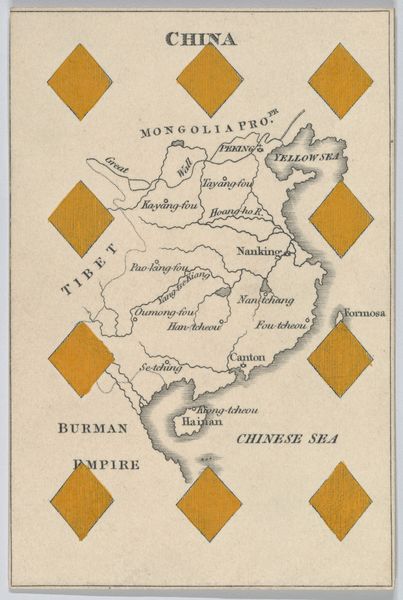
This is “Abyssinia,” a playing card made by William and Henry Rock sometime in the 19th century. As a lithograph, it would have been printed using a flat stone or metal plate, treated so that the image areas would retain ink while the non-image areas repel it. Lithography allowed for relatively quick and cheap reproduction, which is appropriate for a functional object like a deck of cards. The Rock brothers were known for their topographical views, and here they combined the precision of map-making with the whimsy of a parlor game. Note the use of the shamrock motif, which might imply Irish manufacture. The card is interesting for what it leaves out. The Rock brothers were obviously skilled at capturing geography but have chosen only to focus on the spatial organization of the land and nothing about the people who live there. This is where we can consider the labor and politics of card production as they speak to wider issues of labor, politics, and consumption. The map flattens the Abyssinian territory into an abstraction, a possession to be mapped and known. Ultimately, the card reminds us that even the simplest objects can carry complex cultural meanings.
Comments
No comments
Be the first to comment and join the conversation on the ultimate creative platform.
 Collect
 React
React Comment
More like this