About this artwork
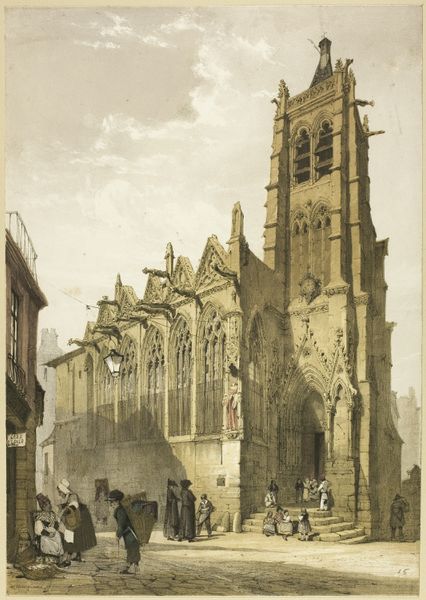
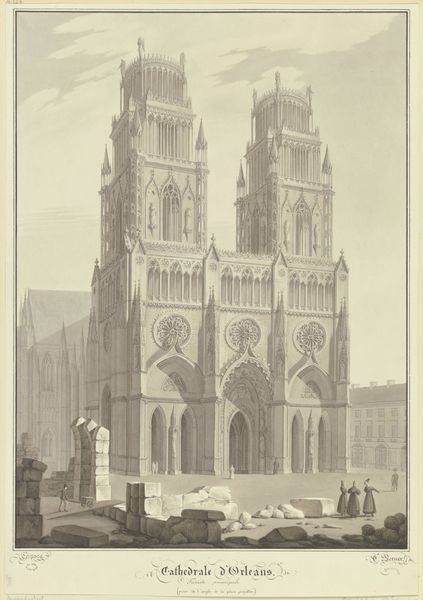
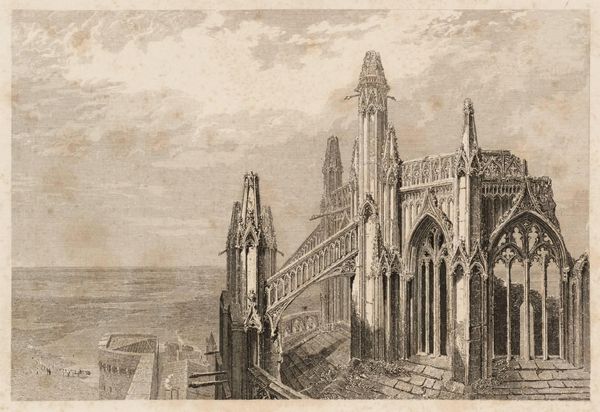
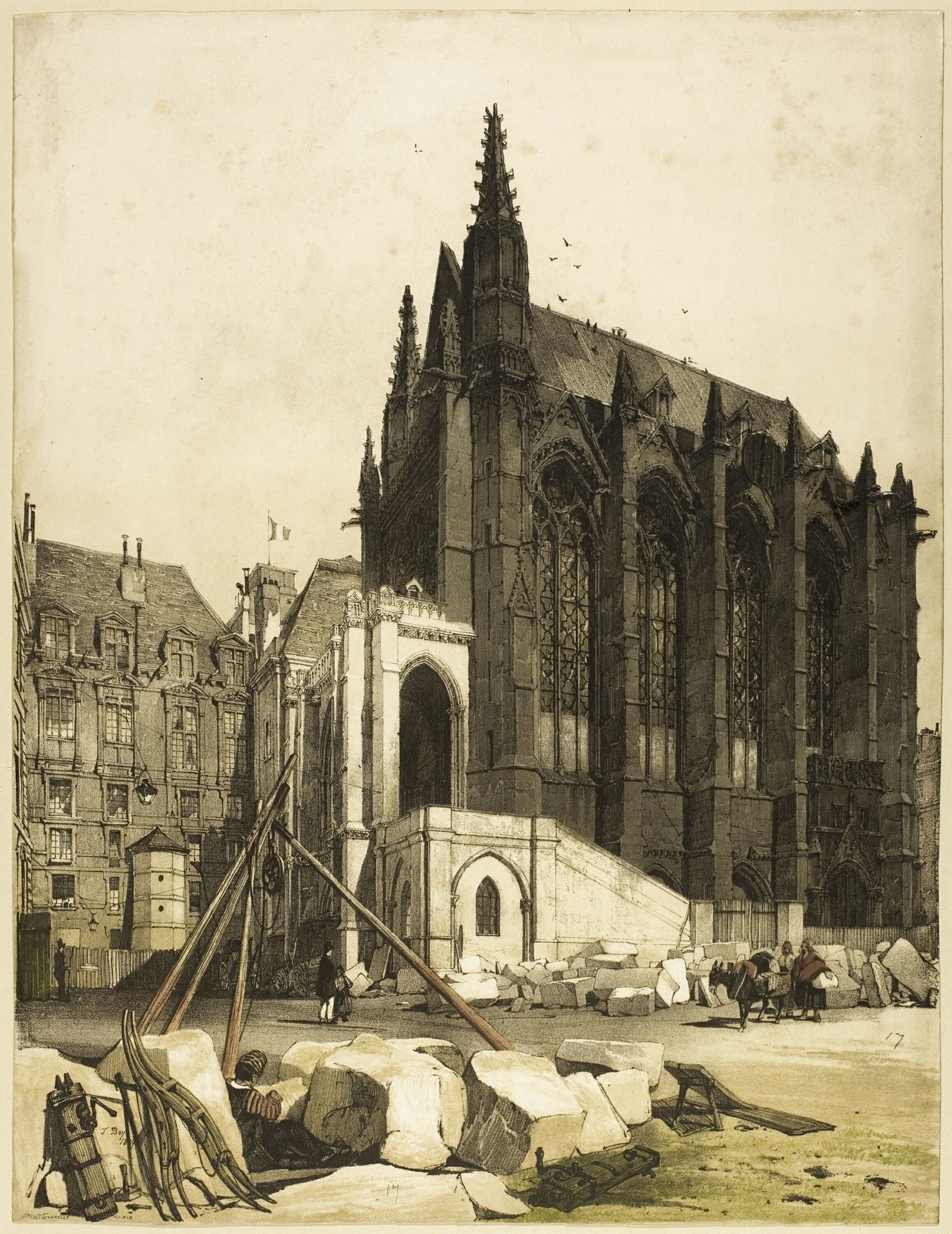
Thomas Shotter Boys created this watercolor and graphite rendering of La Sainte Chapelle in Paris sometime in the 19th century. Considered through the lens of labor and social hierarchy, Boys' depiction of the Parisian landmark subtly layers in the identities of those who upheld its grandeur. We see stone blocks and scaffolding at the forefront and can imagine that the construction site was a hive of activity, filled with workers whose efforts enabled the chapel's presence. Here, Boys doesn't shy away from depicting the working class, and the economic stratification inherent in the creation and maintenance of such iconic structures. While Boys acknowledges the labor involved in preserving historical monuments, he still romanticizes the chapel as a beacon of French identity. This tension reflects the complex ways in which societies often grapple with their relationship to history and the labor that underpins them.
La Sainte Chapelle, Paris
1839


Artwork details
- Medium
- drawing, lithograph, print, plein-air, paper
- Dimensions
- 376 × 290 mm
- Location
- The Art Institute of Chicago
- Copyright
- Public Domain
Tags
Comments
Share your thoughts
About this artwork
Thomas Shotter Boys created this watercolor and graphite rendering of La Sainte Chapelle in Paris sometime in the 19th century. Considered through the lens of labor and social hierarchy, Boys' depiction of the Parisian landmark subtly layers in the identities of those who upheld its grandeur. We see stone blocks and scaffolding at the forefront and can imagine that the construction site was a hive of activity, filled with workers whose efforts enabled the chapel's presence. Here, Boys doesn't shy away from depicting the working class, and the economic stratification inherent in the creation and maintenance of such iconic structures. While Boys acknowledges the labor involved in preserving historical monuments, he still romanticizes the chapel as a beacon of French identity. This tension reflects the complex ways in which societies often grapple with their relationship to history and the labor that underpins them.
Comments
Share your thoughts