About this artwork
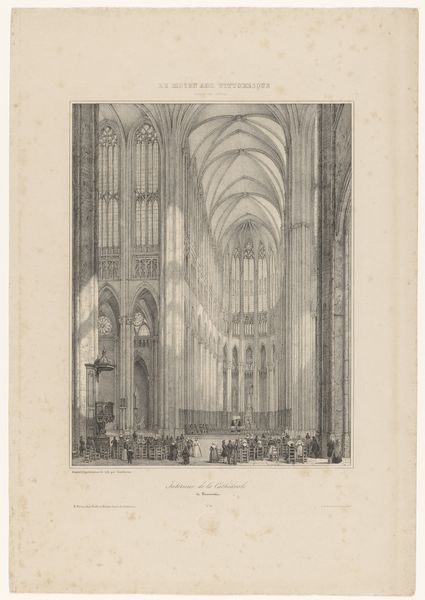
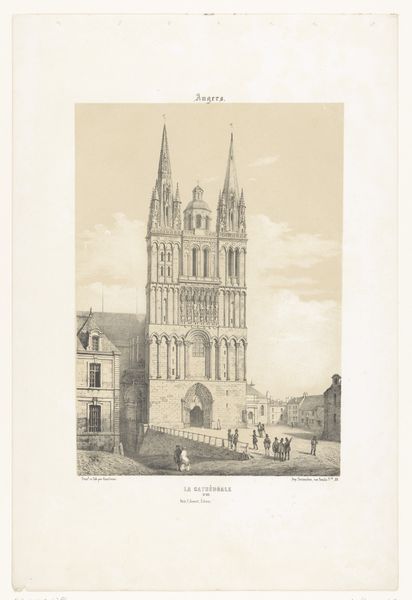
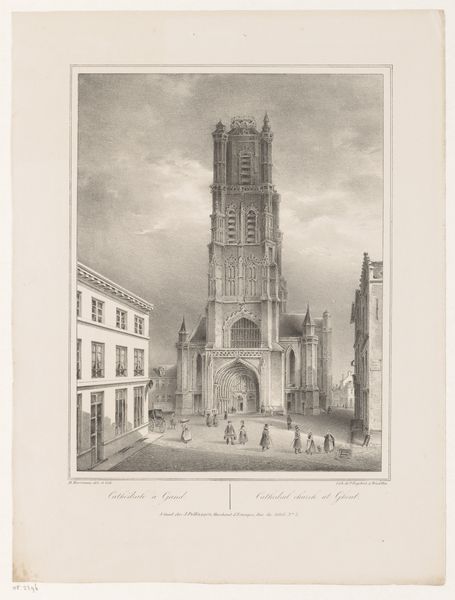
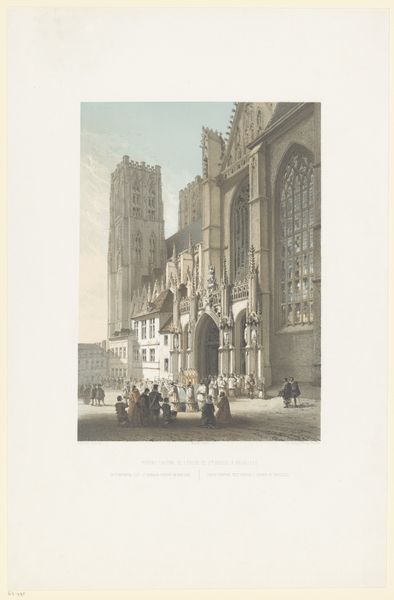
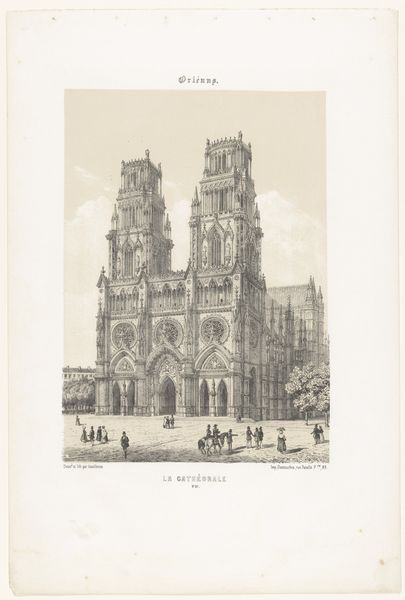
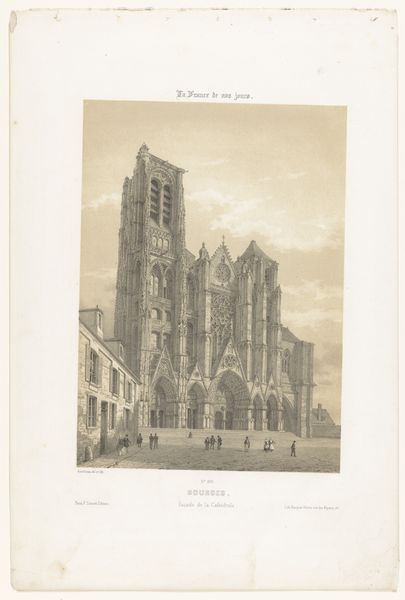
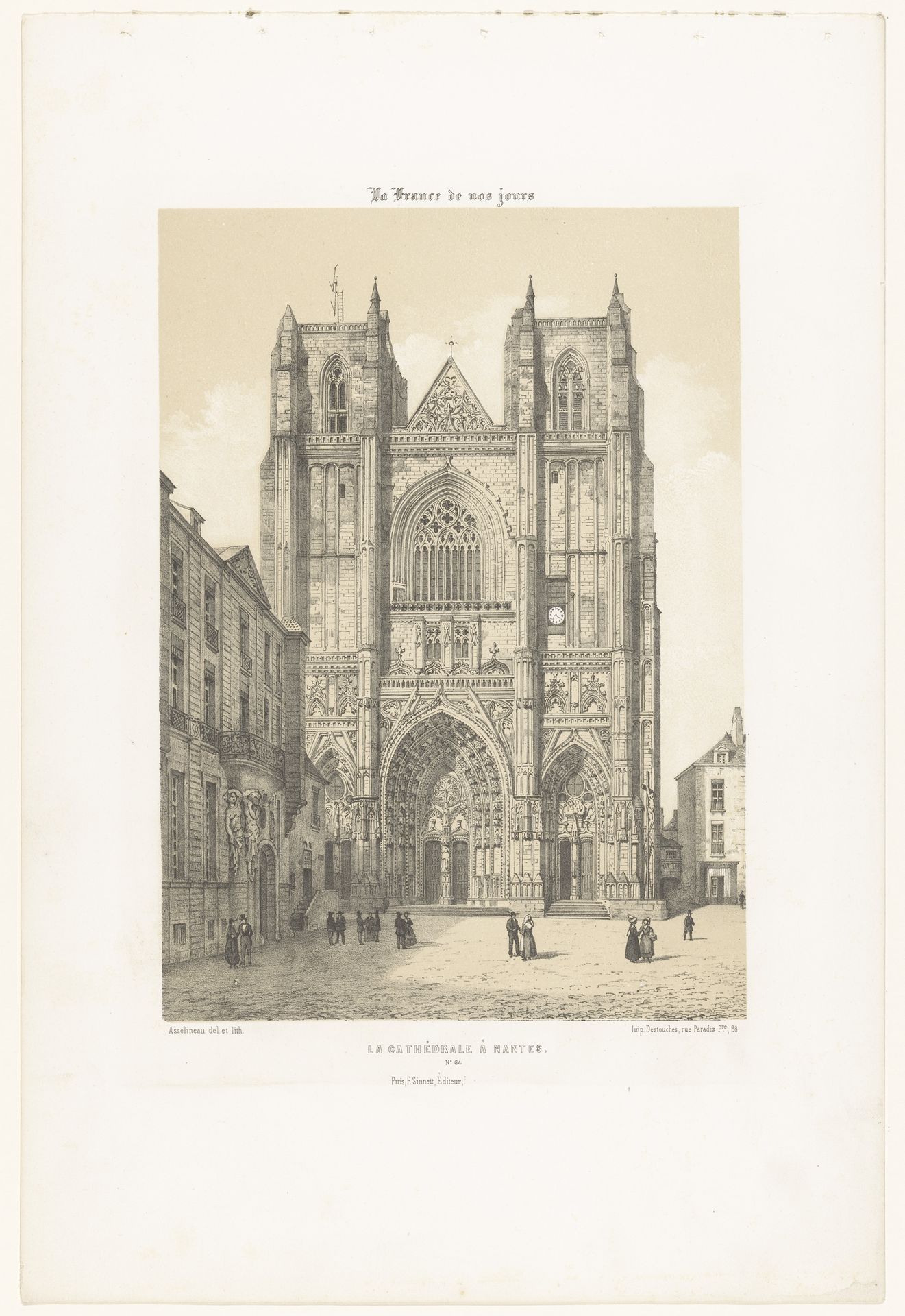
Léon Auguste Asselineau created this print of the Cathedral of Saint Peter and Saint Paul in Nantes using lithography. In lithography, an image is drawn on a flat stone or metal plate with a greasy crayon, then treated with chemicals so that only the drawn parts will hold ink. The printmaker then dampens the stone, applies ink, and presses paper against it. The resulting image can achieve a high level of detail and subtle tonal gradations, as seen in the delicate rendering of the cathedral’s facade. The print is part of a series titled ‘La France de nos jours’, or ‘France today’ which speaks to the democratizing effect of printmaking in the nineteenth century. Lithography allowed for the wide dissemination of images, bringing art and architecture to a broader public. It also provided employment for skilled artisans, even as industrialization transformed other sectors of the economy. Considering the materials, making, and social context of this print allows us to appreciate it as more than just a representation of a cathedral. It becomes a testament to the power of art to capture and reflect the spirit of an era, and to challenge traditional distinctions between fine art and craft.
Zicht op de kathedraal van Sint-Pieter en Sint-Paulus in Nantes
1853 - 1856

Léon Auguste Asselineau
1808 - 1889Location
RijksmuseumArtwork details
- Dimensions
- height 433 mm, width mm
- Location
- Rijksmuseum
- Copyright
- Rijks Museum: Open Domain
Tags
Comments
Share your thoughts
About this artwork
Léon Auguste Asselineau created this print of the Cathedral of Saint Peter and Saint Paul in Nantes using lithography. In lithography, an image is drawn on a flat stone or metal plate with a greasy crayon, then treated with chemicals so that only the drawn parts will hold ink. The printmaker then dampens the stone, applies ink, and presses paper against it. The resulting image can achieve a high level of detail and subtle tonal gradations, as seen in the delicate rendering of the cathedral’s facade. The print is part of a series titled ‘La France de nos jours’, or ‘France today’ which speaks to the democratizing effect of printmaking in the nineteenth century. Lithography allowed for the wide dissemination of images, bringing art and architecture to a broader public. It also provided employment for skilled artisans, even as industrialization transformed other sectors of the economy. Considering the materials, making, and social context of this print allows us to appreciate it as more than just a representation of a cathedral. It becomes a testament to the power of art to capture and reflect the spirit of an era, and to challenge traditional distinctions between fine art and craft.
Comments
Share your thoughts