About this artwork
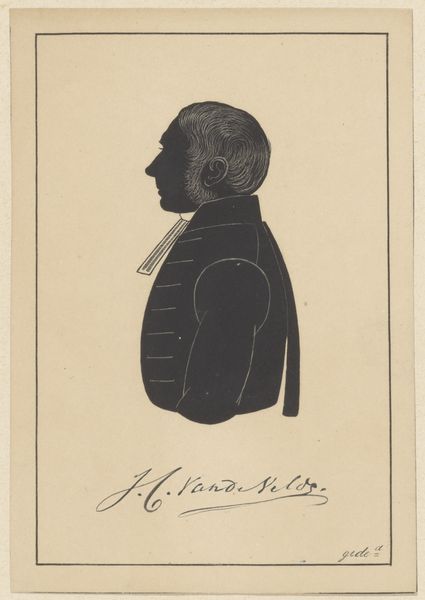
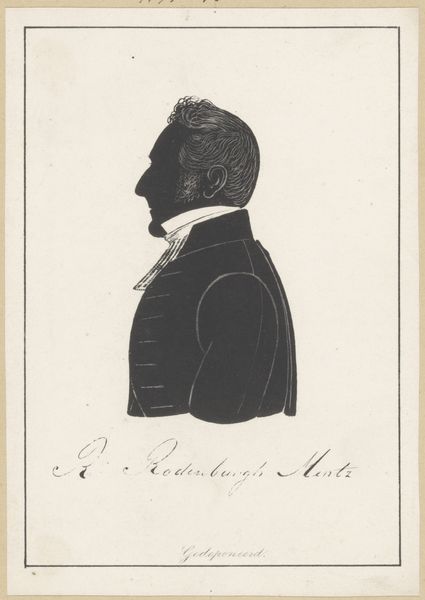
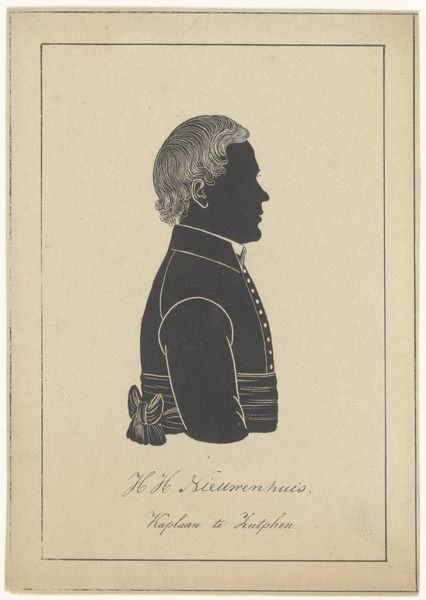
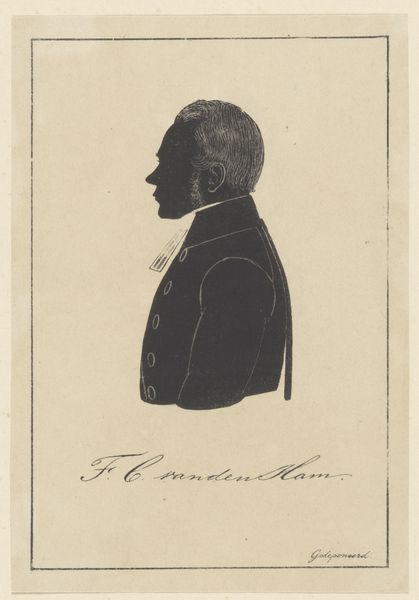
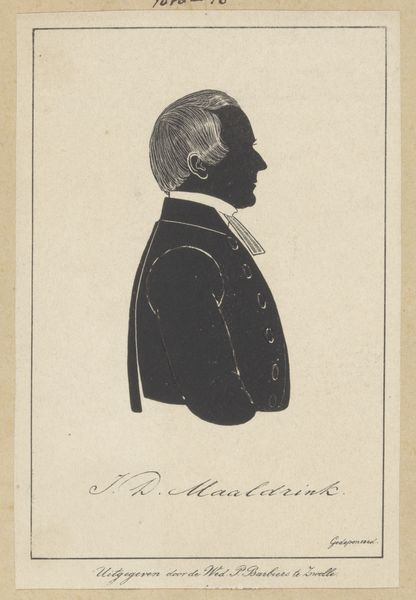
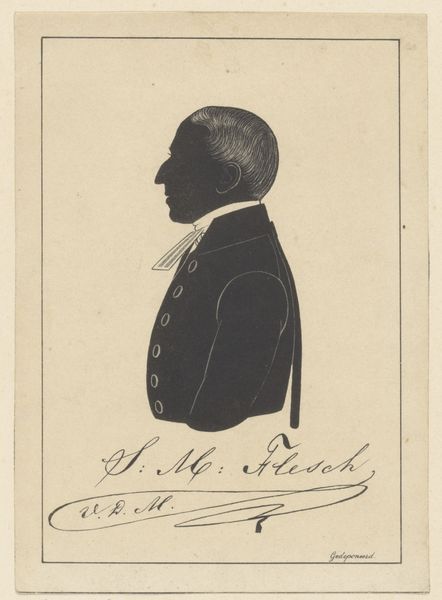
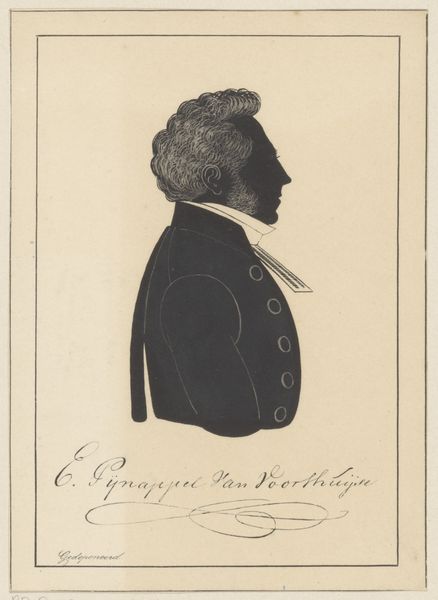
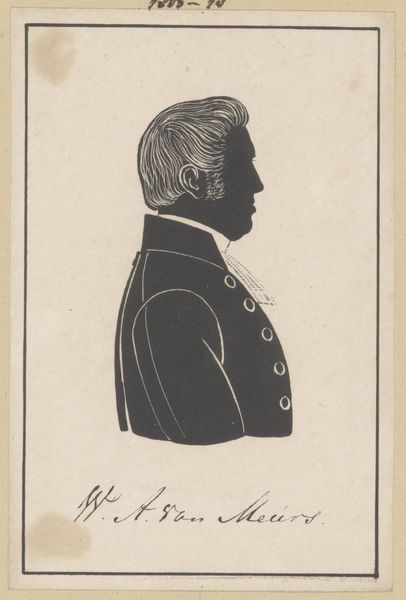
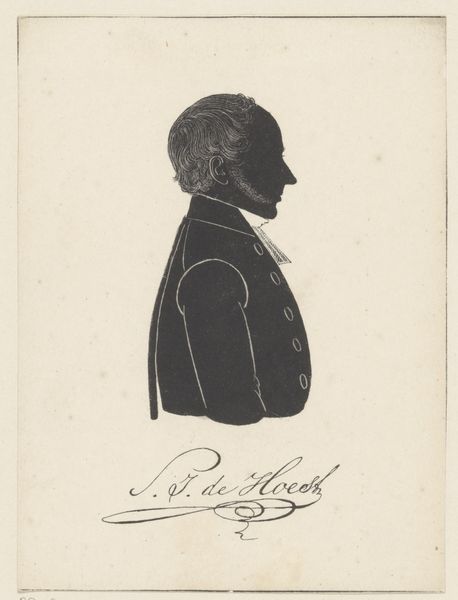
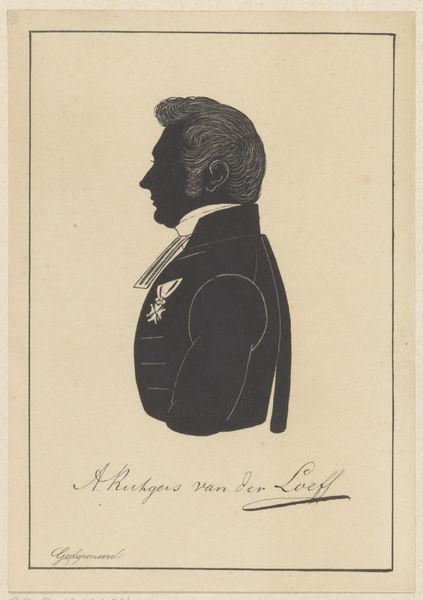
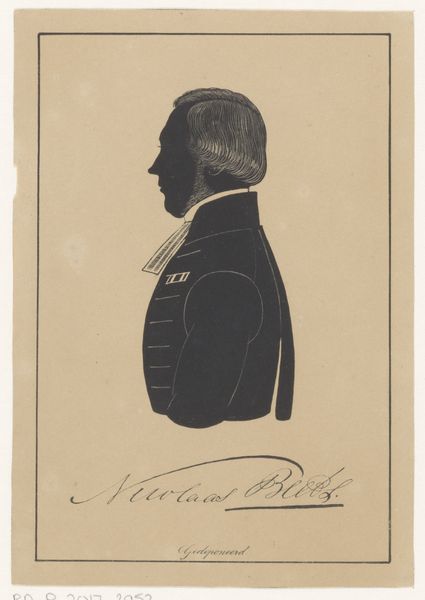
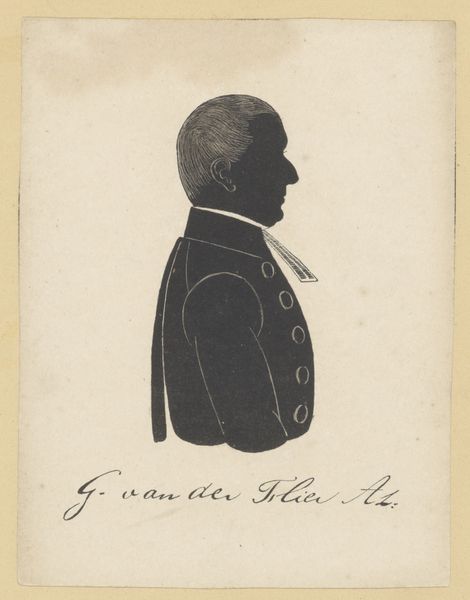
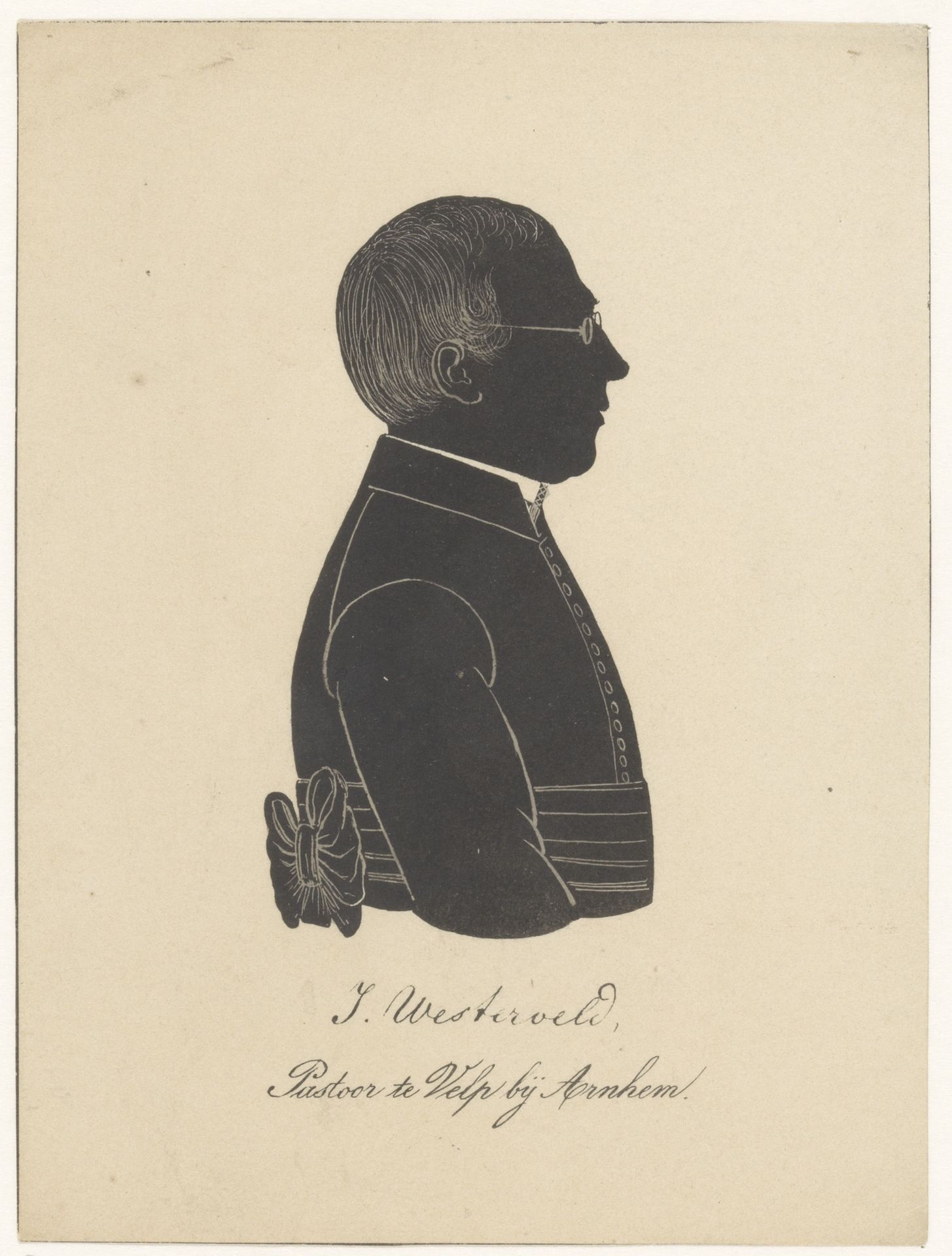
Editor: Here we have "Silhouetportret van J. Westerveld," a silhouette portrait by Pieter Barbiers, dating from the early 19th century. It’s an ink drawing, a stark black figure against a plain background. What strikes me is how much information it conveys with so little detail. What do you see in this piece? Curator: The silhouette, in its stark simplicity, acts almost as a brand, doesn't it? It tells us this man, J. Westerveld, occupied a certain station in life; silhouette portraits like these were fashionable and accessible to the rising middle classes. Consider how it captures not just likeness but aspiration, a visual shorthand for respectability and civic duty, frozen in ink. What symbolic weight does such simplification hold, do you think? Editor: That's interesting - it's like a social symbol. And yet, this feels quite intimate... like a shadow captured, a fleeting moment made permanent. Does that intimate feeling reflect any cultural values or assumptions from that era? Curator: Precisely. There is also a hint of a desire to classify and memorialize through an easily replicable image. It mirrors the broader societal shifts towards valuing the individual alongside increasing bureaucratic processes, creating lasting echoes through symbolic form. The question is: do we see an individual, or a type? Editor: It seems to be both - a unique person made into a universal image. It highlights how identities are constructed, and how much an artist’s stylistic decisions impact how one is remembered. Curator: Indeed, this small silhouette holds so much cultural memory. Thank you for that perceptive reading of visual symbolism.
Silhouetportret van J. Westerveld
1809 - 1848

Pieter (IV) Barbiers
1798 - 1848Location
RijksmuseumArtwork details
- Medium
- drawing, ink
- Dimensions
- height 141 mm, width 106 mm
- Location
- Rijksmuseum
- Copyright
- Rijks Museum: Open Domain
Tags
portrait
drawing
blue ink drawing
ink
line
academic-art
Comments
Be the first to share your thoughts about this work.
About this artwork
Editor: Here we have "Silhouetportret van J. Westerveld," a silhouette portrait by Pieter Barbiers, dating from the early 19th century. It’s an ink drawing, a stark black figure against a plain background. What strikes me is how much information it conveys with so little detail. What do you see in this piece? Curator: The silhouette, in its stark simplicity, acts almost as a brand, doesn't it? It tells us this man, J. Westerveld, occupied a certain station in life; silhouette portraits like these were fashionable and accessible to the rising middle classes. Consider how it captures not just likeness but aspiration, a visual shorthand for respectability and civic duty, frozen in ink. What symbolic weight does such simplification hold, do you think? Editor: That's interesting - it's like a social symbol. And yet, this feels quite intimate... like a shadow captured, a fleeting moment made permanent. Does that intimate feeling reflect any cultural values or assumptions from that era? Curator: Precisely. There is also a hint of a desire to classify and memorialize through an easily replicable image. It mirrors the broader societal shifts towards valuing the individual alongside increasing bureaucratic processes, creating lasting echoes through symbolic form. The question is: do we see an individual, or a type? Editor: It seems to be both - a unique person made into a universal image. It highlights how identities are constructed, and how much an artist’s stylistic decisions impact how one is remembered. Curator: Indeed, this small silhouette holds so much cultural memory. Thank you for that perceptive reading of visual symbolism.
Comments
Be the first to share your thoughts about this work.