About this artwork
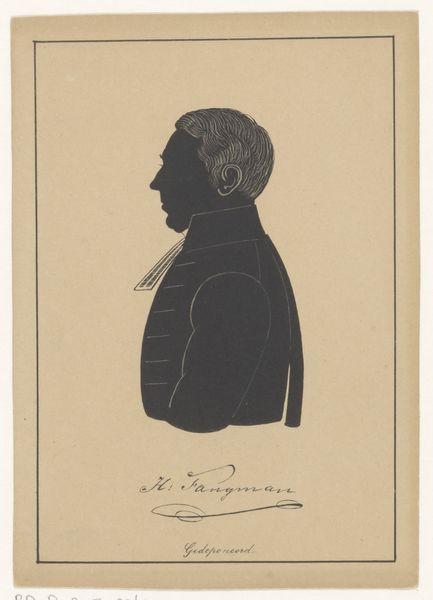
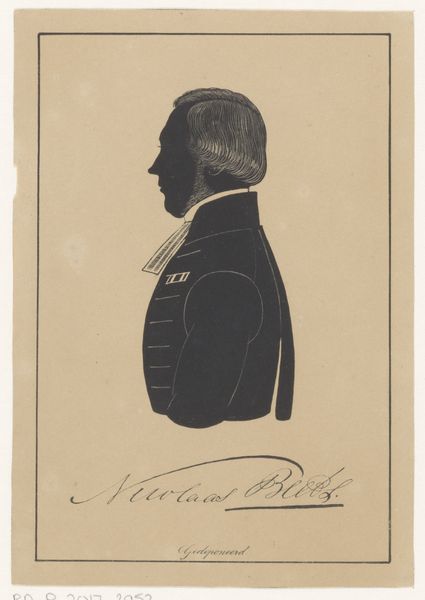
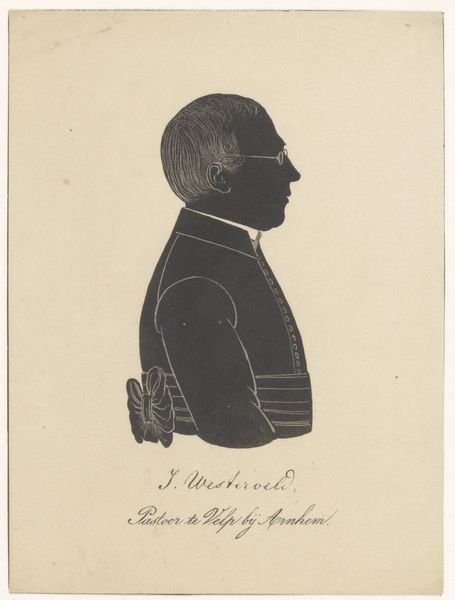
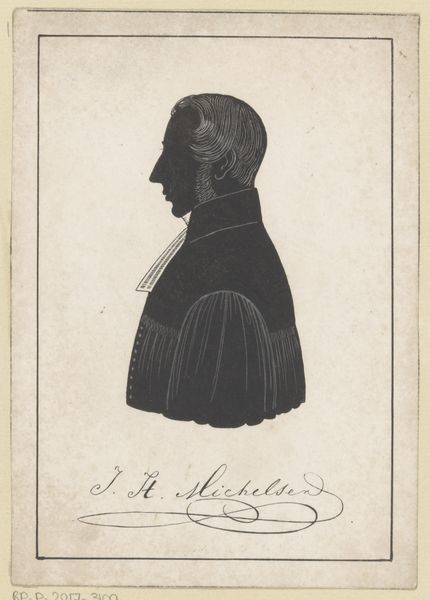
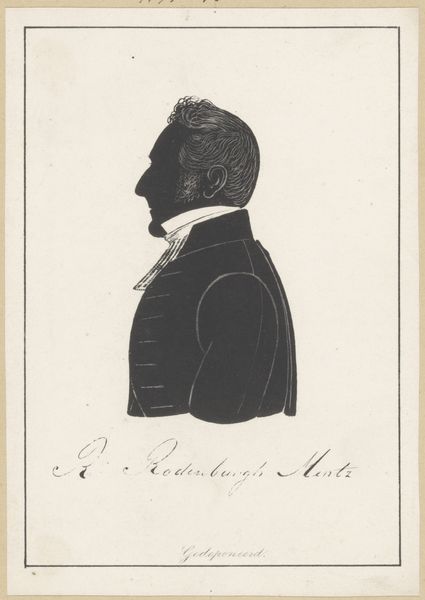
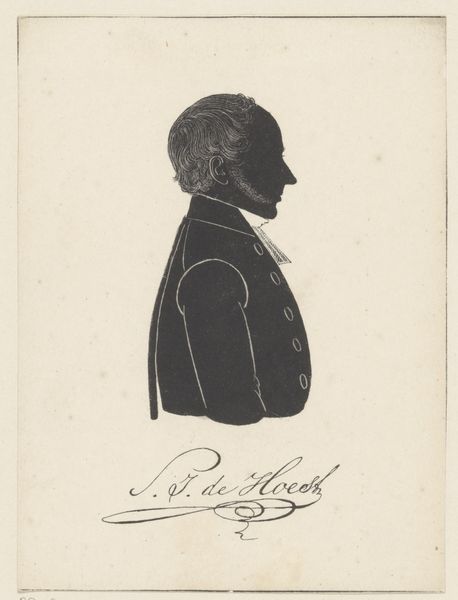
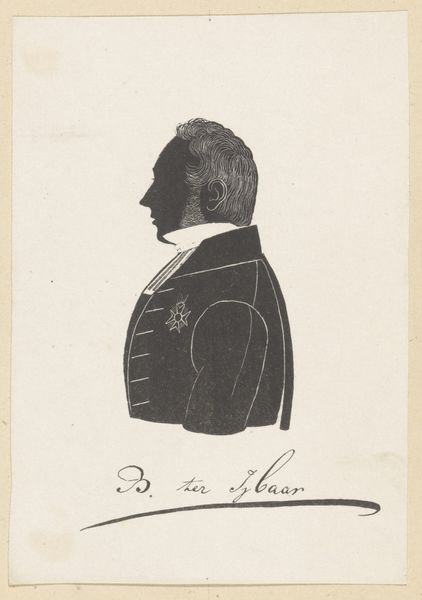
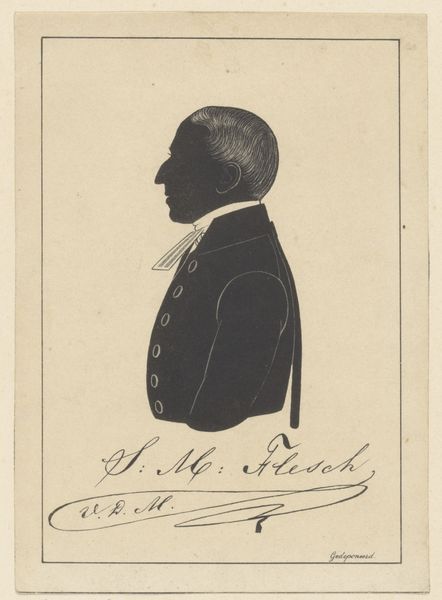
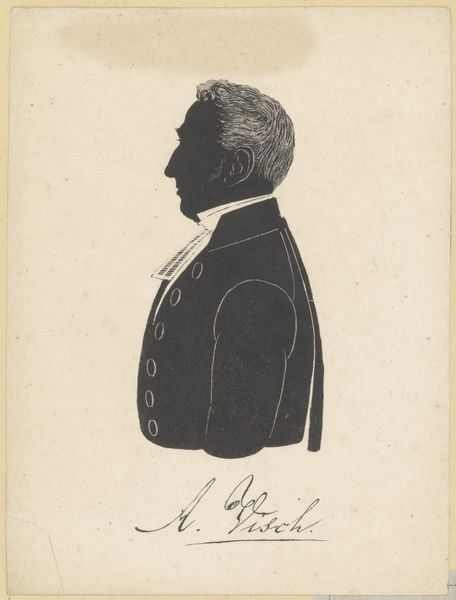
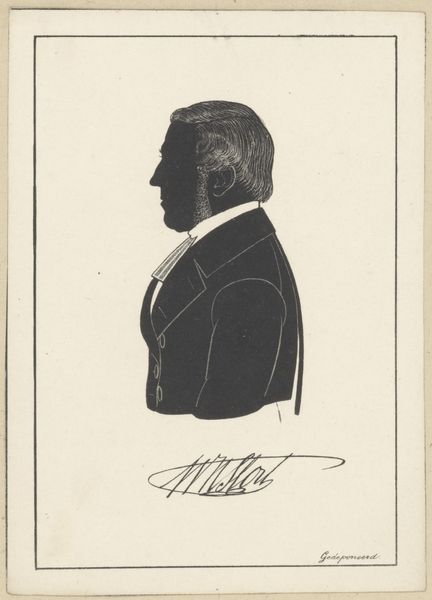
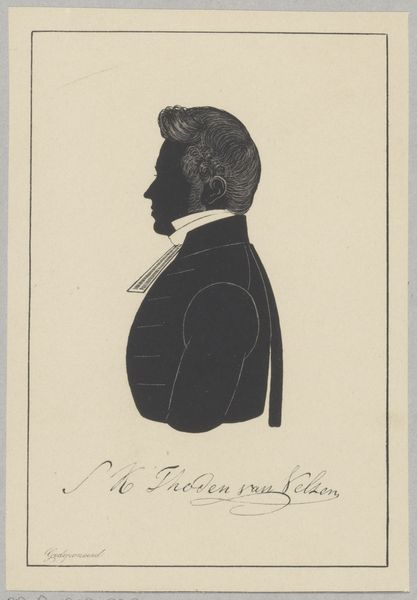
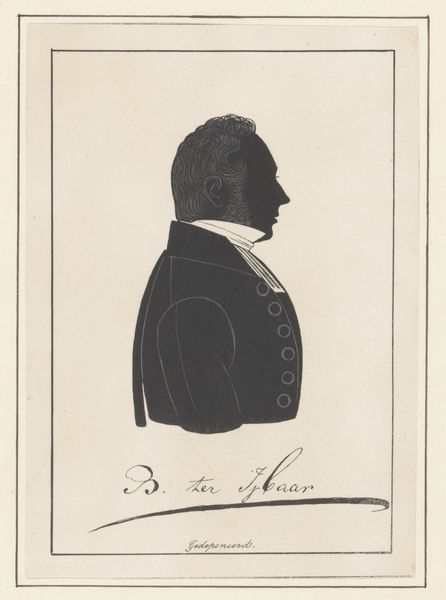
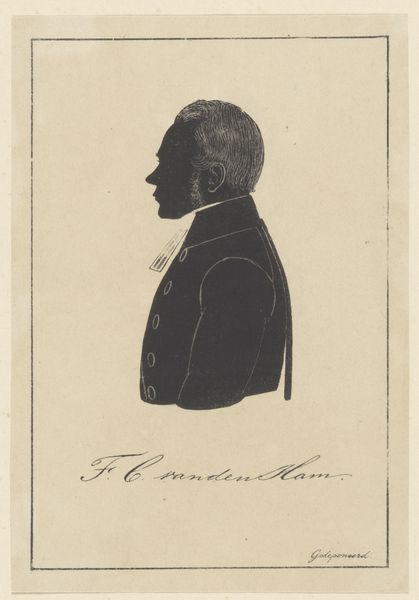
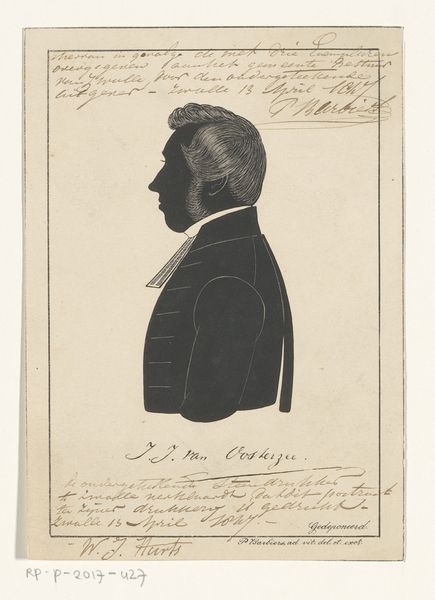
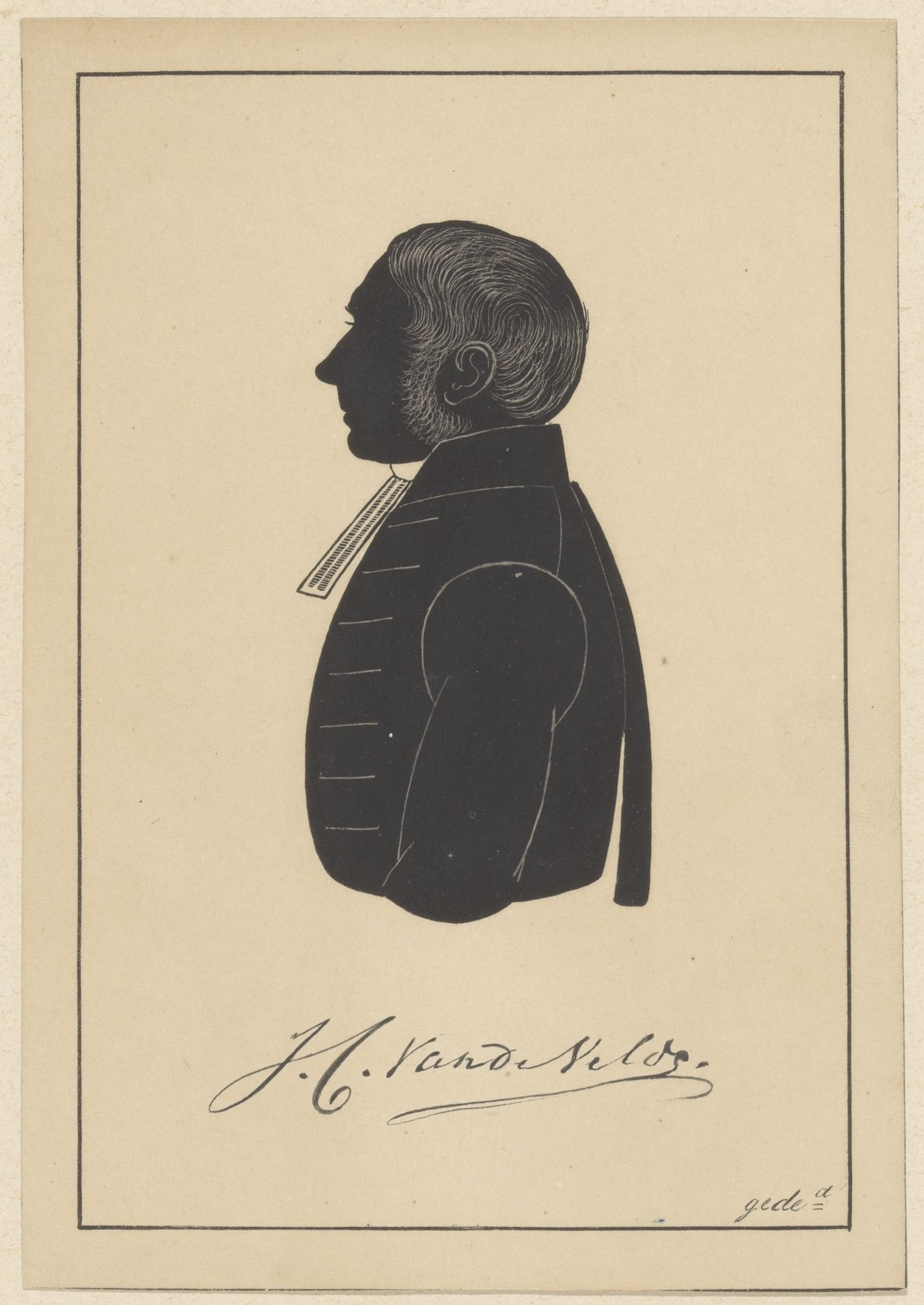
Pieter Barbiers IV rendered this silhouette portrait of Jacob Carel van de Velde using paper and scissors. The composition is strikingly simple: a stark black profile set against a pale background, demanding our attention through its stark contrast and elegant economy of form. The profile, a classical form of portraiture, reduces the individual to an outline, a play of light and shadow that speaks to the essence of form. The silhouette is not merely a representation but an interpretation, reducing complex features to basic shapes. Note the precision of the cut, particularly in rendering the hair, which suggests texture and volume despite the medium's limitations. The stark contrast of the black silhouette against the light background creates a visual tension, a dialogue between presence and absence. This is not just a portrait, but an essay on form, perception, and the reduction of reality to its most essential elements.
Silhouetportret van Jacob Carel van de Velde 1809 - 1848

Pieter (IV) Barbiers
1798 - 1848Location
RijksmuseumArtwork details
- Medium
- drawing, paper, ink
- Dimensions
- height 154 mm, width 107 mm
- Location
- Rijksmuseum
- Copyright
- Rijks Museum: Open Domain
Tags
portrait
drawing
old engraving style
caricature
figuration
paper
ink
line
Comments
No comments
About this artwork
Pieter Barbiers IV rendered this silhouette portrait of Jacob Carel van de Velde using paper and scissors. The composition is strikingly simple: a stark black profile set against a pale background, demanding our attention through its stark contrast and elegant economy of form. The profile, a classical form of portraiture, reduces the individual to an outline, a play of light and shadow that speaks to the essence of form. The silhouette is not merely a representation but an interpretation, reducing complex features to basic shapes. Note the precision of the cut, particularly in rendering the hair, which suggests texture and volume despite the medium's limitations. The stark contrast of the black silhouette against the light background creates a visual tension, a dialogue between presence and absence. This is not just a portrait, but an essay on form, perception, and the reduction of reality to its most essential elements.
Comments
No comments