About this artwork
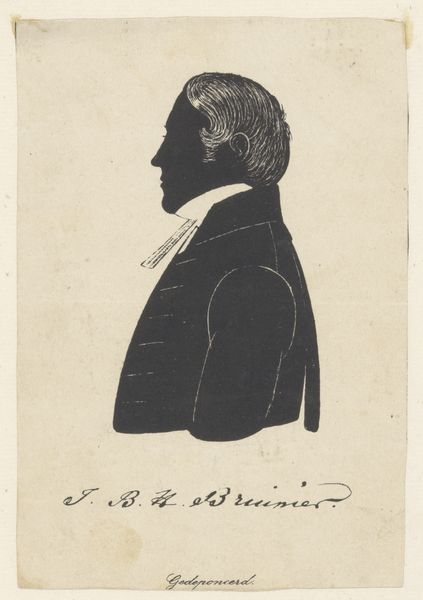
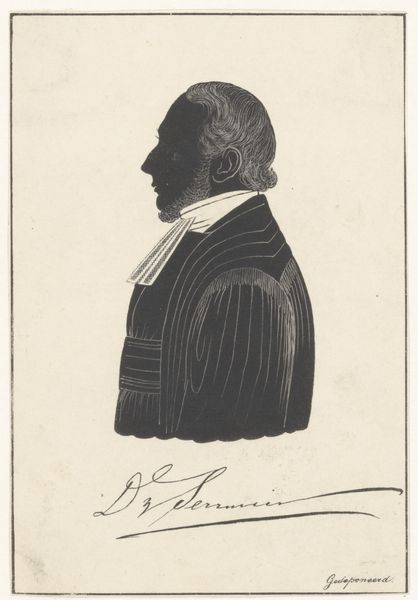
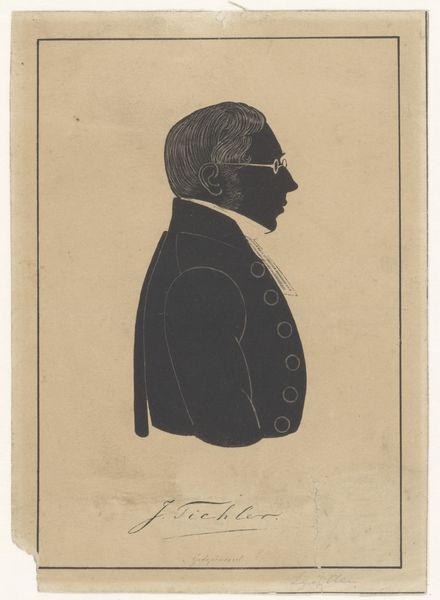
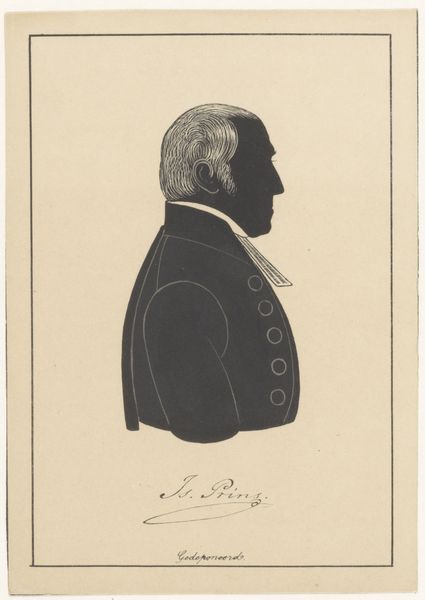
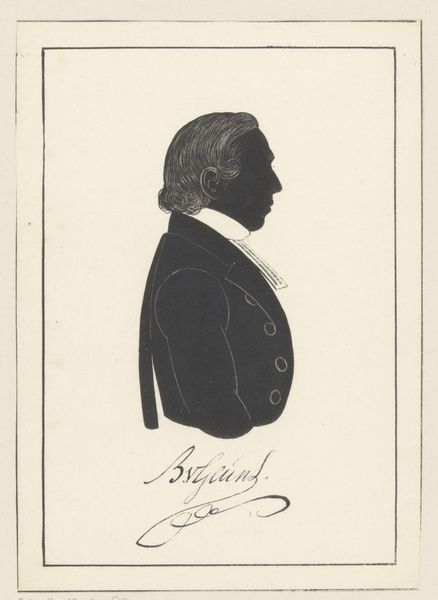
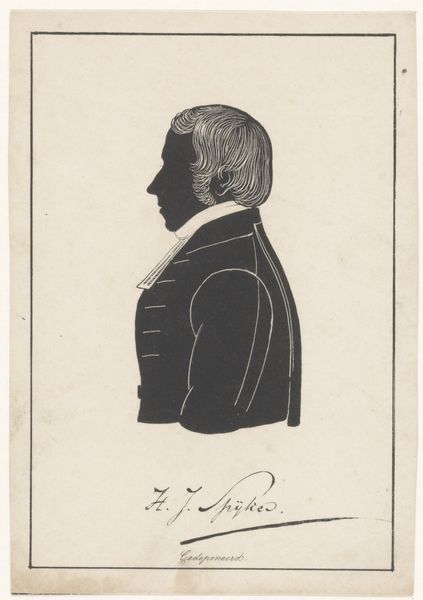
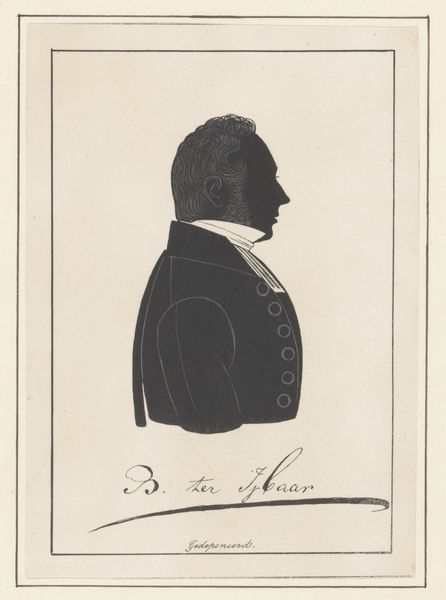
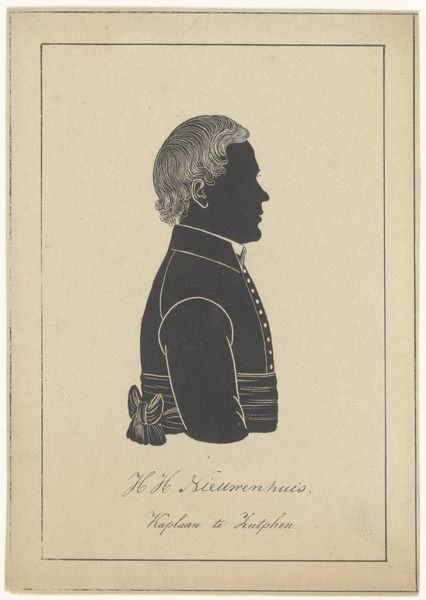
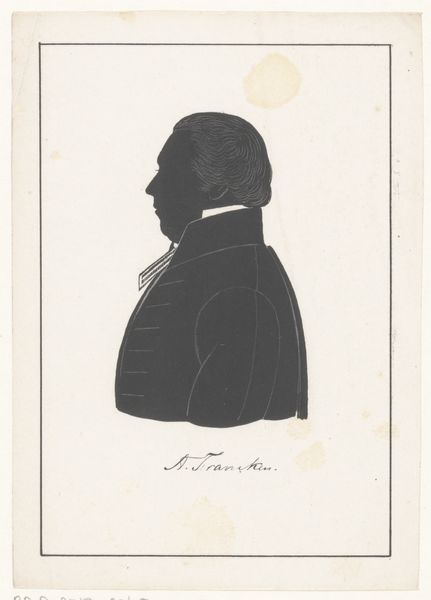
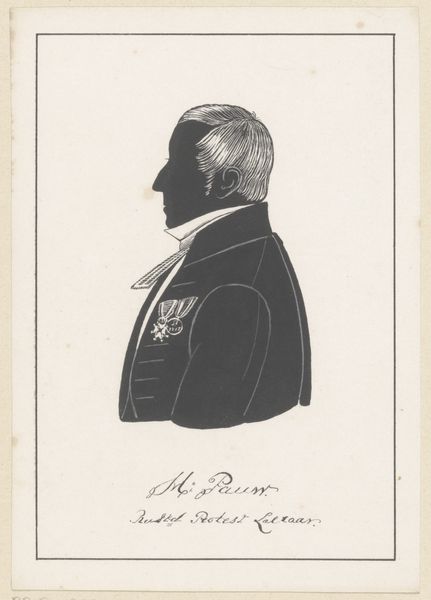
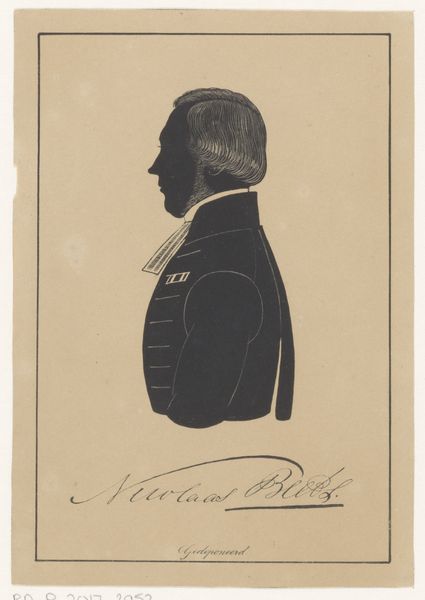
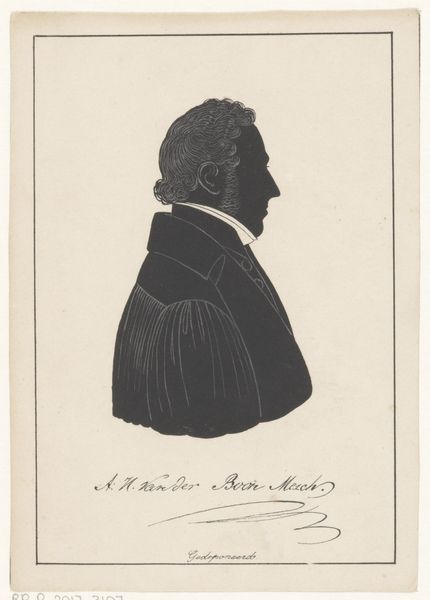
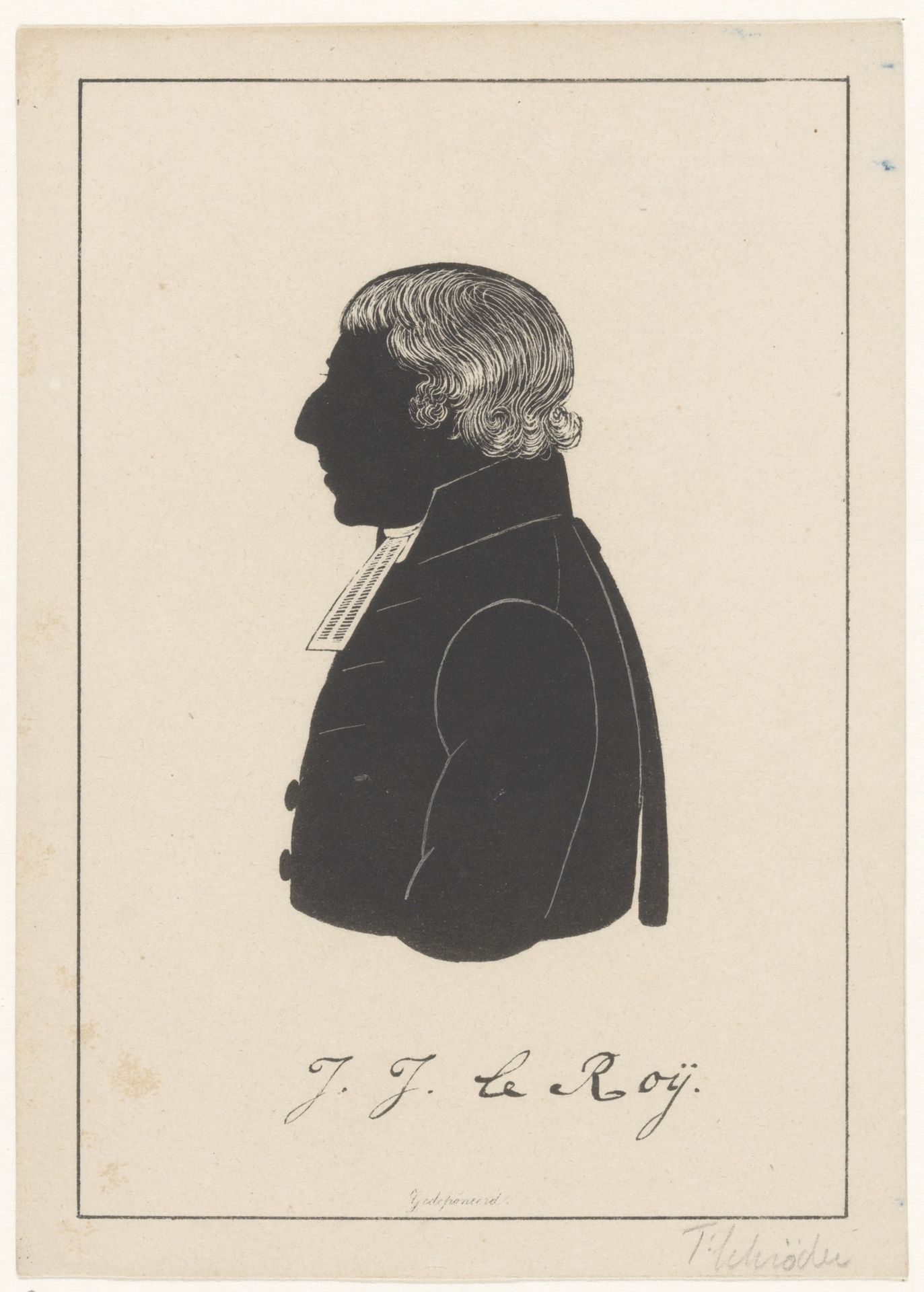
This silhouette portrait of Johannes Jacobus le Roy was made by Pieter Barbiers IV. The stark contrast of the black silhouette against the light background immediately draws us into the sitter's persona. Notice the elaborate wig, a symbol of status and learning during the 18th and 19th centuries. It echoes the grandiose hairstyles of Roman senators, signifying power. Yet, it also reminds us of the masks worn in ancient theater, suggesting a constructed identity. The silhouette, a shadow of a person, has ancient roots, reminding us of Plato’s cave allegory, where shadows represent a limited understanding of reality. This notion of capturing the essence of a person through their shadow taps into a primal desire to preserve memory and identity. The cyclical nature of symbols is evident here. The wig, once a marker of authority, evolves into a theatrical prop, then resurfaces in this shadow portrait, inviting us to question the nature of identity and representation itself.
Silhouetportret van Johannes Jacobus le Roy
1809 - 1870

Pieter (IV) Barbiers
1798 - 1848Location
RijksmuseumArtwork details
- Medium
- drawing, paper
- Dimensions
- height 152 mm, width 108 mm
- Location
- Rijksmuseum
- Copyright
- Rijks Museum: Open Domain
Tags
Comments
Share your thoughts
About this artwork
This silhouette portrait of Johannes Jacobus le Roy was made by Pieter Barbiers IV. The stark contrast of the black silhouette against the light background immediately draws us into the sitter's persona. Notice the elaborate wig, a symbol of status and learning during the 18th and 19th centuries. It echoes the grandiose hairstyles of Roman senators, signifying power. Yet, it also reminds us of the masks worn in ancient theater, suggesting a constructed identity. The silhouette, a shadow of a person, has ancient roots, reminding us of Plato’s cave allegory, where shadows represent a limited understanding of reality. This notion of capturing the essence of a person through their shadow taps into a primal desire to preserve memory and identity. The cyclical nature of symbols is evident here. The wig, once a marker of authority, evolves into a theatrical prop, then resurfaces in this shadow portrait, inviting us to question the nature of identity and representation itself.
Comments
Share your thoughts