About this artwork
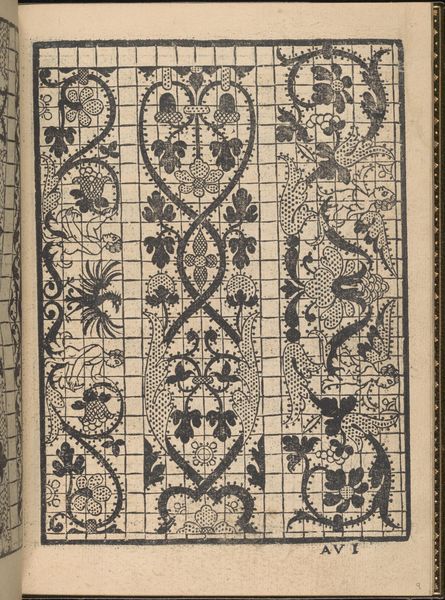
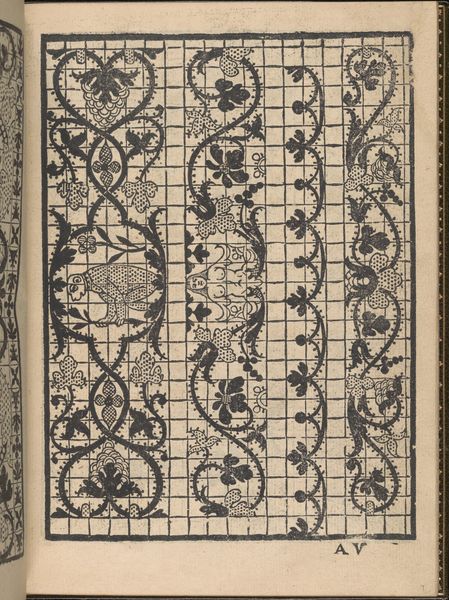
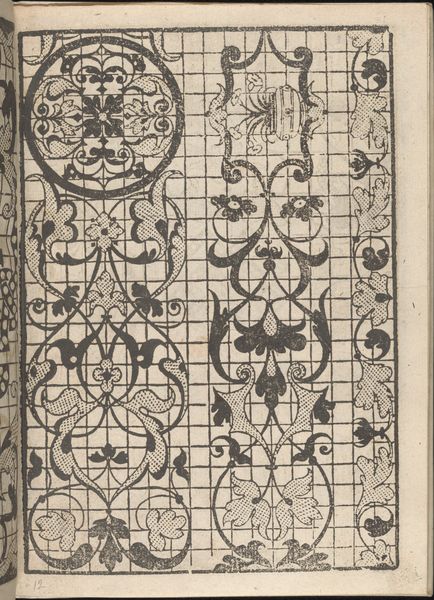
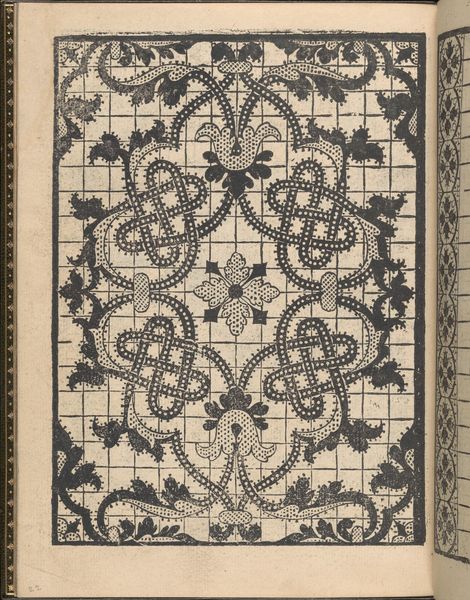
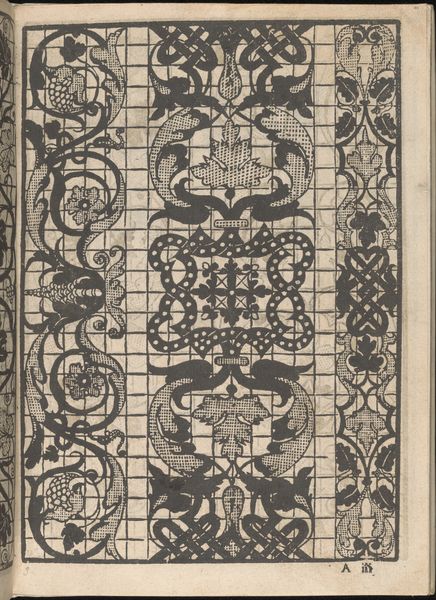
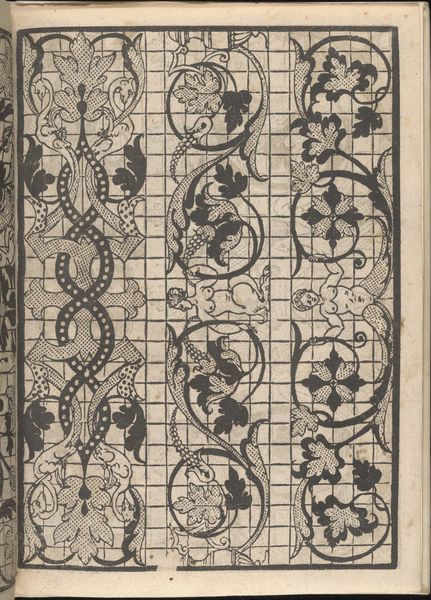
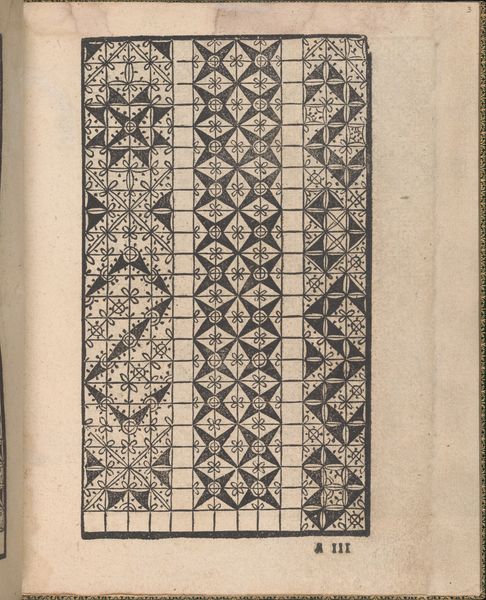
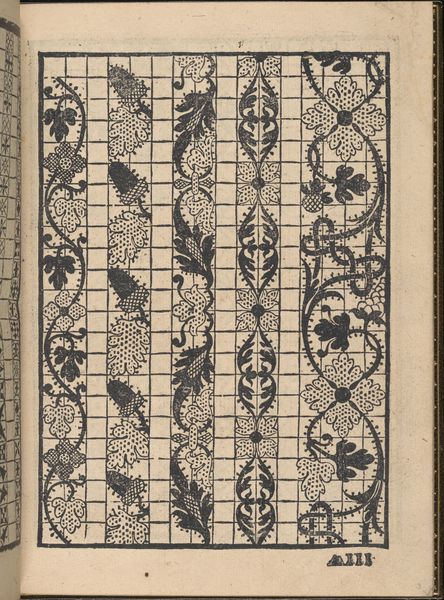
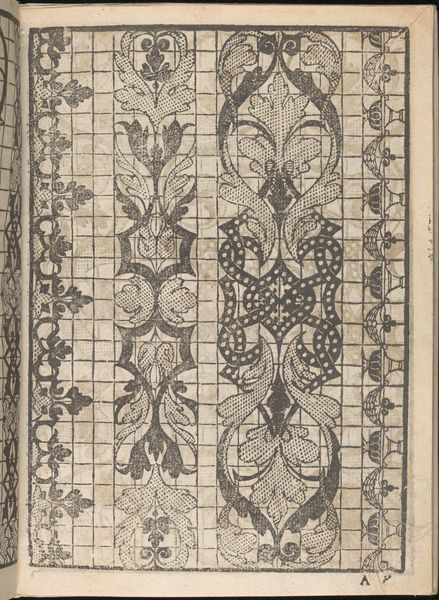
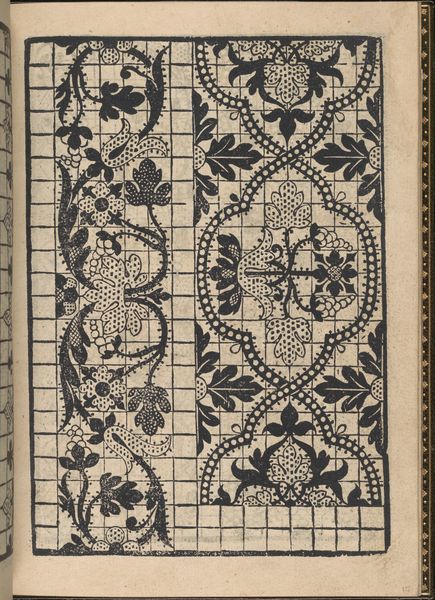
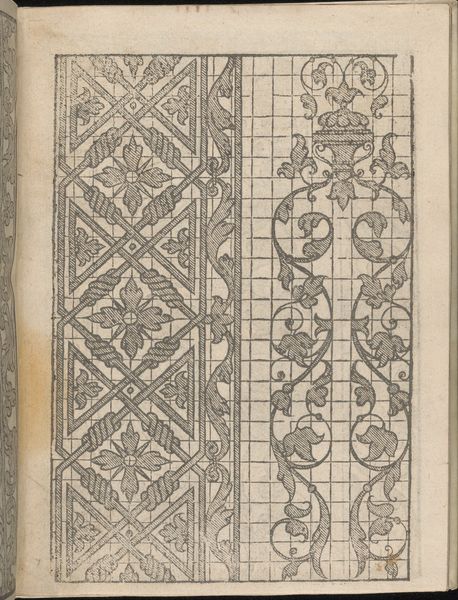
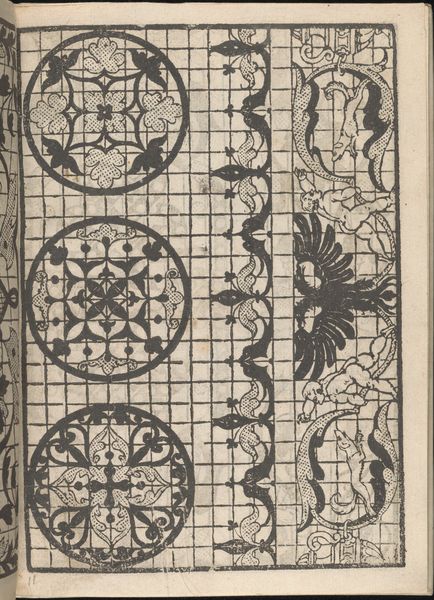
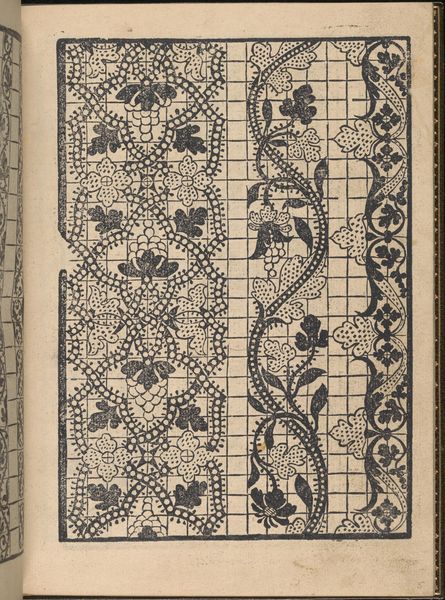
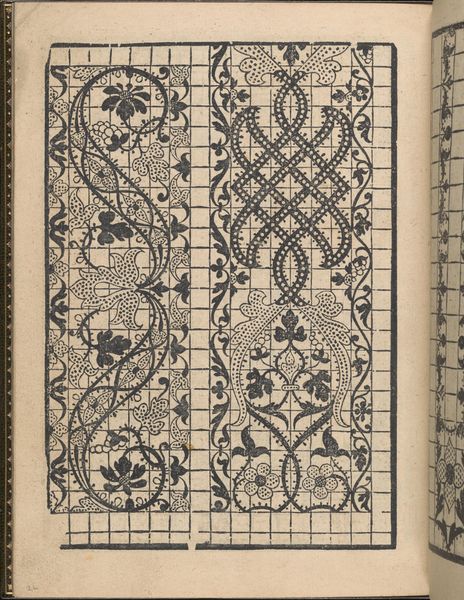
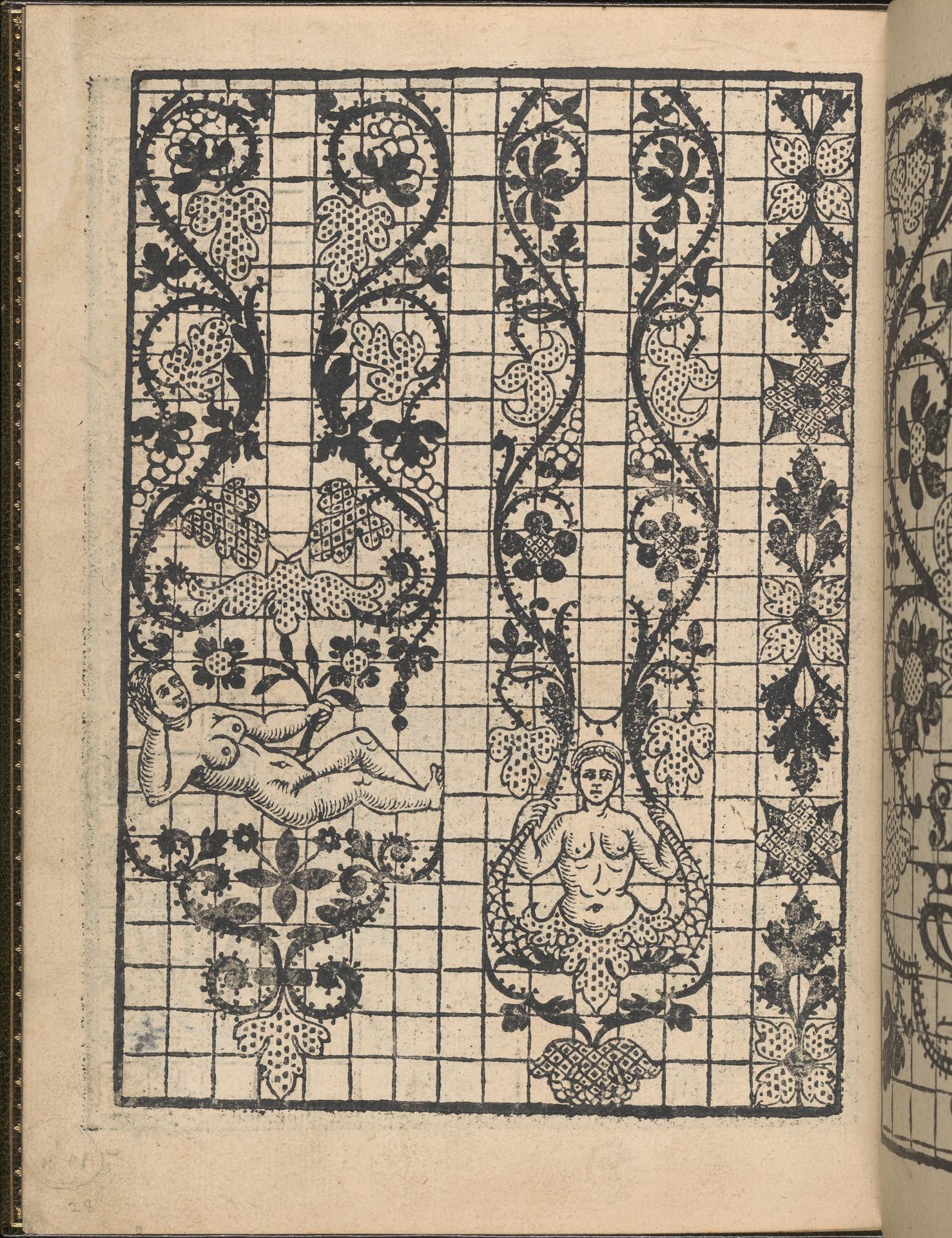
This is page 15 from 'La Gloria et l'Honore di Ponti Tagliati, E Ponti in Aere,' made by Matteo Pagano in the 16th century. The work, an early example of a lace pattern book, presents a structured grid, overlaid with organic and figurative motifs. Note how the underlying grid provides a rigid framework, yet the flowing designs soften the overall effect. The human figures intertwined with floral patterns add a layer of complexity, challenging the strict geometry. Pagano juxtaposes the rational structure with the free-flowing curves of nature. This tension destabilizes traditional notions of order and decorum. The book was intended to guide lacemakers but, in doing so, it offers a unique view on cultural codes and artistic expression through its inventive play with form and function. Consider how the grid is not merely a background but a fundamental element shaping the entire composition, blurring the boundaries between art, craft, and design.
La Gloria et l'Honore di Ponti Tagliati, E Ponti in Aere, page 15 (verso) 1556


Artwork details
- Medium
- drawing, print, intaglio, ink, pen, engraving
- Dimensions
- Overall: 8 1/4 x 6 1/8 in. (21 x 15.5 cm)
- Location
- Metropolitan Museum of Art, New York, NY
- Copyright
- Public Domain
Tags
drawing
medieval
pen drawing
book
intaglio
figuration
11_renaissance
ink
geometric
pen
nude
engraving
Comments
No comments
About this artwork
This is page 15 from 'La Gloria et l'Honore di Ponti Tagliati, E Ponti in Aere,' made by Matteo Pagano in the 16th century. The work, an early example of a lace pattern book, presents a structured grid, overlaid with organic and figurative motifs. Note how the underlying grid provides a rigid framework, yet the flowing designs soften the overall effect. The human figures intertwined with floral patterns add a layer of complexity, challenging the strict geometry. Pagano juxtaposes the rational structure with the free-flowing curves of nature. This tension destabilizes traditional notions of order and decorum. The book was intended to guide lacemakers but, in doing so, it offers a unique view on cultural codes and artistic expression through its inventive play with form and function. Consider how the grid is not merely a background but a fundamental element shaping the entire composition, blurring the boundaries between art, craft, and design.
Comments
No comments