About this artwork
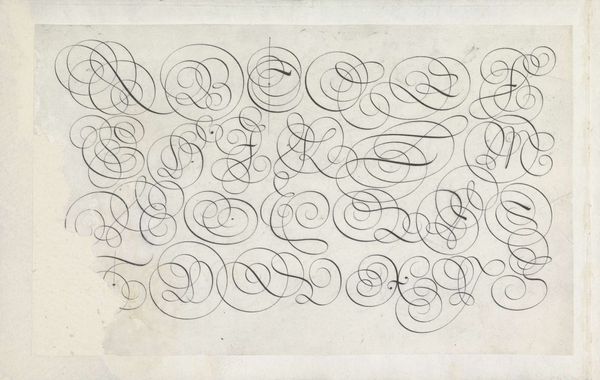
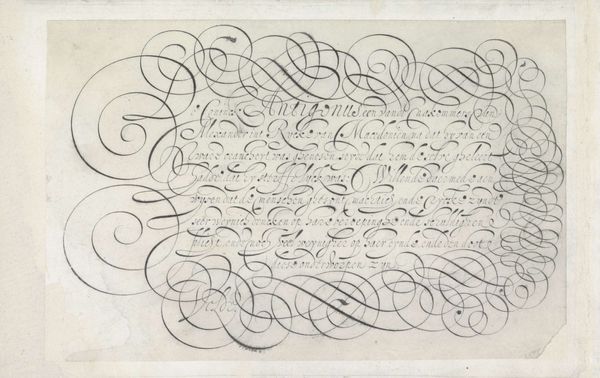
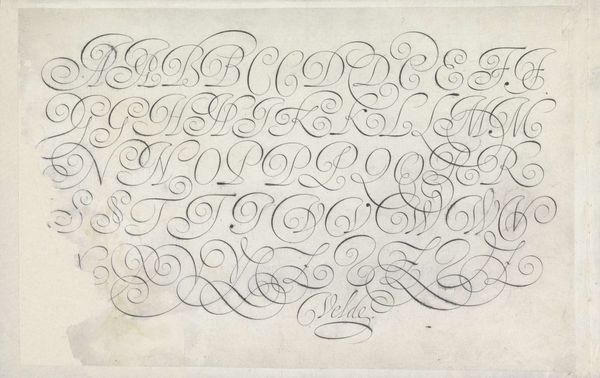
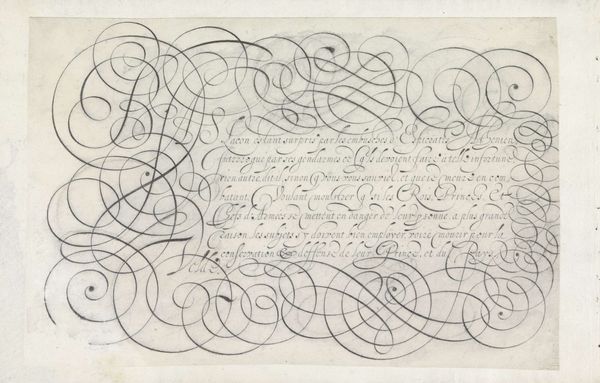
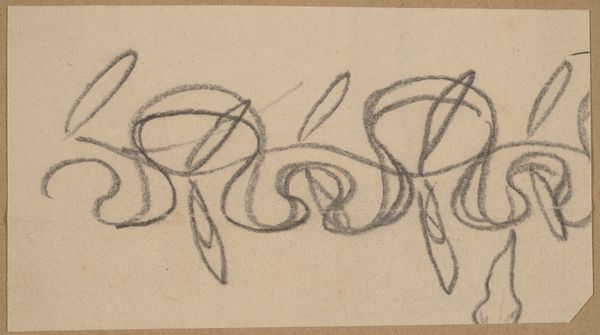
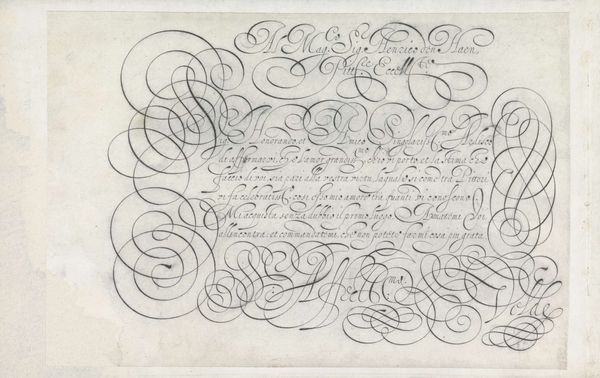
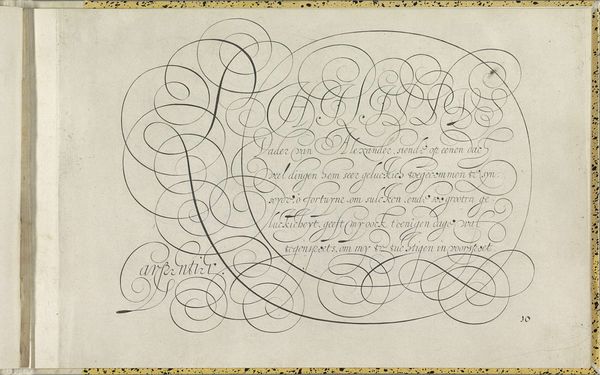
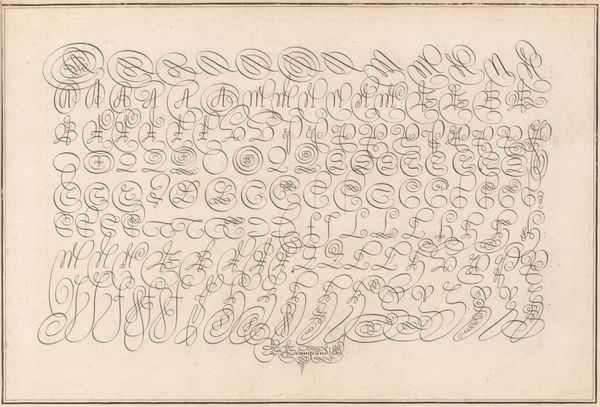
Lieven Willemsz. Coppenol made this writing sample with capital letters, but the date is not known. As you can see, it shows letters formed by elaborate swirls and flourishes, a visual code that spoke to the importance of handwriting in the 17th-century Dutch Republic. During this period, calligraphy was not just a practical skill but a respected art form. Think about the cultural value placed on literacy and elegant handwriting within the context of the burgeoning merchant class and the need for clear communication in trade and governance. Institutions, such as the Dutch East India Company, depended on scribes who could produce official documents. The artist no doubt responded to this need, offering models that were both functional and decorative. If you want to explore this further, look into manuals and copybooks that would have been used at the time. They would have had a huge impact on the social history of art and education in the Netherlands.
Schrijfvoorbeeld met hoofdletters
1618

Lieven Willemsz. Coppenol
1598 - 1667Location
RijksmuseumArtwork details
- Medium
- drawing, paper, ink
- Dimensions
- height 192 mm, width 284 mm
- Location
- Rijksmuseum
- Copyright
- Rijks Museum: Open Domain
Tags
Comments
Share your thoughts
About this artwork
Lieven Willemsz. Coppenol made this writing sample with capital letters, but the date is not known. As you can see, it shows letters formed by elaborate swirls and flourishes, a visual code that spoke to the importance of handwriting in the 17th-century Dutch Republic. During this period, calligraphy was not just a practical skill but a respected art form. Think about the cultural value placed on literacy and elegant handwriting within the context of the burgeoning merchant class and the need for clear communication in trade and governance. Institutions, such as the Dutch East India Company, depended on scribes who could produce official documents. The artist no doubt responded to this need, offering models that were both functional and decorative. If you want to explore this further, look into manuals and copybooks that would have been used at the time. They would have had a huge impact on the social history of art and education in the Netherlands.
Comments
Share your thoughts