About this artwork
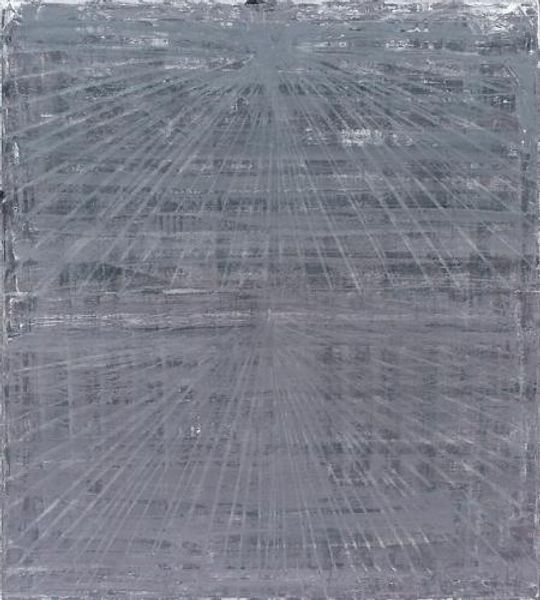
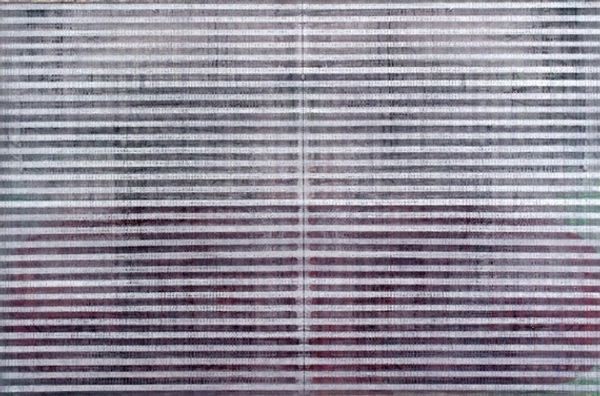
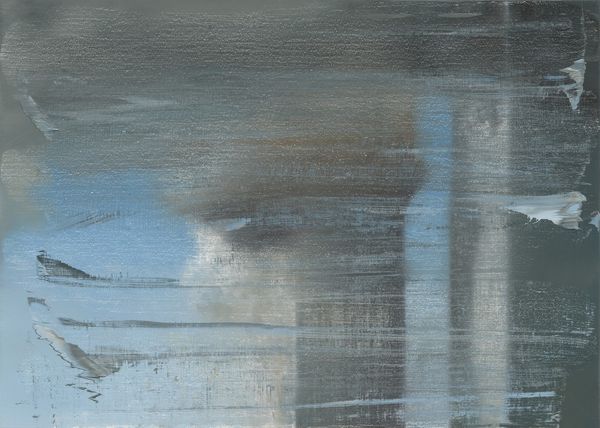
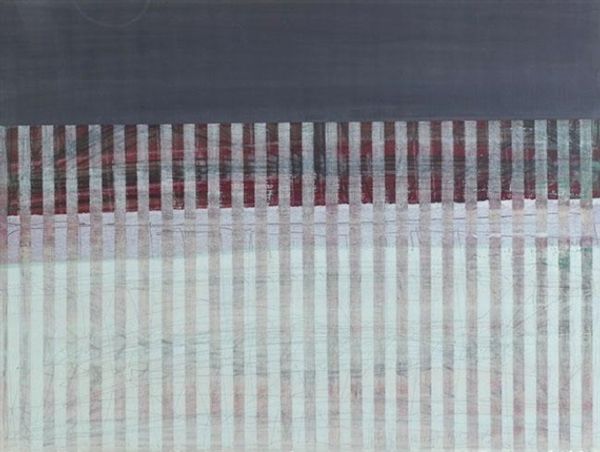
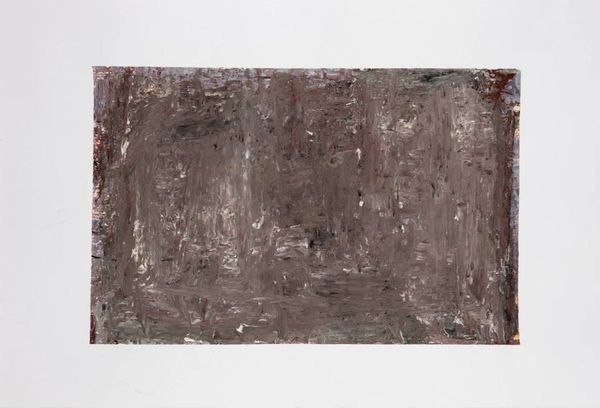
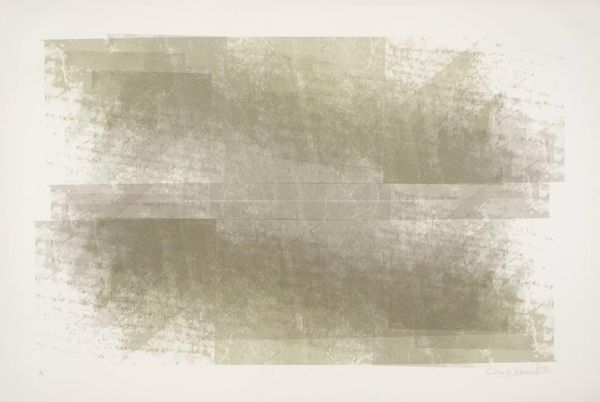
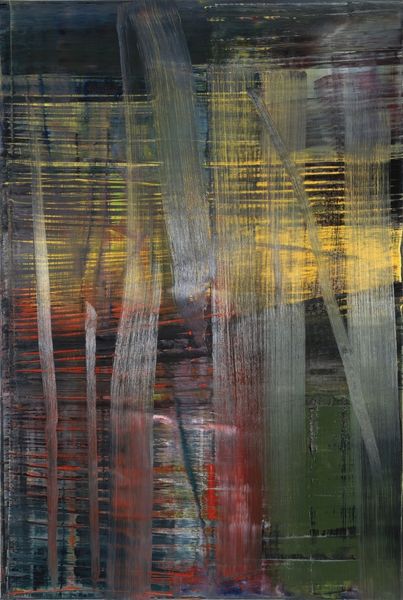
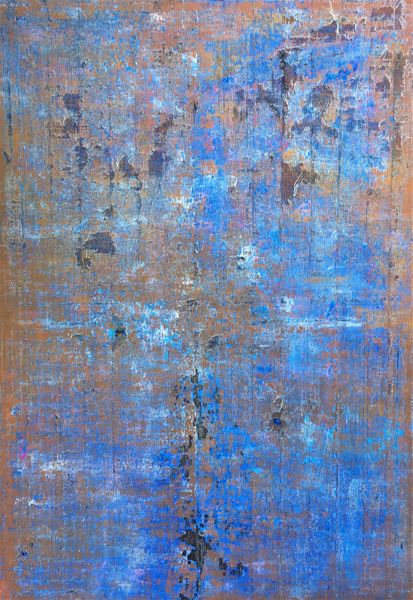
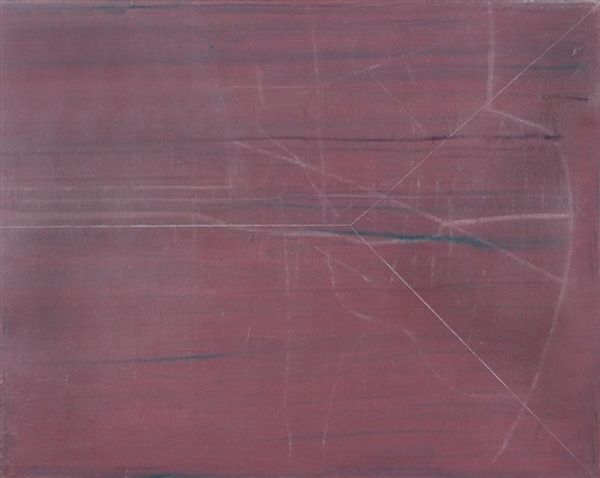
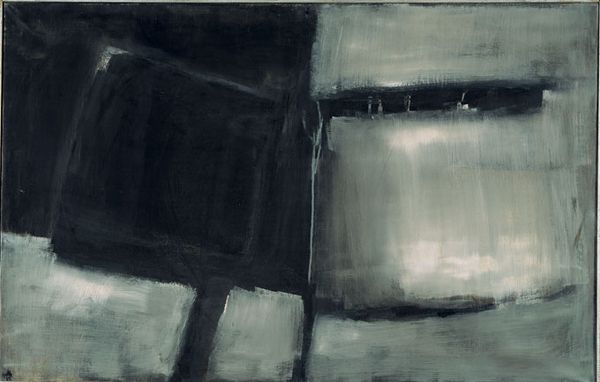
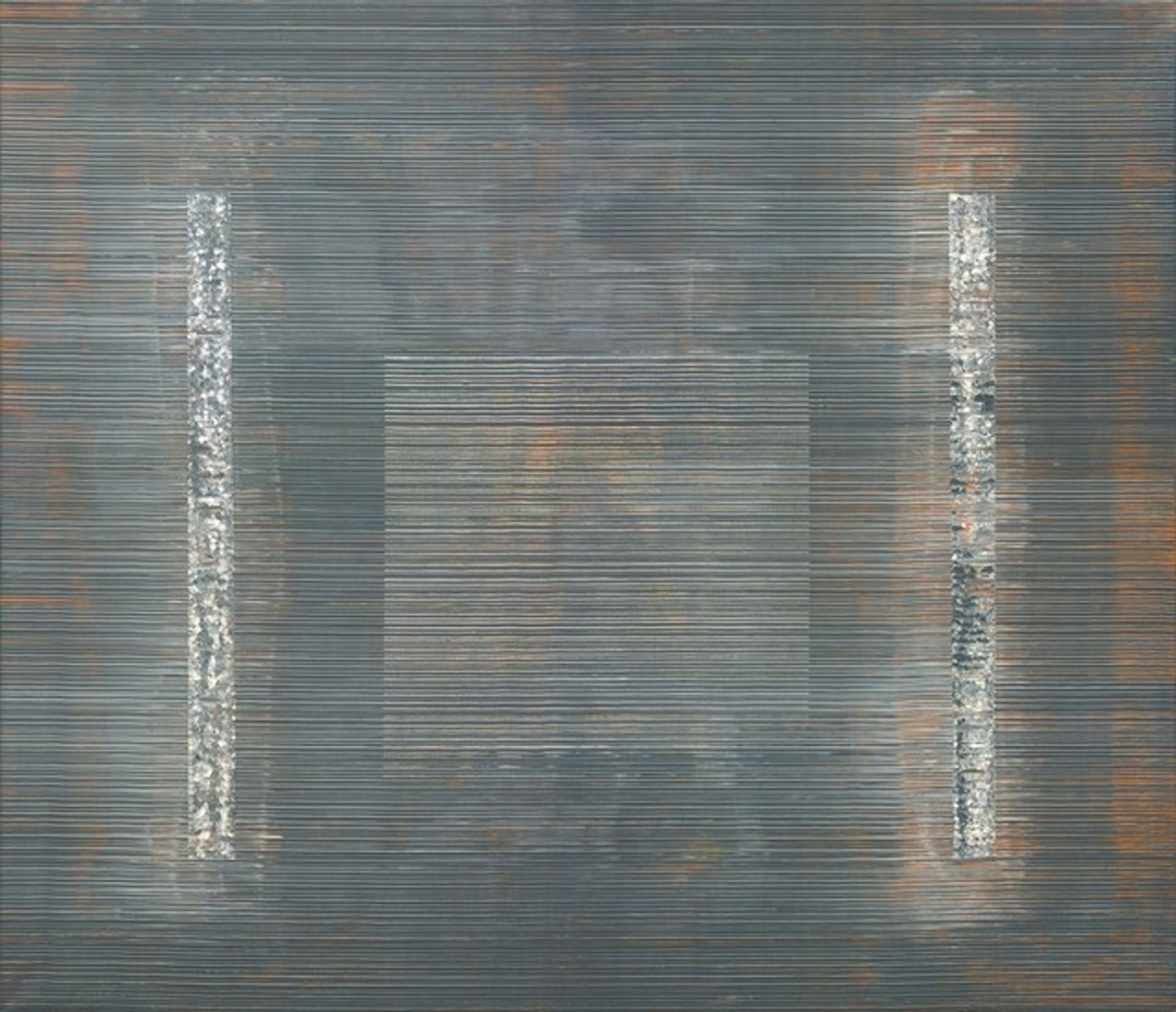
Jack Whitten created "Sphinx Alley II" using mixed media on canvas, resulting in an artwork that immediately strikes us with its textured horizontal lines. The composition features a muted palette with subtle variations in tone, creating an almost meditative visual field. Notice how Whitten disrupts the uniformity with two vertical columns that seem to pierce through the layered surface, adding a rhythmic element to the overall structure. These columns, along with a central square, introduce a play of geometric forms against the organic feel of the textured background. Whitten's work often explores the boundaries between painting and sculpture. The way he builds up the surface invites us to consider not only the visual but also the tactile qualities of the piece. The horizontal lines could be interpreted as a semiotic code, perhaps referencing musical bars or lines of text, suggesting a hidden system of communication. Consider how the artist destabilizes our conventional understanding of painting. By layering materials and creating physical depth, "Sphinx Alley II" transcends the traditional flatness of the canvas, engaging with broader philosophical questions about space and perception. Art then becomes a space for ongoing dialogue and discovery.


Artwork details
- Dimensions
- overall: 186.1 × 214 cm (73 1/4 × 84 1/4 in.)
- Copyright
- National Gallery of Art: CC0 1.0
Tags
natural stone pattern
abstract expressionism
abstract painting
geometric pattern
abstract pattern
organic pattern
wooden texture
texture
natural texture
organic texture
Comments
No comments
About this artwork
Jack Whitten created "Sphinx Alley II" using mixed media on canvas, resulting in an artwork that immediately strikes us with its textured horizontal lines. The composition features a muted palette with subtle variations in tone, creating an almost meditative visual field. Notice how Whitten disrupts the uniformity with two vertical columns that seem to pierce through the layered surface, adding a rhythmic element to the overall structure. These columns, along with a central square, introduce a play of geometric forms against the organic feel of the textured background. Whitten's work often explores the boundaries between painting and sculpture. The way he builds up the surface invites us to consider not only the visual but also the tactile qualities of the piece. The horizontal lines could be interpreted as a semiotic code, perhaps referencing musical bars or lines of text, suggesting a hidden system of communication. Consider how the artist destabilizes our conventional understanding of painting. By layering materials and creating physical depth, "Sphinx Alley II" transcends the traditional flatness of the canvas, engaging with broader philosophical questions about space and perception. Art then becomes a space for ongoing dialogue and discovery.
Comments
No comments