About this artwork
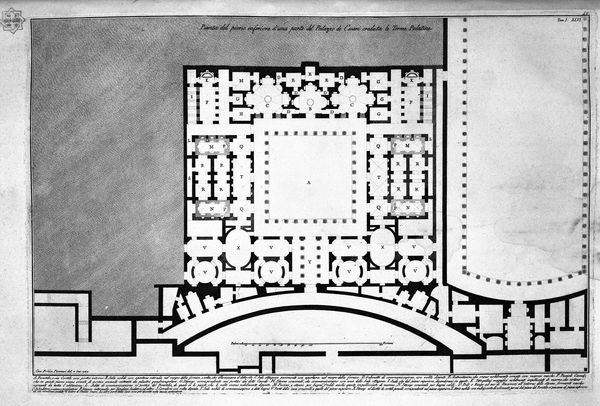
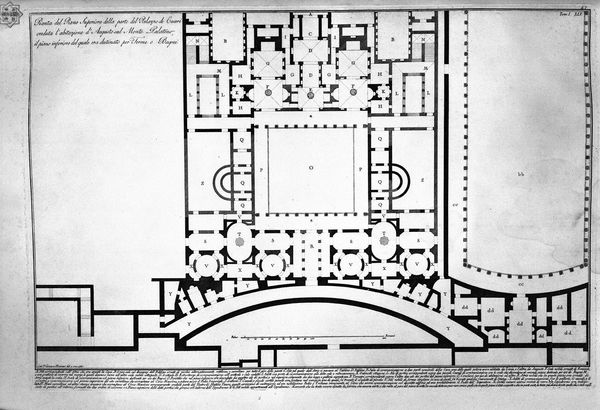
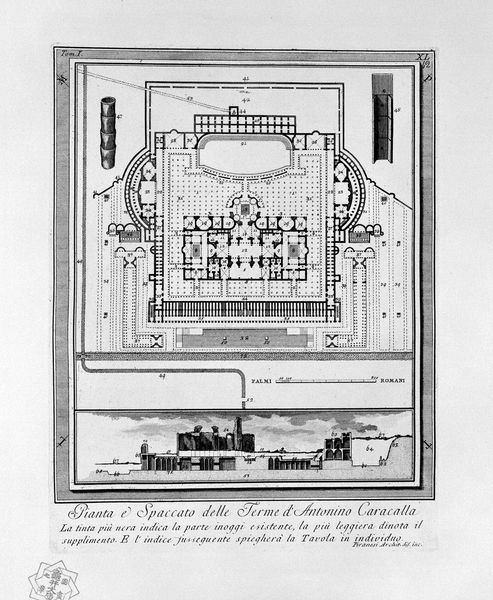
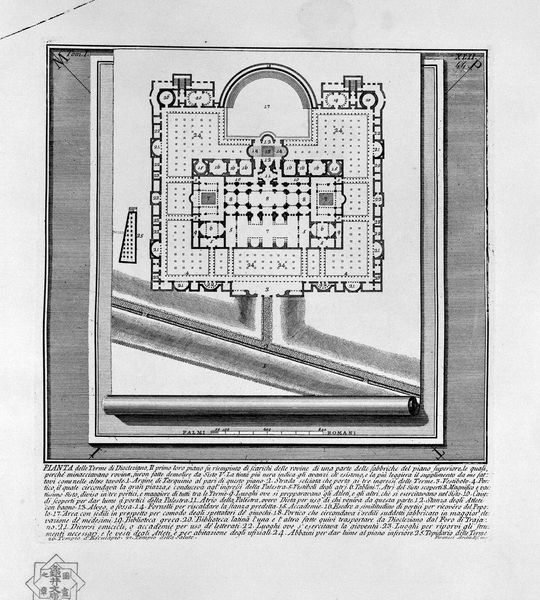
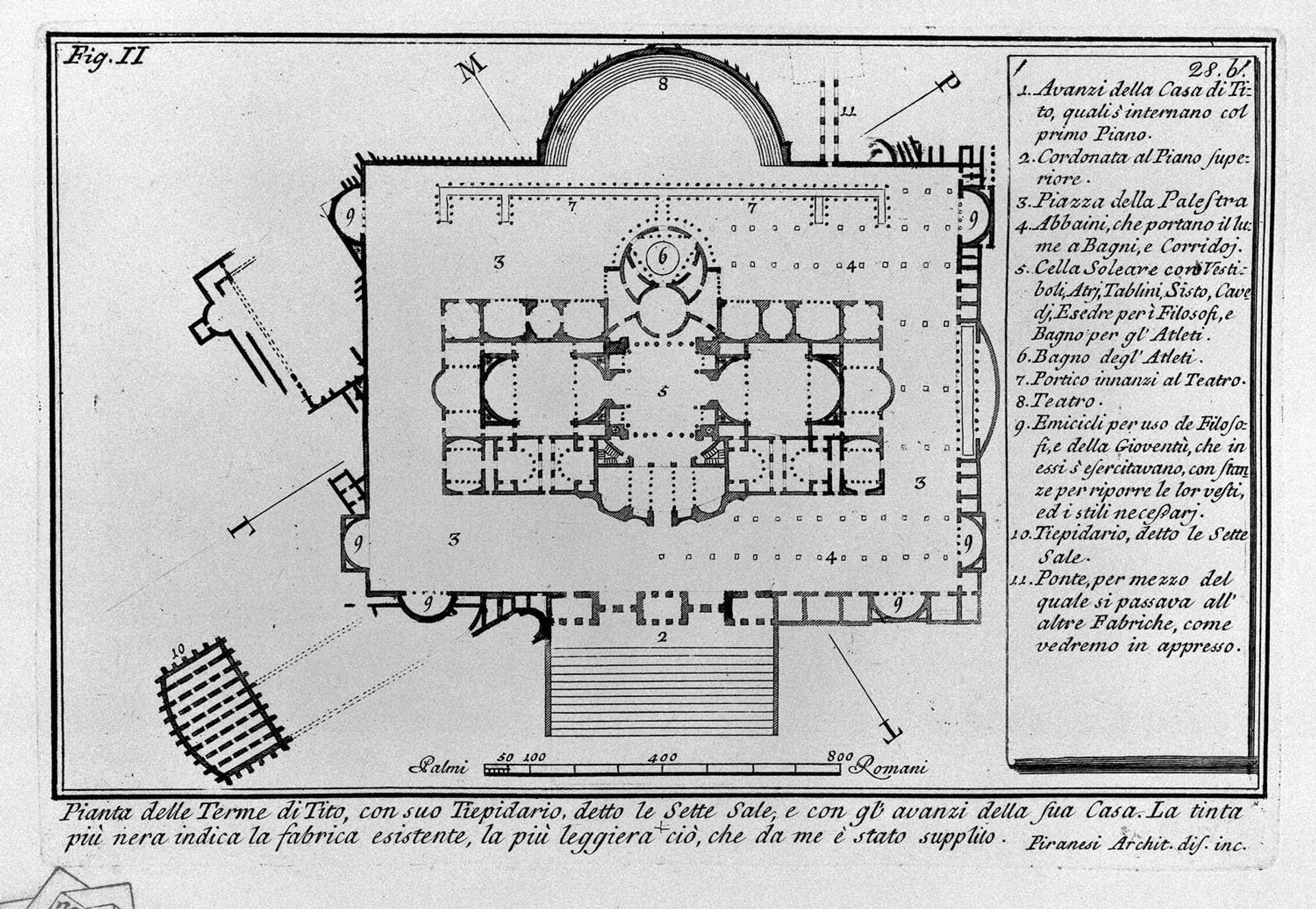
Here we see a plate from Giovanni Battista Piranesi’s "Roman Antiquities," an engraving detailing the ground plan of what he calls the Baths of Titus. The layout is a testament to Roman engineering prowess and social life. But look closer and you'll see that this is not just a depiction of architecture; it’s a map of ancient rituals, health, and leisure. The baths, here meticulously charted, were the center of Roman social life. Notice how these elements are reflected in later bathhouses and even contemporary spa designs. This drawing and the baths’ layout highlight a continuous thread of cultural memory. They are not just diagrams but echoes of a shared human experience across time. Each line and room resonates with the emotional and physical comfort our species have long sought in communal waters.
The Roman antiquities, t. 1, Plate XXVII. "Baths of Titus" (really the Baths of Traianus).
1756

Artwork details
- Medium
- drawing, print, engraving, architecture
- Copyright
- Public domain
Tags
Comments
Share your thoughts
About this artwork
Here we see a plate from Giovanni Battista Piranesi’s "Roman Antiquities," an engraving detailing the ground plan of what he calls the Baths of Titus. The layout is a testament to Roman engineering prowess and social life. But look closer and you'll see that this is not just a depiction of architecture; it’s a map of ancient rituals, health, and leisure. The baths, here meticulously charted, were the center of Roman social life. Notice how these elements are reflected in later bathhouses and even contemporary spa designs. This drawing and the baths’ layout highlight a continuous thread of cultural memory. They are not just diagrams but echoes of a shared human experience across time. Each line and room resonates with the emotional and physical comfort our species have long sought in communal waters.
Comments
Share your thoughts