About this artwork
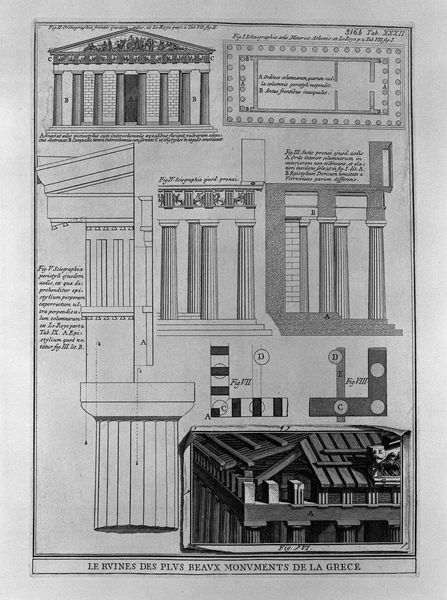
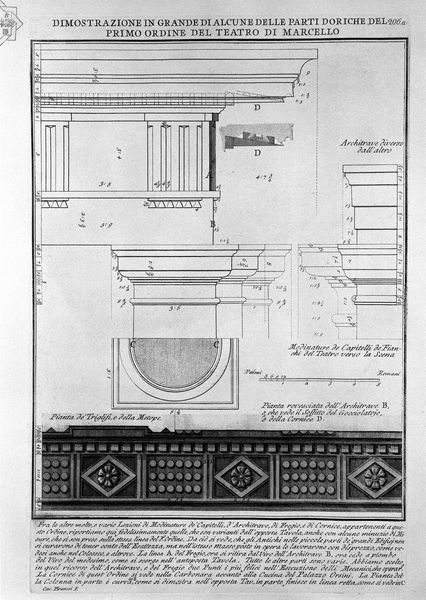
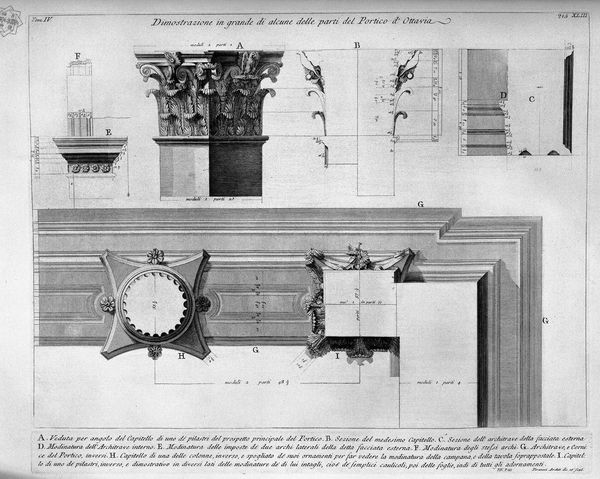
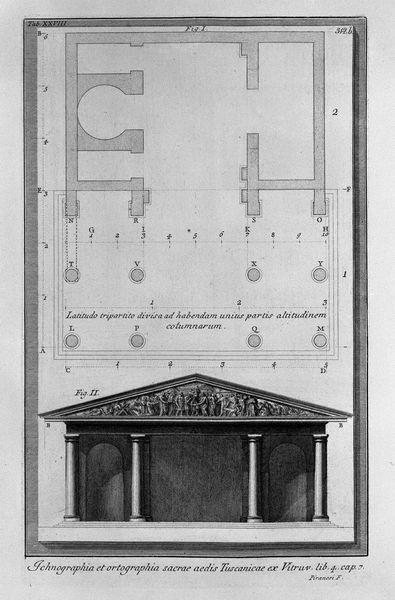
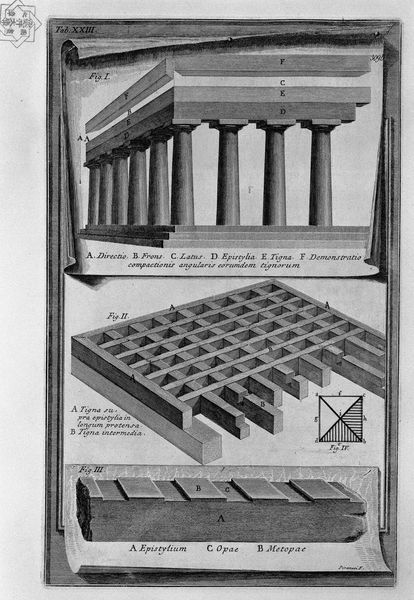
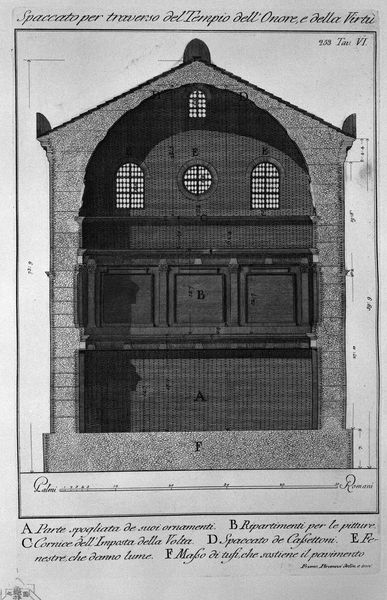
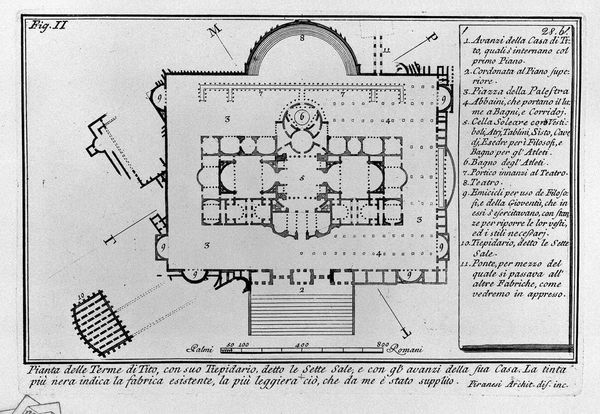
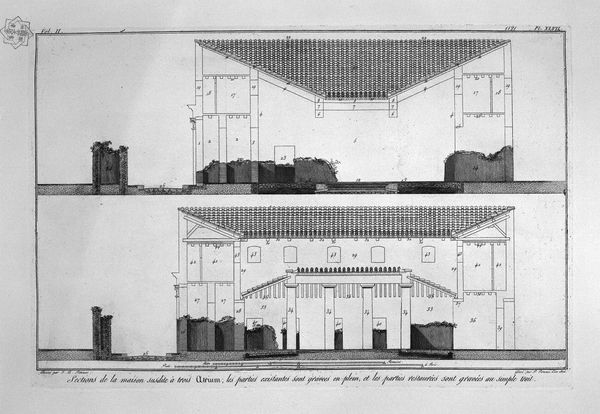
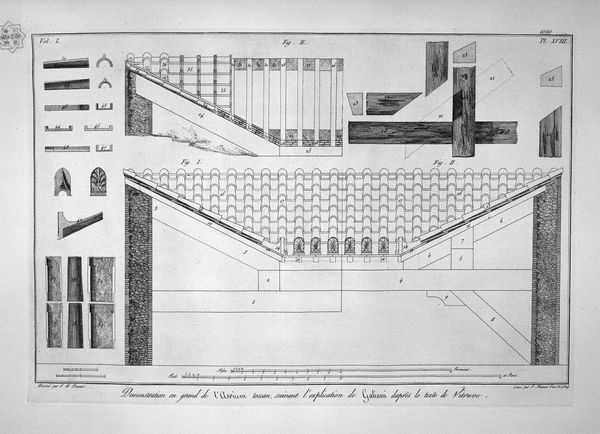
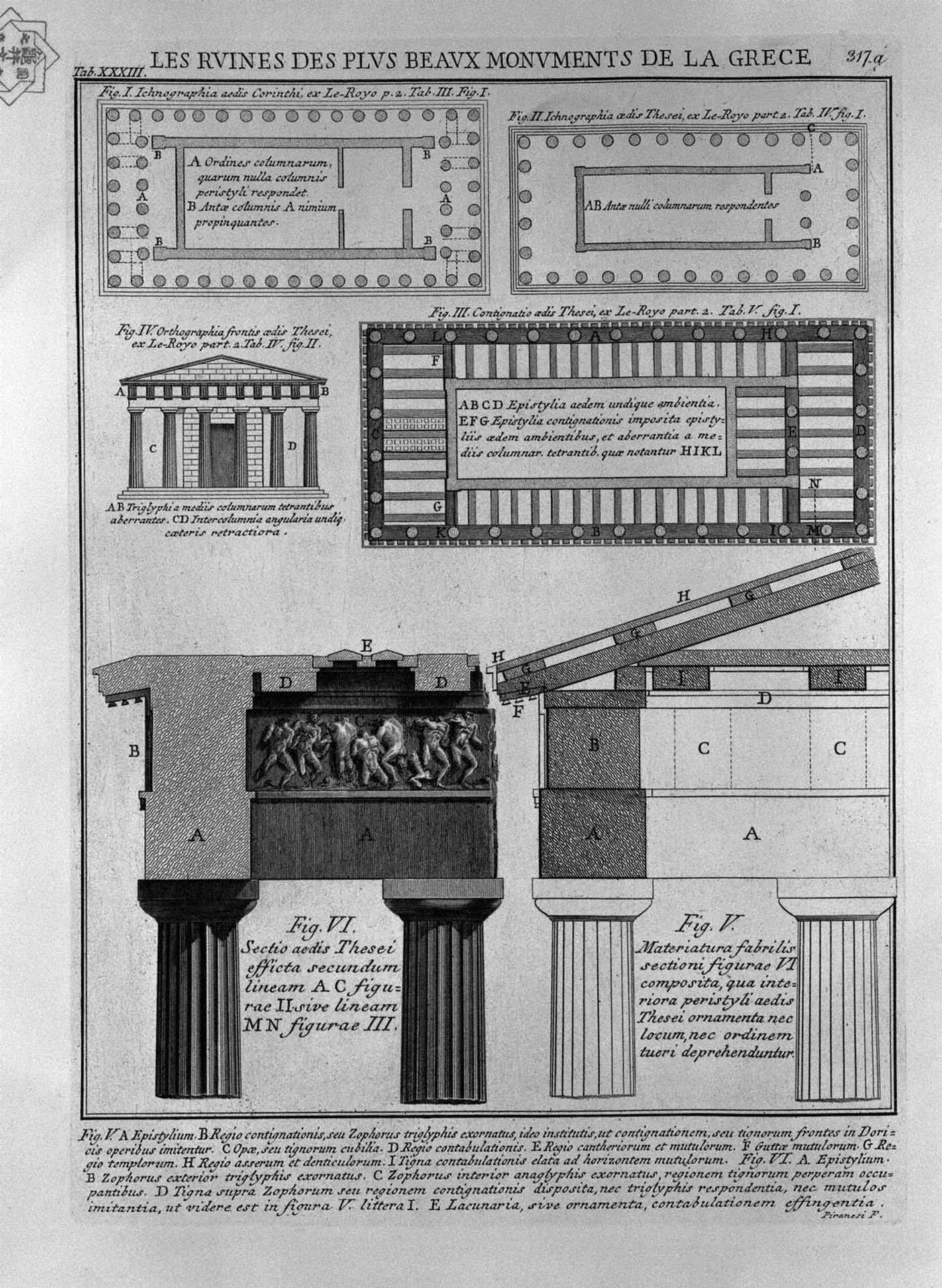
Giovanni Battista Piranesi made this etching titled 'Plan, elevation and details of Doric temples in Greece' after Le Roy. Piranesi’s print presents a visual deconstruction of classical Doric temples through a series of architectural plans and elevations. The composition is carefully arranged, contrasting the flat, graphic quality of the plans with the more detailed renderings of temple facades. The stark black lines against the white paper create a graphic tension, which is characteristic of Piranesi's style. Each line and shape serves as a signifier, pointing to a deeper understanding of architectural form and its cultural significance. The meticulous detail invites a semiotic reading, where each element—column, frieze, or capital—functions as a unit of meaning within the broader language of classical architecture. Piranesi challenges the viewer to reconsider fixed notions of classical beauty. The emphasis on structural elements and their interrelationships underscores the idea that architectural form is not merely aesthetic but also a complex system of communication.
Plan, elevation and details of Doric temples in Greece (from Le Roy)

Artwork details
- Medium
- drawing, print, etching, engraving, architecture
- Copyright
- Public domain
Tags
drawing
etching
greek-and-roman-art
form
geometric
ancient-mediterranean
line
academic-art
engraving
architecture
Comments
Be the first to share your thoughts about this work.
About this artwork
Giovanni Battista Piranesi made this etching titled 'Plan, elevation and details of Doric temples in Greece' after Le Roy. Piranesi’s print presents a visual deconstruction of classical Doric temples through a series of architectural plans and elevations. The composition is carefully arranged, contrasting the flat, graphic quality of the plans with the more detailed renderings of temple facades. The stark black lines against the white paper create a graphic tension, which is characteristic of Piranesi's style. Each line and shape serves as a signifier, pointing to a deeper understanding of architectural form and its cultural significance. The meticulous detail invites a semiotic reading, where each element—column, frieze, or capital—functions as a unit of meaning within the broader language of classical architecture. Piranesi challenges the viewer to reconsider fixed notions of classical beauty. The emphasis on structural elements and their interrelationships underscores the idea that architectural form is not merely aesthetic but also a complex system of communication.
Comments
Be the first to share your thoughts about this work.