drawing, print, ink, engraving
#
drawing
#
pen drawing
# print
#
pen illustration
#
house
#
ink
#
engraving
Dimensions: height 85 mm, width 65 mm
Copyright: Rijks Museum: Open Domain
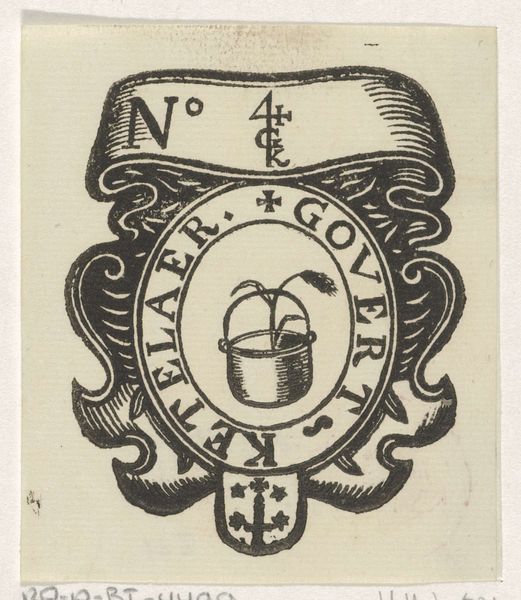
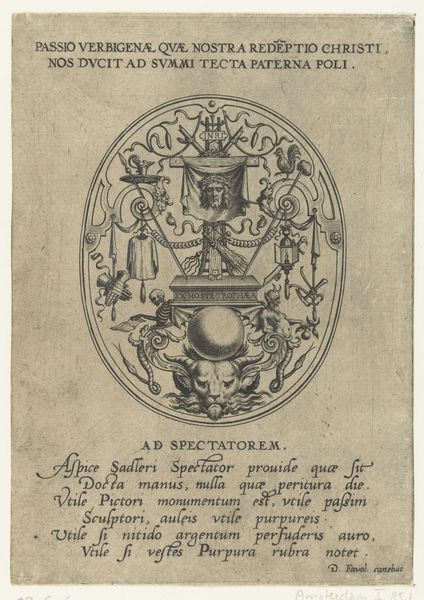
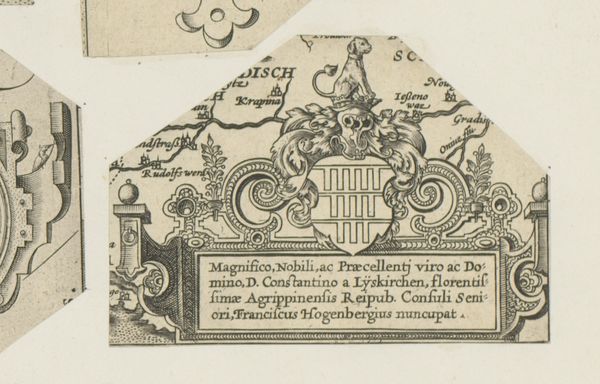
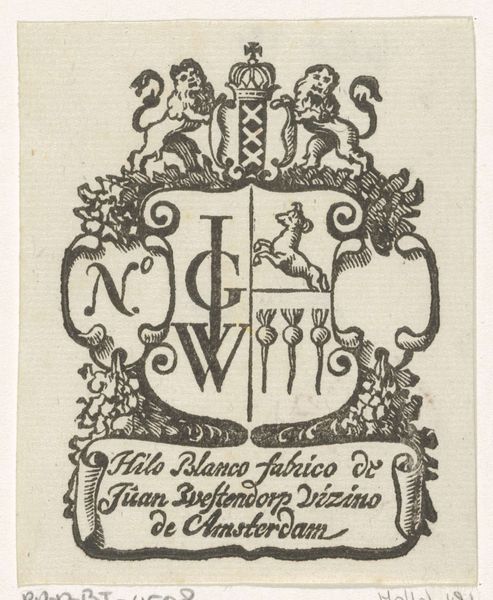
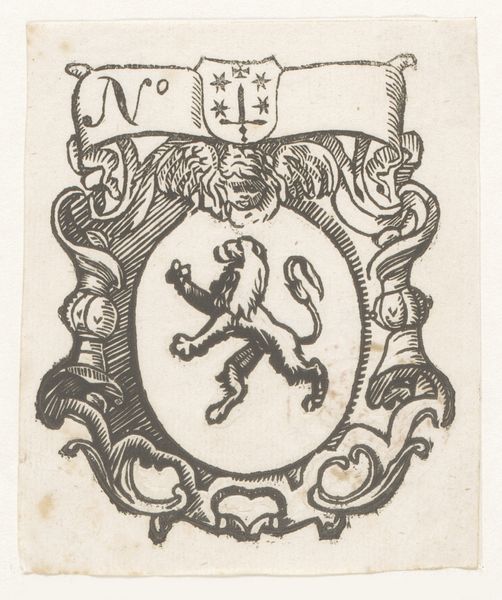
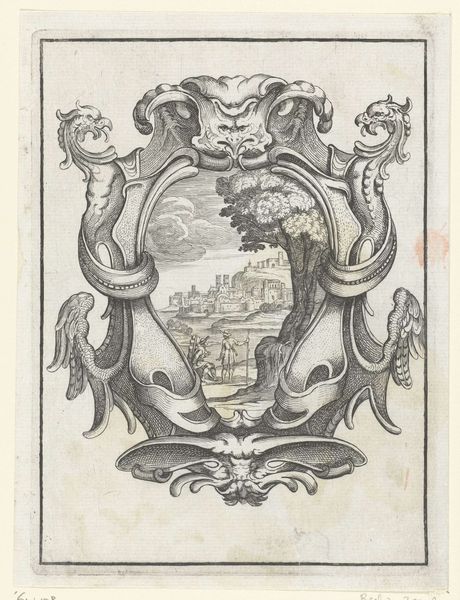
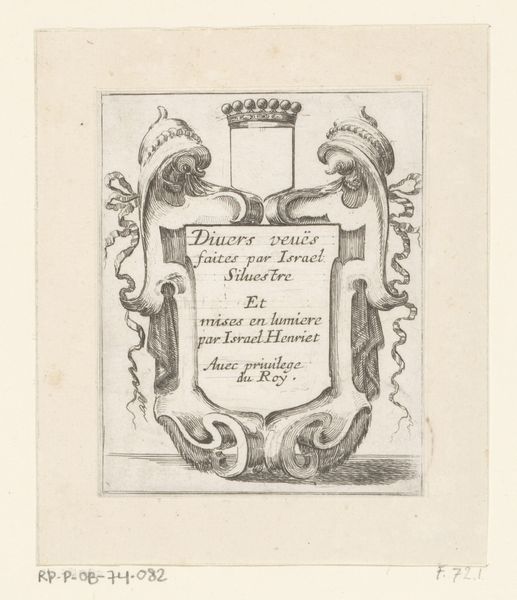
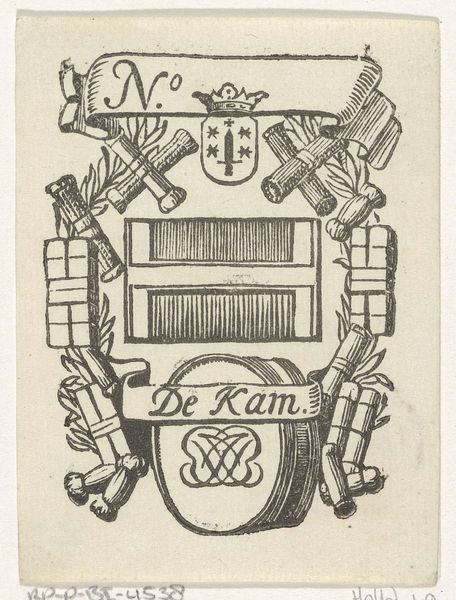
Curator: This delicate pen and ink drawing is a trade card, a handelsetiket, from around 1681 to 1740 by Isaac Vincentsz. van der Vinne. The main image features Colchester Castle. Editor: Oh, my first thought is that it feels both whimsical and historical. Like a little doorway into the past, sketched with a wink. The craftsmanship for such a small thing is just amazing. Curator: It is remarkable! The card features detailed engraving, right? Notice how the artist combines images and text, framing the castle within an oval of leaves and ribbons? Above, we see “J.B. & Co.” for John Brunick & Company. The castle’s ruin speaks volumes, suggesting both age and perhaps a kind of romantic decay. Editor: Yes! That tension between industry and decay—it makes you wonder about John Brunick & Co. What were they selling? Did they identify with the endurance of the castle, or was there something bittersweet in choosing that image? Maybe they sold antique furniture. I do feel some whimsical romanticism here. Like this drawing tells a very old story in very few strokes, so direct and clear and evocative! I almost want a whole series! Curator: Trade cards served as early advertisements, emblems of quality and reliability in a pre-mass media era. They circulated widely, conveying messages about commerce and community. Consider the public role of such an image – it links Brunick’s enterprise to a historical landmark. How very Colchester! Editor: Exactly! I see it now—it’s like slapping your company’s logo on a legend. A canny marketing move! You would also be subtly suggesting that the same level of expertise in rendering is applied in every piece produced by the company. Also that Colchester folks may know and love its landmark. Curator: Precisely. By utilizing visual imagery and craftsmanship, tradesmen like Brunick aimed to build a recognizable brand. It transforms the Castle ruins from a public historic site into private symbolic equity. Editor: What I think I loved the most here, in particular, is seeing how images – even something that tiny can carry a real heft, both visually and culturally. Curator: Agreed. And the drawing lets us peek into a world where art, commerce, and local identity were closely intertwined.
Comments
No comments
Be the first to comment and join the conversation on the ultimate creative platform.
 Collect
 React
React Comment
More like this