drawing, graphic-art, print, ink, engraving
#
drawing
#
graphic-art
#
baroque
#
pen drawing
# print
#
ink
#
geometric
#
engraving
Dimensions: height 89 mm, width 67 mm
Copyright: Rijks Museum: Open Domain
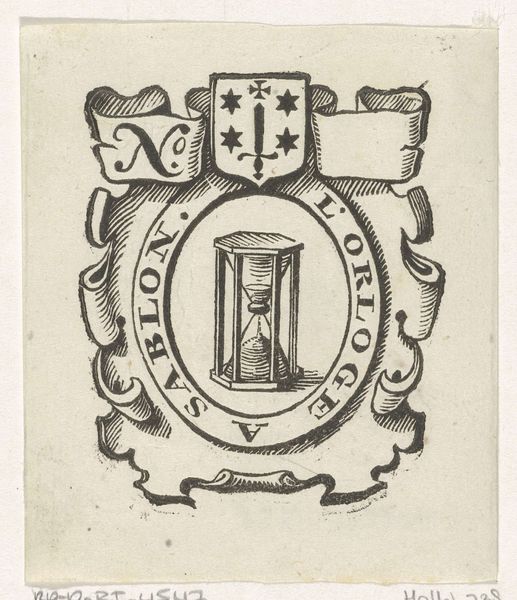
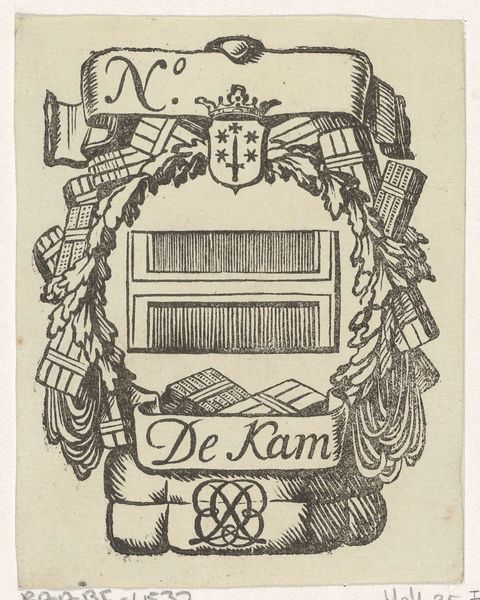
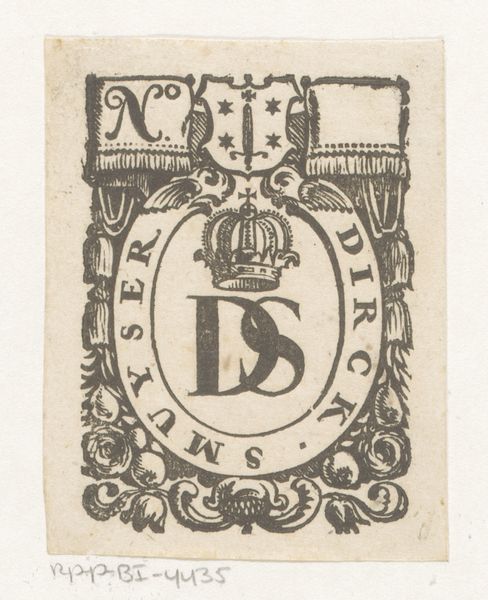
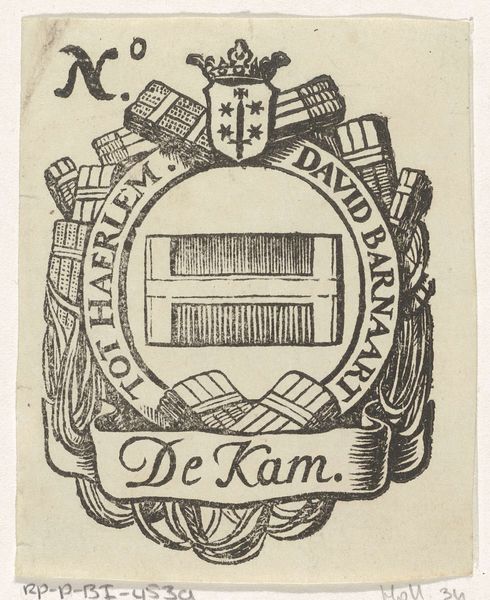
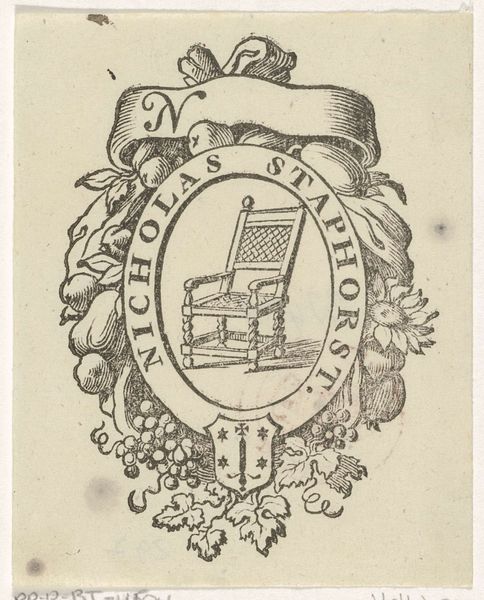
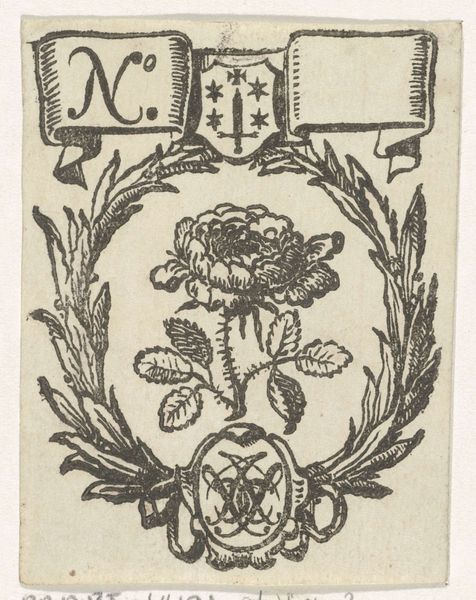
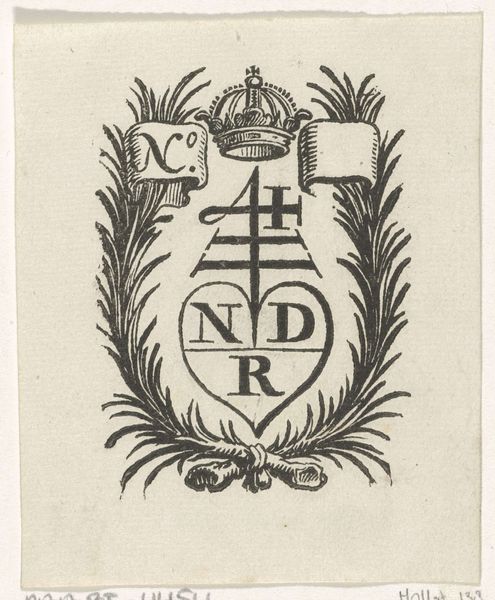
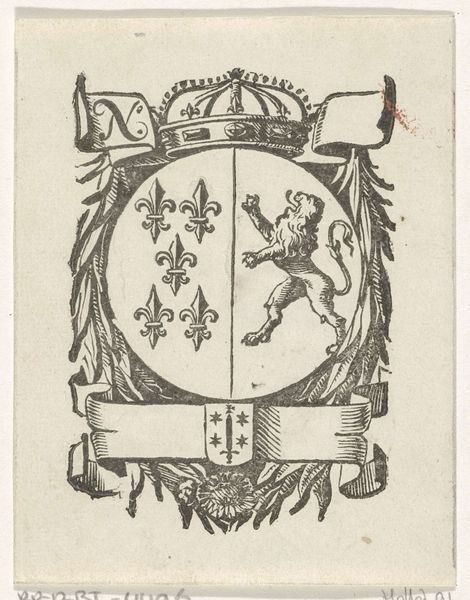
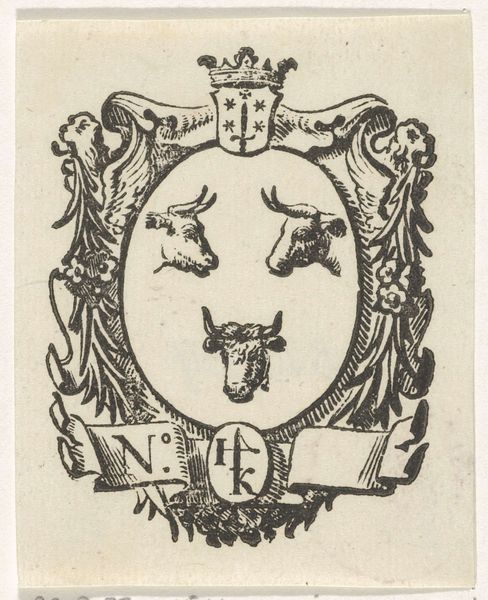
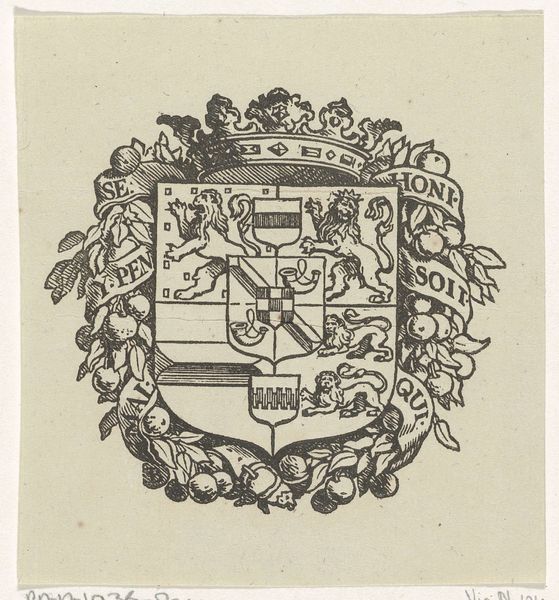
Editor: This is "Handelsetiket van David Barnaart," a drawing, likely an engraving or print, made by Isaac Vincentsz. van der Vinne sometime between 1681 and 1740. It looks like a kind of emblem, maybe for a business? What kind of symbolism can you read in this image? Curator: The symbols resonate with commerce and civic identity. Consider the prominent depiction of what appear to be wool bundles or textile rolls—these would speak directly to the mercantile trade, perhaps of a cloth merchant. And notice how they're framed? Editor: By… what looks like weaponry? Or tools? Curator: Indeed. These bundled tools suggest craftsmanship, labor, and potentially guild affiliation. The juxtaposition of these elements – the raw materials and the tools – allude to production and prosperity rooted in skill. What emotional resonance does that imply? Editor: I guess a feeling of established importance. The banners add a celebratory element, while the family crest with the crown suggests aristocracy. There's an interesting mix of class symbols at play here. Curator: Precisely! It demonstrates the growing power of merchants who sought to align themselves and their status with aristocracy. Consider how images, in particular, can contribute to the construction of identity, and how seemingly disparate objects, when combined, carry layers of historical information. How does knowing that change how you interpret this graphic art? Editor: I see now how loaded even seemingly simple designs like this are. The artist combined recognizable elements to represent a sense of authority and aspiration for this trader. Thanks! Curator: The act of visually constructing social standing remains timeless!
Comments
No comments
Be the first to comment and join the conversation on the ultimate creative platform.
 Collect
 React
React Comment
More like this