About this artwork
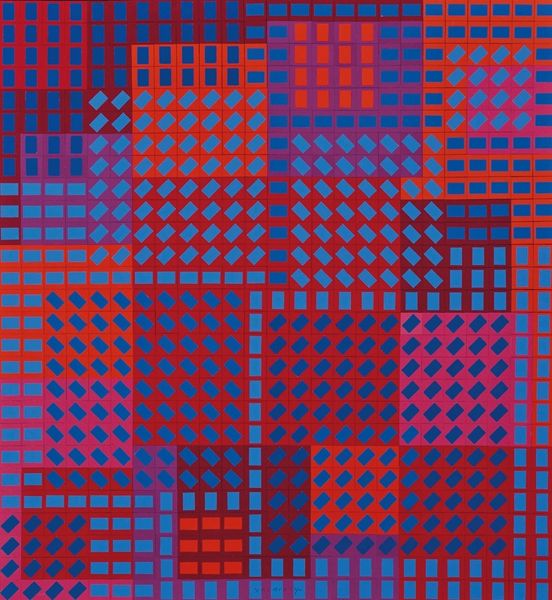
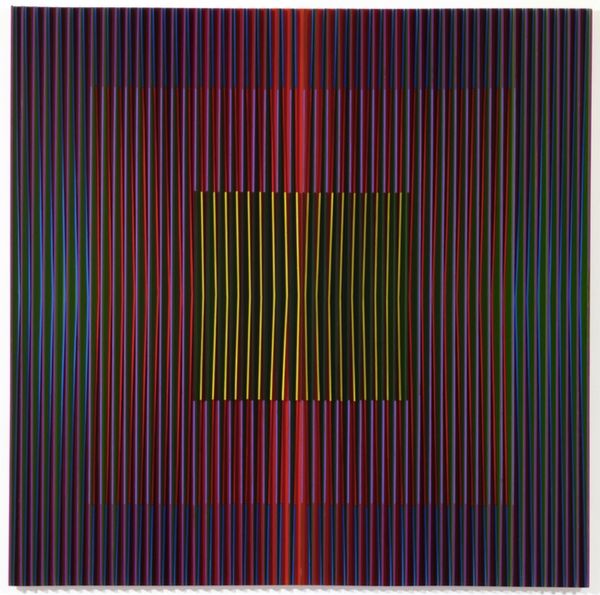
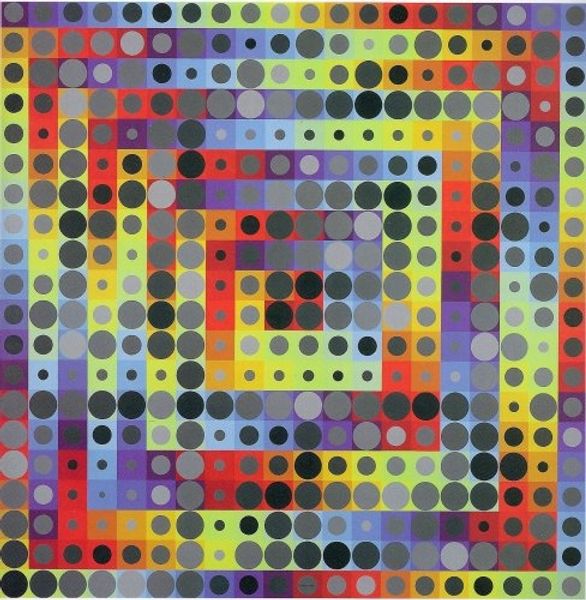
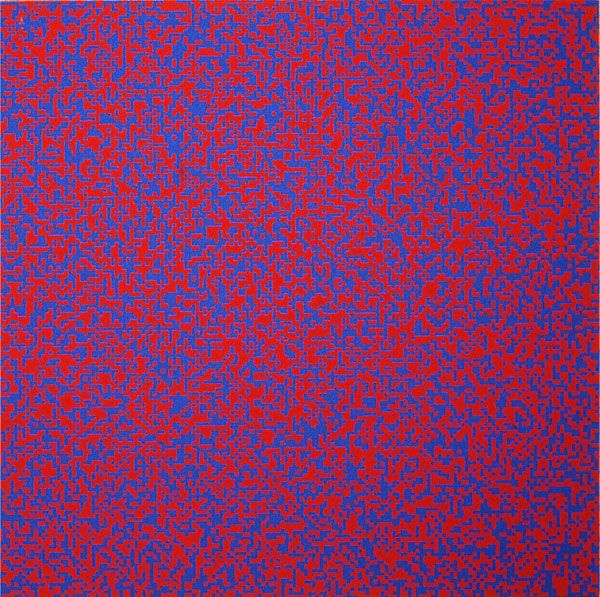
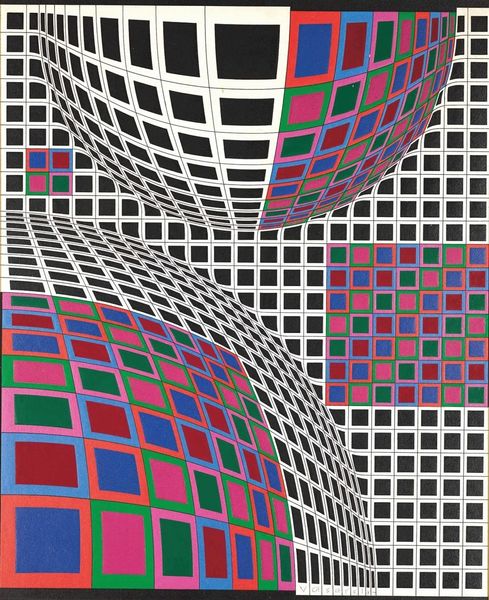
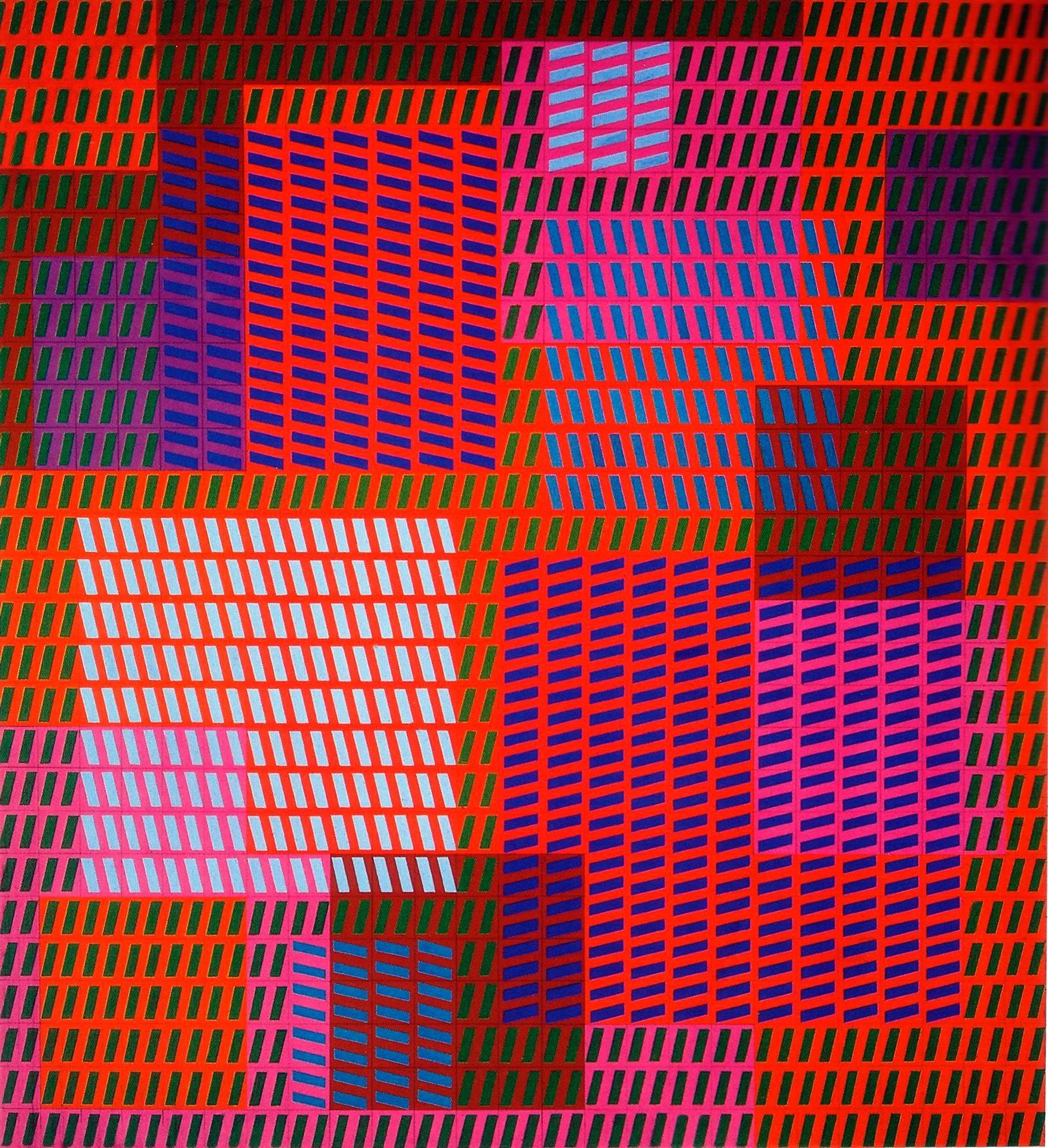
Editor: So, this is Victor Vasarely's "Keiho C1," made with acrylic paint in 1963. It’s visually quite striking – all those repeating geometric shapes, creating a really vibrant surface. It almost feels like the painting is vibrating! What stands out to you the most in this piece? Curator: It’s interesting that you say vibrating. For me, Vasarely's work always conjures up a kind of coded language. The geometric shapes aren't just abstract; they are symbols – perhaps of technology, of the modern city, or even something more primal. It almost seems like an artifact that conceals a set of encrypted messages, using geometric and hard edge as the key. Does this painting stir in you any cultural memories, or evoke associations with past symbolic systems? Editor: That's a fascinating take! I hadn’t thought about them as symbols in that way, more as abstract forms. But, I suppose the very act of repetition could be symbolic… Could these be a symbol for industrial repetition, maybe? Curator: Exactly! Think about the rise of industry and technology in the mid-20th century. The repeating forms can symbolize mass production, and the individual unit losing importance to the larger system. Also, hard-edge painting moved away from traditional, expressive brushwork. Is it just abstraction, or is the symbolic visual language highlighting a shift towards rationalization, order, and a new visual grammar of the machine age? Editor: That gives me a completely new way of looking at it! I was initially just responding to the visual impact, the surface level, but I can see how Vasarely is tapping into deeper cultural anxieties and aspirations. Curator: It reveals how symbols can hide in plain sight. I now find myself wanting to find patterns that act as codes. Editor: Thanks! I hadn't really connected with op art beyond its visual tricks, but this has definitely broadened my perspective on what abstraction can communicate.

Artwork details
- Medium
- acrylic-paint
- Copyright
- Victor Vasarely,Fair Use
Tags
Comments
Share your thoughts
About this artwork
Editor: So, this is Victor Vasarely's "Keiho C1," made with acrylic paint in 1963. It’s visually quite striking – all those repeating geometric shapes, creating a really vibrant surface. It almost feels like the painting is vibrating! What stands out to you the most in this piece? Curator: It’s interesting that you say vibrating. For me, Vasarely's work always conjures up a kind of coded language. The geometric shapes aren't just abstract; they are symbols – perhaps of technology, of the modern city, or even something more primal. It almost seems like an artifact that conceals a set of encrypted messages, using geometric and hard edge as the key. Does this painting stir in you any cultural memories, or evoke associations with past symbolic systems? Editor: That's a fascinating take! I hadn’t thought about them as symbols in that way, more as abstract forms. But, I suppose the very act of repetition could be symbolic… Could these be a symbol for industrial repetition, maybe? Curator: Exactly! Think about the rise of industry and technology in the mid-20th century. The repeating forms can symbolize mass production, and the individual unit losing importance to the larger system. Also, hard-edge painting moved away from traditional, expressive brushwork. Is it just abstraction, or is the symbolic visual language highlighting a shift towards rationalization, order, and a new visual grammar of the machine age? Editor: That gives me a completely new way of looking at it! I was initially just responding to the visual impact, the surface level, but I can see how Vasarely is tapping into deeper cultural anxieties and aspirations. Curator: It reveals how symbols can hide in plain sight. I now find myself wanting to find patterns that act as codes. Editor: Thanks! I hadn't really connected with op art beyond its visual tricks, but this has definitely broadened my perspective on what abstraction can communicate.
Comments
Share your thoughts